Lights, Camera and Special Effects
Using polarization, infrared and ultraviolet in machine vision applications can provide a distinct advantage.
Dedicated lighting is used in machine vision applications to secure constant, consistent conditions and to create a high-contrast image. This includes optimizing the contrast between the target object or feature of interest and its background, and creating high-contrast between the good and bad parts-all while limiting the effects of ambient light.
For some particularly challenging applications, the dedicated lighting technique may require special effects-the use of infrared (IR) or ultraviolet (UV) light sources, or taking advantage of polarization. As with all vision applications, these methods may require some trial and error.
Near-infrared (NIR) is a range of the infrared spectrum closest to visible light that can act like a visible light color in some ways. It is this narrow band of the broad IR spectrum referred to when IR is mentioned in a vision application. When IR is used to illuminate two parts that look the same to the naked eye, one part may reflect more IR than the other. The human eye cannot see this difference in the two parts, but the vision sensor can.
IR light also can be used to see through certain target objects. Objects that do not allow visible light to pass through appear opaque to the human eye. However, these objects may allow IR light, which is of a different wavelength than visible light, to shine through. This results in an effect similar to an X-ray, in a sense, creating translucency in a previously opaque target.
Conversely, some materials can look visibly clear, but block IR light; when using an IR backlight, it will appear opaque. This too may be the key to creating optical contrast in a vision inspection.
Additionally, IR filters also can be used to suppress ambient light-preventing ambient interference with the vision inspection. A common technique is to use an IR light source for the inspection and an IR-pass filter on the camera lens. Since most factory floor lighting contains very little IR, the filter will block much of this unwanted light while passing the IR light for the inspection.
In fluorescence, molecules in the target absorb the high-energy (short wavelength) UV light, which the human eye cannot see, and re-emit lower energy (longer wavelength) visible light, which can be seen. In essence, the part itself becomes a very faint light source, glowing internally.
As with all faint light sources, it is important to ensure that the weak signal is not drowned out by the ambient conditions as the vision sensor is trying to detect it. For this purpose, operators can again make use of lens filters. In the case of UV, one does not want to see the original UV light, however. The operator only wishes to detect the faint visible light coming from the fluorescing chemicals. Thus, the filter should block UV and allow only a narrow band of visible wavelengths through to the camera.
Which band should be allowed to pass through? It depends completely on the application specifics. Some materials emit a blue light while fluorescing; some emit yellow or green or other colors. Operators need to know ahead of time which color they are dealing with to choose the appropriate filter.
UV/fluorescence can be used for a wide range of vision applications. For example, if a customer wants to detect where an otherwise clear glue has been applied to a cardboard package, an inert fluorescent marker die could be added to the glue. This dye does not affect the glue’s performance, but will be used as a detection aid. The clear glue will still appear invisible to humans, but when placed under UV light, its fluorescence can be seen.
In some cases, marking chemicals are not needed, as the fluorescence occurs naturally in the inspected part. Complex biological molecules will usually respond to UV light and appear to glow-a process used by police detectives to see blood residue, for example.
A linear polarizing material, which only allows one of these two states to pass through, is used. Using the linear polarizing film in one orientation allows horizontally polarized light to pass through and blocks vertically polarized light. Rotating the film by 90 degrees switches the condition. When placed over a light source, the material makes the light approximately half as bright-half of the randomly polarized light is blocked-but the light exiting the film is strongly polarized, either horizontally or vertically.
There are a few ways to use this polarized light. First, one could place a polarizing filter on the lens and arrange for that polarizing state to be out of phase with the light. The light only allows horizontally polarized light to leave, and the lens only allows vertically polarized light to enter, for instance.
The trick comes when the polarized light is shined on the target. Some materials respect the polarization state of the light that reflects off them. In the out-of-phase case, these objects will appear dark in the image. Some materials, however, like to randomize the polarization state of any light they reflect. Thus, these materials will appear bright in the image.
Using a polarized ring light and a cross-polarized lens filter, it is possible to tell the difference between electrical conductors and insulators. For instance, paper, plastic and paint will usually randomize a polarization state and look bright, while bare metal targets will respect the polarization state and be very dark.
The second way to use polarizing special effects in vision applications is through use of a polarized backlight, a bright-field lighting technique that places a light behind a target object so that it is aimed directly back toward the sensor. Again, the light is polarized out of phase with the filter on the lens of the vision sensor. The backlight appears very dark in the image. This scheme can allow for the inspection of clear materials. For example, in inspecting sheets of plastic for bubbles or other imperfections, the smooth portions of the material allow the light to pass directly through, without changing the polarization state, so these portions look dark. Tears and rips, however, may randomize the polarization state so that bright spots appear around the flawed areas.
Lastly, a polarizing filter may be placed only on the camera lens and not the light source. In this setup, the filter is able to deal with glare resulting from a phenomenon called polarization by reflection, which occurs in nonmetallic targets.
In polarization by reflection, a non-polarized light source is shining on the part, and the light reflected by the part becomes partially polarized in a plane parallel to the reflecting surface. Operators can adjust the polarizing filter on the lens so that this polarized glare does not make it into the vision sensor. Many times this allows for a nice picture without hot spots.
Outside of the realm of machine vision, the concept of dealing with polarization by reflection can factor into several situations. Sunlight reflected from the surface of a lake can become horizontally polarized. A vertically aligned polarizing filter can greatly reduce the glare, hence, polarized sunglasses. Similarly, glare from the roadway that can distract drivers can be reduced with a polarizing film placed onto the windshield.
While the use of UV, IR and polarized light may not be the first stop on the road to solving a vision application, they can sometimes be the key to overcoming challenging situations.
If machine vision is a science, it is definitely an experimental one; in fact, it may be more of an art. Through educated guessing and trial and error, an applications engineer at a vision lab can try a number of different lighting techniques and special effects may prove just the trick needed to make the inspection work. V&S
Infrared light refers to a large section of the electromagnetic spectrum and includes the light emitted by TV remote controls, heat lamps and hot objects.
Ultraviolet light can be used to create contrast in vision inspections, but in a much different way than IR light.
Polarization refers to the orientation of light particles, or photons. More specifically, polarization refers to the alignment of the photon’s electric field in space.
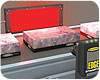
Backlighting, a dedicated lighting technique, creates maximum contrast for many vision inspections. Sometimes a polarized backlight and a cross-polarized lens filter can allow for the detection of otherwise clear materials. Source: Banner Engineering
Dedicated lighting is used in machine vision applications to secure constant, consistent conditions and to create a high-contrast image. This includes optimizing the contrast between the target object or feature of interest and its background, and creating high-contrast between the good and bad parts-all while limiting the effects of ambient light.
For some particularly challenging applications, the dedicated lighting technique may require special effects-the use of infrared (IR) or ultraviolet (UV) light sources, or taking advantage of polarization. As with all vision applications, these methods may require some trial and error.
Infrared Light
Infrared light-light with frequencies lower than visible red-refers to a large section of the electromagnetic spectrum and includes the light emitted by TV remote controls, heat lamps and hot objects. Although humans cannot perceive IR light, vision sensors can see some IR wavelengths-and can take advantage of them for the purpose of enhancing contrast in an inspection.Near-infrared (NIR) is a range of the infrared spectrum closest to visible light that can act like a visible light color in some ways. It is this narrow band of the broad IR spectrum referred to when IR is mentioned in a vision application. When IR is used to illuminate two parts that look the same to the naked eye, one part may reflect more IR than the other. The human eye cannot see this difference in the two parts, but the vision sensor can.
IR light also can be used to see through certain target objects. Objects that do not allow visible light to pass through appear opaque to the human eye. However, these objects may allow IR light, which is of a different wavelength than visible light, to shine through. This results in an effect similar to an X-ray, in a sense, creating translucency in a previously opaque target.
Conversely, some materials can look visibly clear, but block IR light; when using an IR backlight, it will appear opaque. This too may be the key to creating optical contrast in a vision inspection.
Additionally, IR filters also can be used to suppress ambient light-preventing ambient interference with the vision inspection. A common technique is to use an IR light source for the inspection and an IR-pass filter on the camera lens. Since most factory floor lighting contains very little IR, the filter will block much of this unwanted light while passing the IR light for the inspection.
Ultraviolet
While infrared means below red, ultraviolet (UV) means above violet. UV light also can be used to create contrast in vision inspections, but in a much different way than IR light. Instead of shining UV on a target object to see how much it reflects, UV is used to activate the phenomenon of fluorescence.In fluorescence, molecules in the target absorb the high-energy (short wavelength) UV light, which the human eye cannot see, and re-emit lower energy (longer wavelength) visible light, which can be seen. In essence, the part itself becomes a very faint light source, glowing internally.
As with all faint light sources, it is important to ensure that the weak signal is not drowned out by the ambient conditions as the vision sensor is trying to detect it. For this purpose, operators can again make use of lens filters. In the case of UV, one does not want to see the original UV light, however. The operator only wishes to detect the faint visible light coming from the fluorescing chemicals. Thus, the filter should block UV and allow only a narrow band of visible wavelengths through to the camera.
Which band should be allowed to pass through? It depends completely on the application specifics. Some materials emit a blue light while fluorescing; some emit yellow or green or other colors. Operators need to know ahead of time which color they are dealing with to choose the appropriate filter.
UV/fluorescence can be used for a wide range of vision applications. For example, if a customer wants to detect where an otherwise clear glue has been applied to a cardboard package, an inert fluorescent marker die could be added to the glue. This dye does not affect the glue’s performance, but will be used as a detection aid. The clear glue will still appear invisible to humans, but when placed under UV light, its fluorescence can be seen.
In some cases, marking chemicals are not needed, as the fluorescence occurs naturally in the inspected part. Complex biological molecules will usually respond to UV light and appear to glow-a process used by police detectives to see blood residue, for example.
Polarization
Polarization refers to the orientation of light particles (photons) and can be advantageous to vision inspections for several reasons. Specifically, polarization refers to the alignment of the photon’s electric field in space. While light from the sun and light bulbs is randomly polarized, operators can specifically choose to transmit only the portion of the light whose electric field is aligned the way they want. They could choose only light whose electric field is aligned more or less horizontally, for instance, or choose just vertically aligned light.A linear polarizing material, which only allows one of these two states to pass through, is used. Using the linear polarizing film in one orientation allows horizontally polarized light to pass through and blocks vertically polarized light. Rotating the film by 90 degrees switches the condition. When placed over a light source, the material makes the light approximately half as bright-half of the randomly polarized light is blocked-but the light exiting the film is strongly polarized, either horizontally or vertically.
There are a few ways to use this polarized light. First, one could place a polarizing filter on the lens and arrange for that polarizing state to be out of phase with the light. The light only allows horizontally polarized light to leave, and the lens only allows vertically polarized light to enter, for instance.
The trick comes when the polarized light is shined on the target. Some materials respect the polarization state of the light that reflects off them. In the out-of-phase case, these objects will appear dark in the image. Some materials, however, like to randomize the polarization state of any light they reflect. Thus, these materials will appear bright in the image.
Using a polarized ring light and a cross-polarized lens filter, it is possible to tell the difference between electrical conductors and insulators. For instance, paper, plastic and paint will usually randomize a polarization state and look bright, while bare metal targets will respect the polarization state and be very dark.
The second way to use polarizing special effects in vision applications is through use of a polarized backlight, a bright-field lighting technique that places a light behind a target object so that it is aimed directly back toward the sensor. Again, the light is polarized out of phase with the filter on the lens of the vision sensor. The backlight appears very dark in the image. This scheme can allow for the inspection of clear materials. For example, in inspecting sheets of plastic for bubbles or other imperfections, the smooth portions of the material allow the light to pass directly through, without changing the polarization state, so these portions look dark. Tears and rips, however, may randomize the polarization state so that bright spots appear around the flawed areas.
Lastly, a polarizing filter may be placed only on the camera lens and not the light source. In this setup, the filter is able to deal with glare resulting from a phenomenon called polarization by reflection, which occurs in nonmetallic targets.
In polarization by reflection, a non-polarized light source is shining on the part, and the light reflected by the part becomes partially polarized in a plane parallel to the reflecting surface. Operators can adjust the polarizing filter on the lens so that this polarized glare does not make it into the vision sensor. Many times this allows for a nice picture without hot spots.
Outside of the realm of machine vision, the concept of dealing with polarization by reflection can factor into several situations. Sunlight reflected from the surface of a lake can become horizontally polarized. A vertically aligned polarizing filter can greatly reduce the glare, hence, polarized sunglasses. Similarly, glare from the roadway that can distract drivers can be reduced with a polarizing film placed onto the windshield.
While the use of UV, IR and polarized light may not be the first stop on the road to solving a vision application, they can sometimes be the key to overcoming challenging situations.
If machine vision is a science, it is definitely an experimental one; in fact, it may be more of an art. Through educated guessing and trial and error, an applications engineer at a vision lab can try a number of different lighting techniques and special effects may prove just the trick needed to make the inspection work. V&S
Tech Tips
Looking for a reprint of this article?
From high-res PDFs to custom plaques, order your copy today!