Sensors See the Light
Enhance a machine’s sight with a dedicated lighting technique.
Vision sensors act as the eyes of machines, allowing them to “see,” analyze and interpret data in complex visual inspections. When applied correctly, vision sensing can improve production processes and quality for industrial applications, including part verification, gaging and measuring, orientation, flaw detection and sorting. However, vision sensors function best when measuring simple, structured and repeatable visual scenes-which require dedicated lighting that meets the specific application’s requirements.
Proper lighting maximizes the contrast between the target object or feature of interest and its background, providing consistent illumination that is unaffected by ambient lights. Dedicated lighting includes selecting the optimal light source as well as determining the lighting geometry best suited for an application’s specific requirements.

LEDs give off monochromatic light distributed along a narrow band of wavelength. These lights, which offer durability and a usable life of approximately 100,000 hours, can be used for illuminating small objects as well as for some long-distance applications.
Fluorescent lights are best used for creating large, evenly illuminated areas but are more fragile and have a shorter life span. Fluorescent tubes create an electrical arc through a mercury vapor, producing ultraviolet (UV) light. This UV light strikes the phosphor coating on the inside of the tube, causing these phosphors to fluoresce and emit visible white light.
The third light source, halogen lights, uses a tungsten filament and a small amount of halogen gas, encased in quartz. As the filament heats, the tungsten evaporates. The halogen gas combines with the tungsten vapor, allowing the tungsten to redeposit only on the filament-not the quartz walls of the bulb-so the filament lasts longer and burns brighter. Halogen lights are suitable for lighting both large and small areas, but they are relatively expensive and produce a very high heat output.
To reduce the blurring effect, the camera exposure time must be reduced, which in turn, causes the image to be dark. In this case, a strobed light source can provide a very bright, very short flash of light. Strobes are used to freeze motion on a part, but in order to achieve the best results, they must be the only source of light that falls on a target object.
By manipulating the lighting geometry-how the light source is physically positioned in relation to the target object-operators can eliminate glare and hot spots as well as minimize unimportant features. Adjusting the lighting geometry optimizes the inspection by emphasizing or de-emphasizing various aspects of the scene. Techniques, or ways to position the light sources, include backlighting, bright-field and dark-field lighting.
In backlighting, the light source is aligned behind the target object so that it shines directly into the camera. Backlighting is the highest contrast technique available and is useful for illuminating defects on translucent objects or creating silhouettes of opaque objects. However, in order to be effective, the light must be larger than the target object, which is not possible for every application. Backlighting cannot be used for detecting surface texture or color.
The most commonly used technique is bright-field lighting, a method where the light source is positioned so it shines perpendicular to the object. This technique makes the smooth surfaces of an object appear brighter than the rough surfaces in the image, producing contrast based on the surface texture of the target. While bright-field lighting provides even illumination and can be used for most lighting applications, it should not be used for highly reflective target objects because it may create extreme glare that can interfere with the vision inspection.
Dark-field lighting is the opposite of bright-field lighting. Illuminating the object with indirect light makes the smooth surfaces of an object look dark, but makes rough surfaces, such as defects or raised features, appear bright. Dark-field lighting positions the light source at a low angle so its light reflects off the smooth portions of an object, away from the camera. Dark-field lighting delivers a reliable solution for highly reflective target objects, or for detecting scratches or flaws in otherwise flat surfaces.
For example, dedicated lighting can make it possible to sort parts by size and shape using machine vision, saving time and preventing inaccuracies common in manual sorting. In this instance, backlights placed behind the object can create a dark shadow of the part (a silhouette), which can be inspected for appropriate dimensions. Backlights also can provide an ideal solution for a variety of additional applications, including detecting foreign material on a clear web, measuring the spacing between the leads of an IC chip and inspecting for cracks or holes in sheet metal.
An application that requires detection of small marks or abnormalities on the target object, such as notches in ceramic rings and dents in metal tubing, may be best suited for dark-field lighting. Area lights are mounted off to the side of the camera and at an angle to the target object so that the light is reflected off any smooth surfaces and away from the sensor. Because area lights deliver even illumination in a concentrated area and can be used to create shadows and glare, the vision sensor is able to detect the presence or absence of a feature. Area lights also can be used to verify printing on reflective surfaces and distinguish between rough and smooth surfaces.
To detect label presence on a target object or verify the date or lot codes on these labels, bright-field lighting can be a useful technique. Specifically, LED ring lights are mounted on the vision sensor. With this arrangement, the camera lens looks through the center opening of the ring light assembly, which illuminates the area directly in front of the camera. Ring lights provide even illumination of small objects, reduce shadows on images with protrusions and center the light on the image.
For these and countless additional applications, combining the advantages of specific light sources and well-chosen lighting geometry can create a lighting solution that is specific to a given application and enhances the vision inspection’s accuracy, delivering significant time and cost savings. V&S
Brent Evanger is an application engineer at Banner Engineering (Minneapolis). For more information, call (888) 373-6767, e-mail [email protected] or visit www.bannerengineering.com.
For example, dedicated lighting can make it possible to sort parts by size and shape using machine vision, saving time and preventing inaccuracies common in manual sorting. In this instance, backlights placed behind the object can create a dark shadow of the part (a silhouette), which can be inspected for appropriate dimensions. Backlights also can provide an ideal solution for a variety of additional applications, including detecting foreign material on a clear web, measuring the spacing between the leads of an IC chip and inspecting for cracks or holes in sheet metal.
An application that requires detection of small marks or abnormalities on the target object, such as notches in ceramic rings and dents in metal tubing, may be best suited for dark-field lighting. Area lights are mounted off to the side of the camera and at an angle to the target object so that the light is reflected off any smooth surfaces and away from the sensor. Because area lights deliver even illumination in a concentrated area and can be used to create shadows and glare, the vision sensor is able to detect the presence or absence of a feature. Area lights also can be used to verify printing on reflective surfaces and distinguish between rough and smooth surfaces.
To detect label presence on a target object or verify the date or lot codes on these labels, bright-field lighting can be a useful technique. Specifically, LED ring lights are mounted on the vision sensor. With this arrangement, the camera lens looks through the center opening of the ring light assembly, which illuminates the area directly in front of the camera. Ring lights provide even illumination of small objects, reduce shadows on images with protrusions and center the light on the image.
For these and countless additional applications, combining the advantages of specific light sources and well-chosen lighting geometry can create a lighting solution that is specific to a given application and enhances the vision inspection’s accuracy, delivering significant time and cost savings. V&S
Brent Evanger is an application engineer at Banner Engineering (Minneapolis). For more information, call (888) 373-6767, e-mail [email protected] or visit www.bannerengineering.com.
Vision sensors act as the eyes of machines, allowing them to “see,” analyze and interpret data in complex visual inspections. When applied correctly, vision sensing can improve production processes and quality for industrial applications, including part verification, gaging and measuring, orientation, flaw detection and sorting. However, vision sensors function best when measuring simple, structured and repeatable visual scenes-which require dedicated lighting that meets the specific application’s requirements.
Proper lighting maximizes the contrast between the target object or feature of interest and its background, providing consistent illumination that is unaffected by ambient lights. Dedicated lighting includes selecting the optimal light source as well as determining the lighting geometry best suited for an application’s specific requirements.
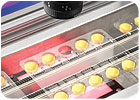
Dedicated light sources enhance the vision inspection’s reliability by producing consistent lighting suited for each application. For example, fluorescent tubular lights provide cost-effective illumination in a rugged, sealed housing for a variety of requirements including automotive parts inspections. Source: Banner Engineering
Sources of Light
Most vision sensors create grayscale images that indicate various intensities of light throughout the target object. Because ambient light found in most application environments does not provide consistent or uniform light coverage, it should not be relied on for vision inspections. Instead, various lighting options are available to best fit diverse applications. Sources of dedicated light include light emitting diodes (LEDs), fluorescent lights and halogen lights.LEDs give off monochromatic light distributed along a narrow band of wavelength. These lights, which offer durability and a usable life of approximately 100,000 hours, can be used for illuminating small objects as well as for some long-distance applications.
Fluorescent lights are best used for creating large, evenly illuminated areas but are more fragile and have a shorter life span. Fluorescent tubes create an electrical arc through a mercury vapor, producing ultraviolet (UV) light. This UV light strikes the phosphor coating on the inside of the tube, causing these phosphors to fluoresce and emit visible white light.
The third light source, halogen lights, uses a tungsten filament and a small amount of halogen gas, encased in quartz. As the filament heats, the tungsten evaporates. The halogen gas combines with the tungsten vapor, allowing the tungsten to redeposit only on the filament-not the quartz walls of the bulb-so the filament lasts longer and burns brighter. Halogen lights are suitable for lighting both large and small areas, but they are relatively expensive and produce a very high heat output.
Backlights that are placed behind the target and aimed directly at the vision sensor provide more optical contrast than any other lighting solution. Backlights are suited for high-accuracy applications including precision measurement and shape verification. Source: Banner Engineering
Lighting Geometry
After a light source is selected, the next step is determining how the light should reflect off the target object’s surface and enter the vision sensor to produce the best possible image. For most applications, lights are used in continuous mode-they are on all the time. However, for applications in which the part is moving quickly, the use of a standard light in continuous mode may result in a blurry image.To reduce the blurring effect, the camera exposure time must be reduced, which in turn, causes the image to be dark. In this case, a strobed light source can provide a very bright, very short flash of light. Strobes are used to freeze motion on a part, but in order to achieve the best results, they must be the only source of light that falls on a target object.
By manipulating the lighting geometry-how the light source is physically positioned in relation to the target object-operators can eliminate glare and hot spots as well as minimize unimportant features. Adjusting the lighting geometry optimizes the inspection by emphasizing or de-emphasizing various aspects of the scene. Techniques, or ways to position the light sources, include backlighting, bright-field and dark-field lighting.
In backlighting, the light source is aligned behind the target object so that it shines directly into the camera. Backlighting is the highest contrast technique available and is useful for illuminating defects on translucent objects or creating silhouettes of opaque objects. However, in order to be effective, the light must be larger than the target object, which is not possible for every application. Backlighting cannot be used for detecting surface texture or color.
The most commonly used technique is bright-field lighting, a method where the light source is positioned so it shines perpendicular to the object. This technique makes the smooth surfaces of an object appear brighter than the rough surfaces in the image, producing contrast based on the surface texture of the target. While bright-field lighting provides even illumination and can be used for most lighting applications, it should not be used for highly reflective target objects because it may create extreme glare that can interfere with the vision inspection.
Dark-field lighting is the opposite of bright-field lighting. Illuminating the object with indirect light makes the smooth surfaces of an object look dark, but makes rough surfaces, such as defects or raised features, appear bright. Dark-field lighting positions the light source at a low angle so its light reflects off the smooth portions of an object, away from the camera. Dark-field lighting delivers a reliable solution for highly reflective target objects, or for detecting scratches or flaws in otherwise flat surfaces.
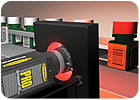
Ring lights illuminate the area directly in front of the camera. These lights can be used for inspections that involve small parts such as bar code scanning for accurate traceability. Source: Banner Engineering
Lighting for Any Application
The combination of the ideal light source and correct lighting geometry creates the desired image contrast by highlighting or downplaying optical differences between the target object and its background. This pairing of light and geometry can be determined by considering specific application requirements.For example, dedicated lighting can make it possible to sort parts by size and shape using machine vision, saving time and preventing inaccuracies common in manual sorting. In this instance, backlights placed behind the object can create a dark shadow of the part (a silhouette), which can be inspected for appropriate dimensions. Backlights also can provide an ideal solution for a variety of additional applications, including detecting foreign material on a clear web, measuring the spacing between the leads of an IC chip and inspecting for cracks or holes in sheet metal.
An application that requires detection of small marks or abnormalities on the target object, such as notches in ceramic rings and dents in metal tubing, may be best suited for dark-field lighting. Area lights are mounted off to the side of the camera and at an angle to the target object so that the light is reflected off any smooth surfaces and away from the sensor. Because area lights deliver even illumination in a concentrated area and can be used to create shadows and glare, the vision sensor is able to detect the presence or absence of a feature. Area lights also can be used to verify printing on reflective surfaces and distinguish between rough and smooth surfaces.
To detect label presence on a target object or verify the date or lot codes on these labels, bright-field lighting can be a useful technique. Specifically, LED ring lights are mounted on the vision sensor. With this arrangement, the camera lens looks through the center opening of the ring light assembly, which illuminates the area directly in front of the camera. Ring lights provide even illumination of small objects, reduce shadows on images with protrusions and center the light on the image.
For these and countless additional applications, combining the advantages of specific light sources and well-chosen lighting geometry can create a lighting solution that is specific to a given application and enhances the vision inspection’s accuracy, delivering significant time and cost savings. V&S
Brent Evanger is an application engineer at Banner Engineering (Minneapolis). For more information, call (888) 373-6767, e-mail [email protected] or visit www.bannerengineering.com.
Tech Tips
The combination of the ideal light source and correct lighting geometry creates the desired image contrast by highlighting or downplaying optical differences between the target object and its background. This pairing of light and geometry can be determined by considering specific application requirements.For example, dedicated lighting can make it possible to sort parts by size and shape using machine vision, saving time and preventing inaccuracies common in manual sorting. In this instance, backlights placed behind the object can create a dark shadow of the part (a silhouette), which can be inspected for appropriate dimensions. Backlights also can provide an ideal solution for a variety of additional applications, including detecting foreign material on a clear web, measuring the spacing between the leads of an IC chip and inspecting for cracks or holes in sheet metal.
An application that requires detection of small marks or abnormalities on the target object, such as notches in ceramic rings and dents in metal tubing, may be best suited for dark-field lighting. Area lights are mounted off to the side of the camera and at an angle to the target object so that the light is reflected off any smooth surfaces and away from the sensor. Because area lights deliver even illumination in a concentrated area and can be used to create shadows and glare, the vision sensor is able to detect the presence or absence of a feature. Area lights also can be used to verify printing on reflective surfaces and distinguish between rough and smooth surfaces.
To detect label presence on a target object or verify the date or lot codes on these labels, bright-field lighting can be a useful technique. Specifically, LED ring lights are mounted on the vision sensor. With this arrangement, the camera lens looks through the center opening of the ring light assembly, which illuminates the area directly in front of the camera. Ring lights provide even illumination of small objects, reduce shadows on images with protrusions and center the light on the image.
For these and countless additional applications, combining the advantages of specific light sources and well-chosen lighting geometry can create a lighting solution that is specific to a given application and enhances the vision inspection’s accuracy, delivering significant time and cost savings. V&S
Brent Evanger is an application engineer at Banner Engineering (Minneapolis). For more information, call (888) 373-6767, e-mail [email protected] or visit www.bannerengineering.com.
Looking for a reprint of this article?
From high-res PDFs to custom plaques, order your copy today!