Q&A: Understanding the Cost-Effectiveness of Electronic Temperature Compensation
Paul Sagar, president of Albion Devices Inc., explains the potential benefits of temperature compensation in shop-floor gaging.
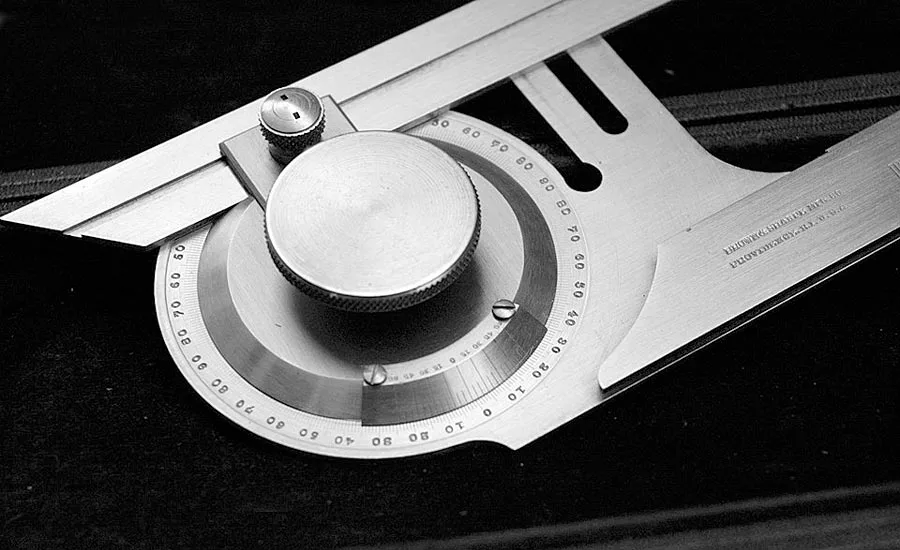
All metals expand and contract as temperatures vary. By eliminating these effects from precision measurements, Albion gages provide repeatable and reproducible measurements in all climates and working conditions year-round.
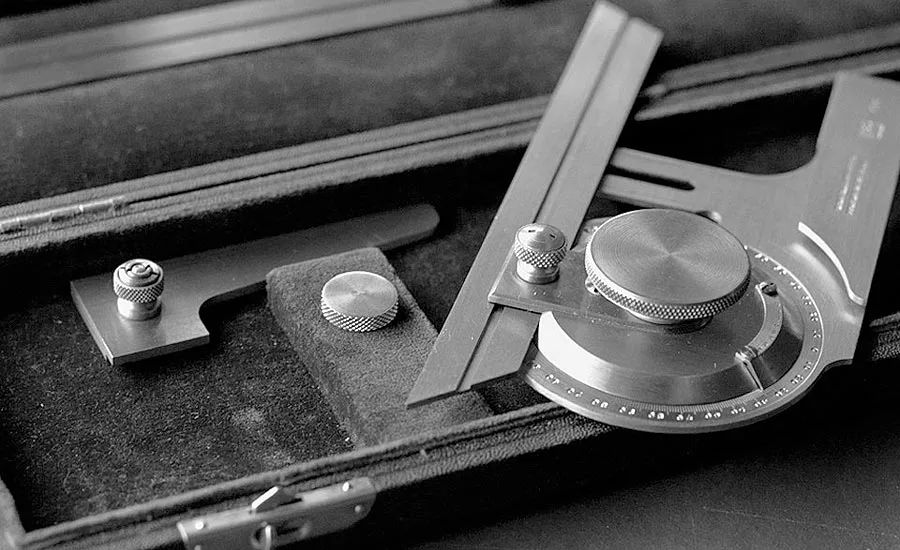
Albion produces a variety of TComp snap gages and digital indicators.
Environment testing equipment is integral to the management of manufacturing shop floors, though it doesn’t get talked about much. This is usually because most companies have a system in place that they stick to because they’ve been using it for years, and it seems to be working fine; chalk it up to the “If ain’t broke, don’t fix it” mentality. Also, because the current trend in manufacturing is to streamline manufacturing processes, many manufacturers tend to discard anything large or seemingly cumbersome, lest it bottleneck production.
In addition, manufacturers must decide what kind of environment testing equipment they need most to ensure high quality control at a reasonable price. When it comes to gages, temperature compensation is key, as even the slightest temperature change could result in inaccurate measurements—and thus, an untold waste of time and, most important to the company’s bottom line, money.
However, even after being successfully applied to shop-floor gages for more than 25 years, electronic temperature concentration is “poorly understood and commonly undervalued,” according to Albion Devices president Paul Sagar. In his article “The Value of Temperature Compensation in Shop-Floor Gaging,” Sagar writes that a properly implemented temperature compensation system can save many times its investment cost within months by maintaining gage R&R to effectively control productions processes while temperatures vary, all in real time.
The rub is that other, though arguably less effective, solutions already exist. Many CMMs are already equipped with temperature compensation capabilities, but they are usually restricted to a thermal range of about 15°F, when a much larger range would make it much less prone to inaccuracies. Companies also tend to use air conditioning or coolant control to reduce thermal effects in measurements, but these are often expensive and generally less successful in preventing customer rejects, warranty issues, and end-user dissatisfaction.
Sagar argues that it’s often too easy to “over-simplify” the solution. “It is not sufficient to specify to a gage supplier that ‘temperature compensation is required,’” he writes. A good system will measure temperatures of work piece, master, and gage, and correct for each of them if they are not at reference temperature using a customized correction coefficient. The sensors will respond quickly (or as quickly as physics will allow) and a compensation algorithm will correct measurements made by the gaging system so that they display as if all temperatures were at reference temperature.”
For supporting data, Sagar provides the following example (see Figure 1):
“In one case, a major automaker installed a new piston line and used temperature compensation on its gauges at a cost of $40,000. The rejected alternative option was to install a temperature-controlled accumulating facility around the entire gauging operation at a cost of $1 million. The line was tested, and subsequently went into production. The tests, and subsequent monitoring over a period of seven years, showed that the compensation system consistently corrected for more than 97 percent of thermal errors. Pistons could be inspected to within better than ±1 µm repeatability, regardless of ambient temperature changes and process variations.”
I asked Sagar to further explain why many manufacturers remain hesitant to implement temperature compensation systems, especially if they are more effective at minimizing the loss of accuracy and repeatability as temperatures change than the alternatives.
Quality: Per your article, why do you think that electronic temperature compensation is misunderstood and undervalued? Is it because the other options are seemingly less expensive in the long run, or seem easier to implement? And what steps can be taken to challenge what appears to be the status quo?
Paul Sagar: In my experience, it is just too much trouble for many people to address. Corrections for thermal effects involve very small measurements, in the order of tenths of thousandths of an inch, or a few microns. Temperature compensation (temp comp) is much cheaper than other alternatives, but it involves some effort to understand and implement, while the other alternatives are easier to understand and install. I know of one instance, for example, where air conditioning and “air tempering” were installed in a huge plant to address the problem that could have been solved for less than a tenth of the cost. In other cases, because the corrections are so small, cost justifications are not understood by those controlling the purse strings, and who are reluctant to authorize the necessary expenditures.
As to what other steps can be taken to change this situation, it is hard to say. I have been trying to educate the market place for 28 years with some success, but not as much as I would like. It [does seem] expensive. The problem is that industrial gaging is already extremely complex, and adding temp comp only adds to the complexity, to the point that it is tempting to ignore it. Having said that, there are now several gaging companies that offer their own versions of temp comp on their gages.
Temperature compensation systems seem to be the most cost- effective solution. Are you seeing more of them being implemented?
The need to hold ever-tighter tolerances is driving the awareness that environmental issues are making it harder to meet gage R&R specifications. As I said, others now offer temp comp solutions—I happen to believe that they do not necessarily use the correct approach or have the right temperature sensing technology, but they have more marketing power than I do. They are less concerned with actively marketing temp comp as a solution, because their core business is gaging; but they offer a solution, so as to be able to meet the requests of end users for temp comp.
Looking forward, how do you see temperature compensation systems continuing to catch on and improve?
Faster temperature sensing is probably the next step. Infrared is very fast, but not accurate enough, so contact sensing is still the preferred method. Most contact sensors currently on the market reach a steady reading only after several seconds of contact with the target. This can delay cycle times. We have developed contact sensors that respond within a second, which is to my knowledge the fastest available in a durable sensor. We are currently in the process of introducing this technology. Another area for implementation on a wider scale would be in-process temperature compensation, where measurements are taken during actual operations such as grinding. We developed a specific sensor for such applications some time ago.
Since the company’s inception in 1988, Albion’s original product line continues to be installed and used successfully. What has remained consistent about that system, and what has been changed?
What has stayed consistent is the temperature compensation algorithm (proprietary) and some basic sensor design and building technology (also proprietary). Updates have involved different versions of the system with newer, more user-friendly human interfaces.
Looking for a reprint of this article?
From high-res PDFs to custom plaques, order your copy today!