Capitalizing on the Convergence of Manufacturing Quality, IoT and Lean
Now more than ever, it is vital for experts in quality and operations technology to work together to help manufacturing plants realize the full potential from the industrial internet of things.
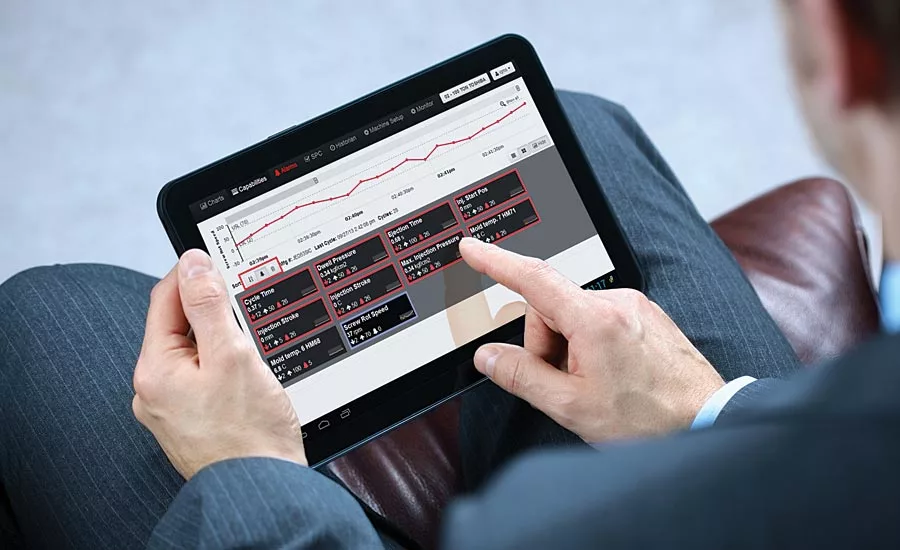
Real-time quality metrics can now be available to all employees anywhere they are needed. Source: IQMS
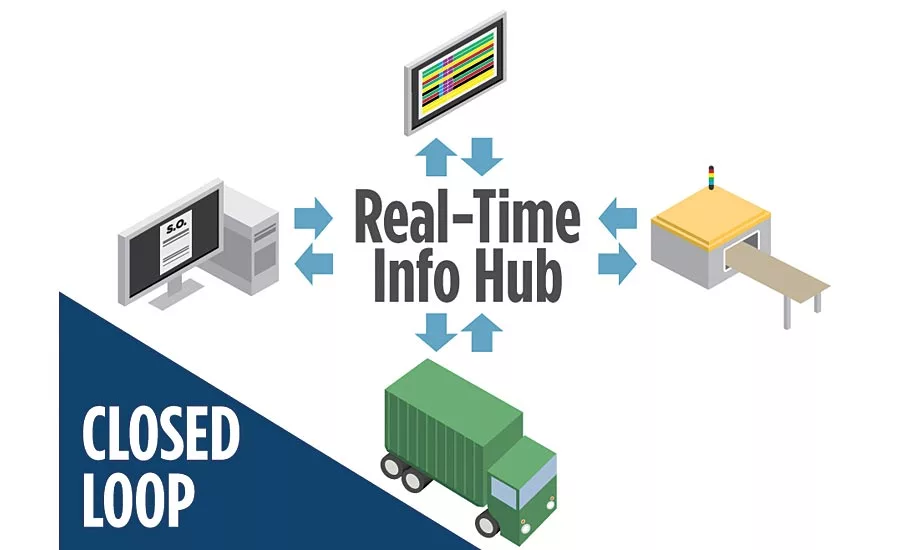
The convergence of IoT with manufacturing enables timely, closed loop operations to assure consistent quality. Source: IQMS
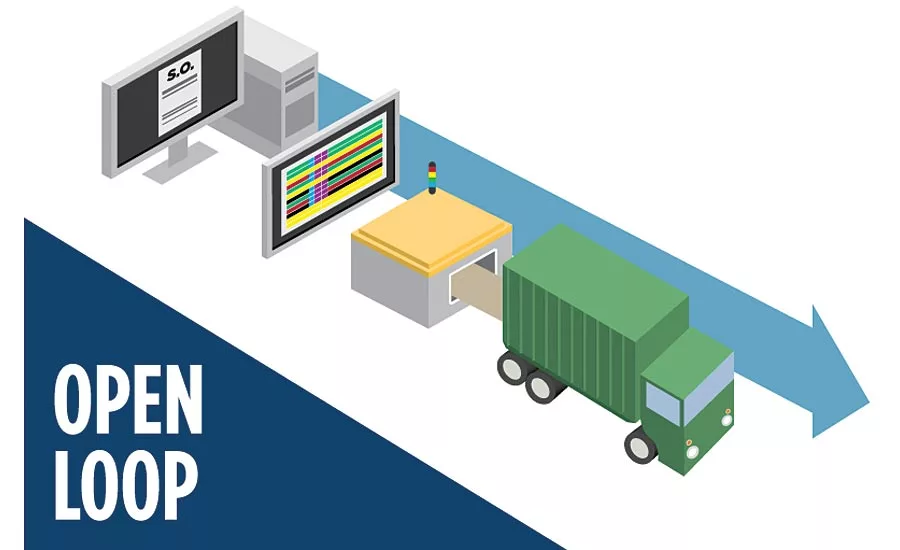
Presuming perfect operations in open loop mode has long term risks. Source: IQMS
The industrial internet of things (IIoT) is moving from a future promise to real-world strategy as manufacturers seek to transform sensor data into actionable insights. In fact, research firm MarketsandMarkets predicts that the worldwide IIoT market will grow to $195.47 billion by 2022.
The internet of things (IoT) will play a particularly critical role in optimizing manufacturing quality as robots and machine controls increasingly become an integral part of the plant floor, serving to accelerate throughput and improve repeatability. Yet equipment will wear and eventually experience failures over months and years of operation. Meanwhile, people involved in manufacturing processes as well as material handling, maintenance, and manual data capture can introduce mistakes. By capturing, analyzing and communicating data from IoT sensors in real time, manufacturers can identify and even predict issues before they become problematic.
That’s why now, more than ever, it is vital for experts in quality and operations technology (OT) to work closely together to help manufacturing plants realize the full potential of production processes with support from the industrial internet of things.
This article examines established best practices for fully harnessing the power of IIoT to optimize quality, including automating the capture of data, creating a closed-loop feedback system, and establishing a lean information flow.
Automating the Capture of Data
IIoT offers real-time measurements and opportunities for production, compliance and quality managers to stay closely connected to their shop floor operations. By automating the capture of process and product data from IoT sensors, manufacturers can more effectively obtain real-time metrics to support statistical process control (SPC) best practices and Six Sigma methodologies—enabling the use of trend analytics to assure consistent quality and performance improvement.
For years, product measurement sampling plans have been a key part of SPC best practices to support quality assurance, in part because it has been impractical, sometimes impossible, to measure the key characteristics of every piece being made. The frequently used truism, “you can’t inspect quality into a product,” is indeed true when a quality process demands traceability and relies on people to do manual inspection of every step and piece.
Because IIoT technology is only as useful as the data it provides, operations and quality managers are increasingly turning to their information technology teams to help implement analytics and metrics that enable a real-time, actionable closed-loop feedback quality system. This is central to making effective data-driven decisions, efficient manufacturing, and squeaky-clean quality a reality.
Modern Open Loop vs. Closed Loop Operations
Automated manufacturing processes, when they are new and perfectly maintained, assure repeatability. But blindly assuming that their performance remains completely accurate over weeks, months and years of use is risky.
In historical best practices, quality professionals have focused on recording and predicting product quality by manually capturing measurements with sampling frequencies, depending on the characteristics. Many new manufacturing lines have modern automation in the form of robotics, advanced manufacturing and measuring equipment, and state-of-the-art controllers. However, using legacy thought processes, the new equipment and controls are often operated in a preprogrammed, open loop mode where important quality data is manually captured by technicians who later key information into spreadsheets or specialized quality software for after-the-fact analysis.
With the availability of modern measuring systems, important data can be reliably and automatically captured in-line and even analyzed locally in real time. This presents a remarkable opportunity to detect and act on issues quickly.
Yet, too often, process engineering plans for the measurements are simply used for automated go/no-go determinations to route non-conforming parts to offline chutes and bins for further analysis later. In other cases, manually captured data is compiled into charts and metrics at the end of the shift or day. While these quality information activities can be considered a form of closed loop feedback, the time delays lead to post-mortem styled reviews after the information is often no longer actionable in preventing, or at least correcting, quality problems.
The goal of quality management is not only to catch occasional mistakes, but to prevent product issues by identifying when key characteristics begin to trend out of control. As a result, more managers are turning to closed-loop automation of measurements inside a plant. This approach offers the promise of maintaining a continuous stream of accurate, complete, and valuable status information during the entire production cycle to provide actionable up-to-the-minute quality analytics.
The barriers to implementing a closed loop have lowered as automated production lines have become more sophisticated, capable, and “smart.” The data they are generating can be sent to central servers via the in-plant network for aggregation and real-time analysis to not only warn of actual non-conformances, but also to identify trends that will ultimately lead to physical non-conformances. This kind of closed loop smart manufacturing provides operators, specialists, and managers access to accurate and timely quality metrics and alerts.
The IIoT technology available for production facilities now enables direct connections to programmable logic controllers (PLCs) and smart sensors on process equipment and tooling to monitor operating parameters, such as speed, cycle time, temperature, pressure, flow rate, current, and voltage. This makes it feasible and affordable to capture both process and product measurements for each work piece in the overall measurement scheme. Moreover, when automated monitoring of process parameters is combined with in-line measurements of product characteristics, the information flow and real-time analytics assures an effective transactional quality management system.
So, while designing sound manufacturing processes based on failure modes and effects analysis (FMEA) methodology remains a smart way to minimize potential risks, quality assurance is reinforced as IIoT connected smart devices are retrofitted on legacy work centers, and new smart equipment blankets plant floors.
The steady stream of measurements (data) from the production floor enables the information loop to be closed in a healthy and enduring way. With real-time analytics built on SPC methods applied to upper and lower control limits, quality specialists and operations managers can access up-to-the-minute metrics to predict product quality and receive alerts for looming quality issues. With this automated lean information flow, they are also able to predict when equipment will need maintenance prior to impacting product quality or interrupting production schedules. This in turn helps to assure maximum uptime and equipment utilization in support of efficiencies, consistent quality, and on-time deliveries.
A case in point is one electronics and aerospace supplier that has automated the capture of IoT sensor data on the factory floor through its integrated SPC, manufacturing execution system (MES), and enterprise resource planning (ERP) software. The manufacturer was able to achieve a 75% reduction in its time to react to manufacturing issues. By relying on real-time monitoring, prevention, and prediction instead of reaction, this company also was able to demonstrate to prospective and existing customers that it had a lights-out quality manufacturing system with strong up-time availability.
Establishing Lean Information Flow
With so much focus on the application of lean manufacturing principles and practices, quality managers also need to be focused on lean information flow. Anytime people are involved in data capture, transfer, and analysis, it is possible for distractions, fatigue, and delays to introduce missing or false data, skewing metrics. Like any process, information flow (or lack thereof) with poor definition and wasted effort can bring a high risk of failure.
Two approaches are commonly seen in creating a lean information flow. The first is the use of best-of-breed software systems knit together with intensive integration in the overall plant information system. The second approach is the use of comprehensive, purpose-built enterprise business and manufacturing software system(s). Both architectures can deliver analytic tools—such as real-time metrics, trend analysis, constantly refreshed charts, and quality alerts—to office computers, tablets, and smart phones to keep leaders closely connected to the shop floor.
Both models also can be deployed in an internal data center, public cloud, or a hybrid of the two platforms. There are several factors to consider regarding one deployment model over the other, such as scalability, overall expense, and system responsiveness. However, the efficient flow of information in the database structure and the strength of the applications’ business logic is more far more important to quality success.
There is one especially valuable added benefit of assuring a lean information flow: Lean cultures are improved as operators and managers accurately know what challenges and root causes they are dealing with, enabling quick data-driven decisions to resolve and prevent problems. An unexpected payoff is the development of a healthy “let’s decide now” culture where engaged employees are armed with real-time information to manage their operations.
Conclusion
The introduction of IoT technologies in product design and smart manufacturing has brought the industry to the brink of enabling effective and efficient management of production with virtually perfect quality. What remains is for company leadership to work with product and process designers to envision these innovations and then provide resources and authority to establish the supply chain of the future—now.
Looking for a reprint of this article?
From high-res PDFs to custom plaques, order your copy today!