Three Manufacturing Trends that Meet the Need for Speed
The business world, including the manufacturing sector, seems to move a little faster every day.
For decades, quality, low cost, and on-time delivery have been the primary demands of manufacturing customers. Recently, a new demand has been added to the mix—speed. Customers still want a quality product delivered on-time at a fair price. Only now they want it faster. If you can’t meet their requested turnaround time, they will find a competitor who will. Manufacturers are responding to this demand in many different ways, starting with these three trends.
1. Automation
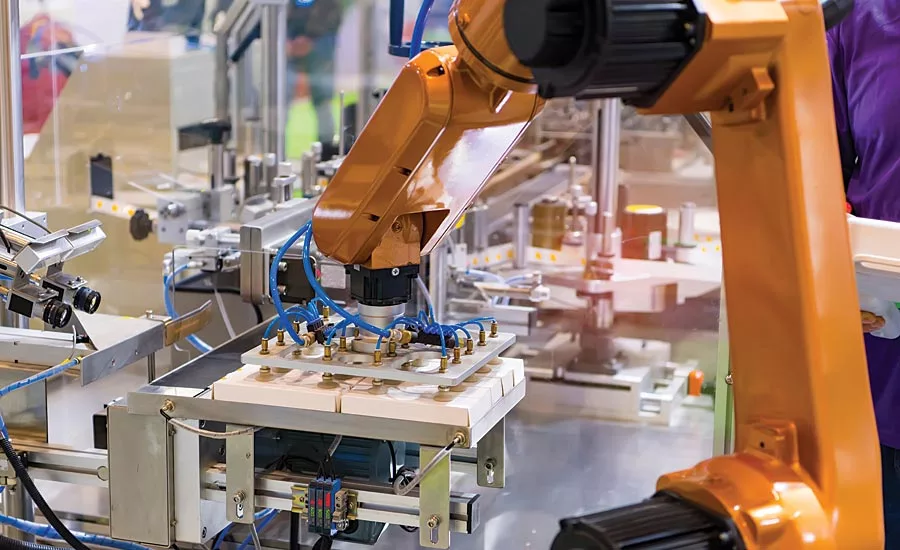
Automation is the future of manufacturing. Production plants run almost entirely by robots are already operating around the world. These plants allow for a decrease in labor costs while increasing production. At the FANUC Corp. in Japan, robots work around the clock manufacturing more than 20,000 robots each month. For now, robot-run plants are an exception to the rule. But automation on a smaller scale is increasingly being embraced by manufacturers in the quest to get faster.
For example, CNC machines have always required highly skilled operators to run them. Thanks to new technologies, CNCs are becoming more computer-based. Many can make parts without having an operator present. Others need only minimal human interaction. Automated CNCs typically require a programmable logic controller (PLC), which can be used to control an assembly line, robotic device, or process that requires high reliability. The PLC connects to the CNC machine to run the process and sends the job data to an ERP system.
This has fostered another innovation called “lights out” manufacturing. Using automated CNCs, manufacturers can make parts all night long without needing anyone to clock in or out of the job. This allows the plant to run three shifts with very minimal staff for the second and third shifts, thereby increasing production and reducing labor costs.
This is just one example of how automation, when paired with ERP software and other technologies, enables manufacturers to lower costs and increase speed without sacrificing quality. At this point, most manufacturers are a long way from being able to automate the majority of their production processes. But as ongoing advances enable machines and humans to get better at talking to each other, production lines and in some cases entire plants will become increasingly automated.
Automation should be approached from a strategic perspective. Start by picking one problem that slows down your manufacturing process. Then define it, analyze how automation can solve it, and identify the expected benefits and return on investment.
Most of all, be sure to align your automation strategy with your business and operations strategies. Every automation project should have two essential elements—a clearly defined purpose and an outcome that aligns with and supports your long-term business goals.
2. Increasing use of KPIs and Dashboards.
Thanks to ERP software and the Internet of Things (IoT), today’s manufacturers have more data at their fingertips than ever. Yet, by itself, having mountains of data about your business doesn’t guarantee smart decisions, winning strategies or faster production times. It’s what you do with the data that makes the difference.
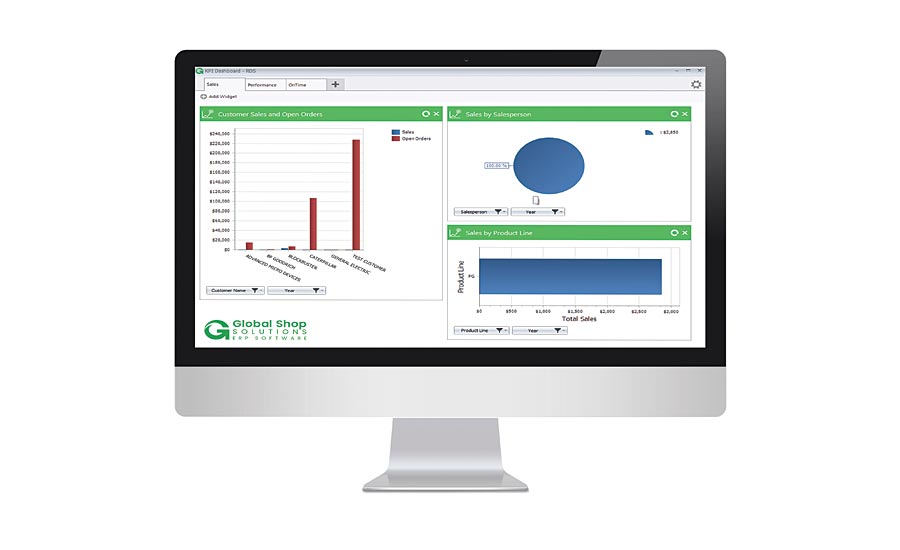
When it comes to analyzing the high-level data needed to make short-term and long-term business decisions, few tools can match the speed and flexibility of key performance indicators (KPIs) and dashboards. These powerful visual tools enable manufacturers to bring together data about the company’s most important performance metrics in one, easy-to-access dashboard. This enables management to:
- Quickly identify customer, product and industry trends
- Analyze the current and future health of the business
- Forecast future customer needs and products/solutions to meet them
- Make faster, better decisions regarding products, product lines, capital investment and more
KPIs and dashboards are available as standard or optional features on many ERP software systems. The main advantage with having KPIs and dashboards built into your ERP is that it eliminates the need for another software program that resides outside of an ERP system. Business intelligence software typically offers a wider range of tracking and analysis capabilities.
To get the most out of KPIs and dashboards, determine which KPIs are most important to achieving your business goals. Then track them on a daily, weekly, monthly, quarterly and annual basis. These are your “results” indicators. They provide both short-term and long-term insights into what’s happening in your business.
Next, identify leading metrics for your results indicators. For example, the number of contracts signed each month or inventory purchases. These and other leading metrics help you determine in advance whether you’re on track to achieve the results you want—critical data for making adjustments to existing strategies.
Most KPI and dashboard solutions come with certain KPIs—sales, margins, labor performance, quality, scrap, etc.—built in. The best solutions also allow for some customization so you can format the data the way you need to see it. When you understand the performance metrics that matter to your business and have that data instantly at your fingertips (instead of spending valuable time digging for it) you’ll make better decisions faster and with more confidence.

3. Going mobile.
Sitting at a PC to key in inventory and material movement data is one of the most inefficient and error-prone tasks in a manufacturing business. That’s why the third trend, going mobile on the shop floor, is taking the manufacturing industry by storm.
Installing wireless networks and using mobile devices to electronically collect data from anywhere on the shop floor is revolutionizing everyday tasks ranging from inventory management to material movement, capturing labor data, managing personnel, and more. Using barcode scanners, mobile tablets and other hand-held devices, shop floor personnel can do the following and more from anywhere within the plant:
- Clock in and out of jobs
- Issue material
- Track bin-to-bin movements as they
- are made
- Ship finished goods
- Communicate quickly
- Improve safety in the workplace
Assign codes to each material transaction to instantly find out which job was associated with the transaction, what bin it affected and who did the transaction, all in real-time.
Mobile technology allows supervisors to come out from behind their desks and see what is happening from anywhere on the shop floor. Sales reps can use mobile customer relationship management apps to remotely handle customer transactions. All it takes is a mobile device that can access the web and an ERP program to process the communication and store the data in the system.
In most cases, mobile materials management starts with barcoding every part or material received. From there, tracking material movement can be performed anywhere on the shop floor with a hand-held scanner. Inventory is consistent and accurate. You know what you have and where it is in real time. Operators aren’t standing around waiting for parts to come in, which allows jobs to be completed on time.
Mobile technology greatly reduces the time required to issue material to work orders. Simply scan the work order router and the materials being picked. Then print a label (using small hand-held or equipment-mounted printers) that identifies the department and the job. The ERP system automatically updates the data, so it’s fast, efficient and error-free.
Many manufacturers are also using mobile shipping. A worker on the floor scans the pick list and the finished goods to validate that the correct items are being shipped. They complete the shipment directly from the handheld device, and the paperwork automatically prints to a designated laser printer.
Aside from speed and accuracy, one of the real drivers of mobile manufacturing is cost. For most companies, going mobile doesn’t require a huge capital investment. The main expenses are installing the wireless system and purchasing the barcode scanners and mobile devices. The learning curve is short, which allows the transition to mobile to be relatively painless.
The Unending Quest for Speed
The business world, including the manufacturing sector, seems to move a little faster every day. As long as customers continue to demand parts and products with very short lead times, manufacturers will strive to reduce production times while maintaining quality and minimizing cost. As of today, automation, KPIs/dashboards and mobile technology are leading trends in the headlong rush to achieve speed on the shop floor. As new technologies are introduced and the IoT matures, who knows what trends will drive the manufacturing industry 10 years from now?
Looking for a reprint of this article?
From high-res PDFs to custom plaques, order your copy today!