Vision & Sensors | Trends
The Evolution of Machine Vision in Industrial and Non-Industrial Markets
Machine vision continues to bridge the gap between human perception and technological capabilities, shaping the future of industries and innovation alike.
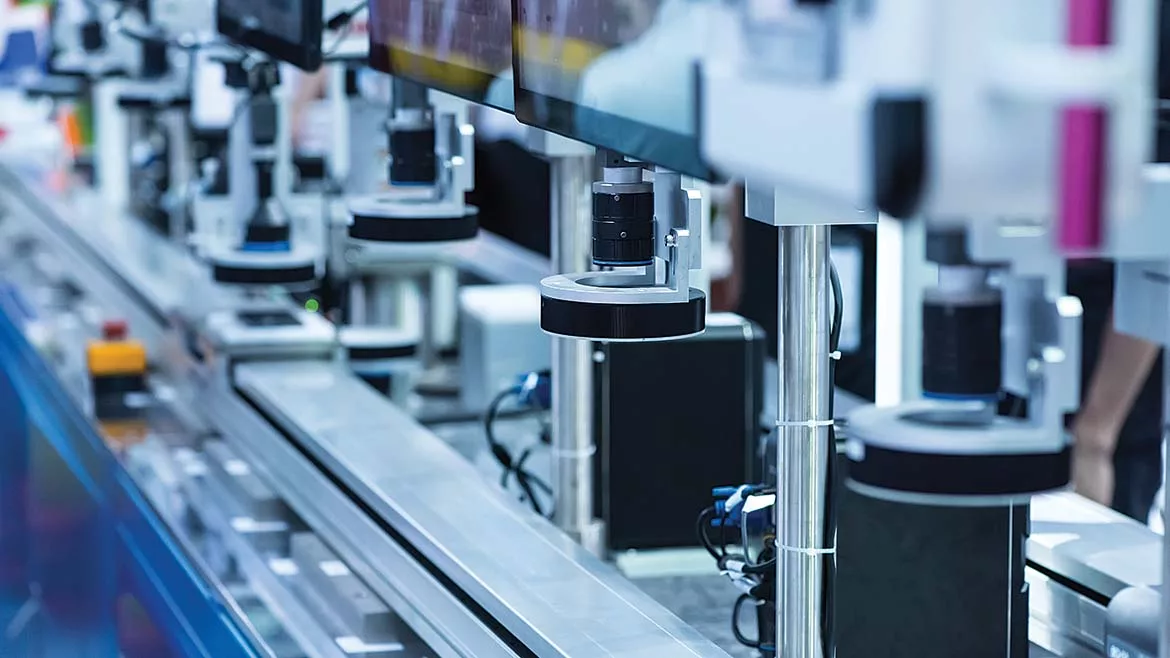
Image Source: asharkyu / Shutterstock
Machine vision has undergone significant acceleration over the past four decades, from its roots during the 1980s when the Automated Imaging Association (AIA) was established. The evolution continued through the 1990s, with the development of multiple sensors and interfaces. However, it was in the 2000s that the demand for automation and computer vision started to surge. Despite the increasing availability and choice of technologies, sensor integration remained complex, particularly with CCD sensors. Any advancement in automation technology was considered a significant leap forward, driving integrators to explore ways to incorporate vision into their systems. Yet the market was still quite small to justify specialized solutions at this point, which led to the use of “general-purpose” machine vision cameras. For example, a 1.3MP monochrome USB3 camera could be used in diverse industries, including semiconductor, metrology, food inspection, and life sciences. With the maturation of technology over the last decade, there has been a shift towards more specialized solutions, marking a departure from the era of “general-purpose” machine vision cameras toward more purpose-built specialized solutions. This article will shed light on the factors that continue to shape today’s and tomorrow’s requirements for imaging.

External Factors Influencing Machine Vision
Various external factors have played pivotal roles in shaping the advancement of machine vision technology. On the sensor side, the proliferation of smartphones, and replacements for DSLRs and professional photography equipment, has significantly influenced sensor development. The introduction of the Mobile Industry Processor Interface (MIPI) standard has facilitated the integration of sensors, making them more accessible and easier to incorporate, especially in non-industrial and embedded vision applications. Additionally, the promise of autonomous vehicles has led to the deployment of large numbers of cameras, further driving sensor advancements. The expansion of the security camera market and the rise of virtual reality have also contributed to the push for low-cost and easy-to-integrate sensor technology.
Outside of sensors, interface technology is becoming more accessible. The demand for low-cost networking equipment to support high bandwidth applications has spurred developments in network infrastructure, with increasing availability and decreasing costs of high-speed and high-reliability networking solutions at 100 Gigabit/second and higher. Along with high-speed networking equipment, USB3 is a popular machine vision camera interface. The USB standard is actively under development with USB3.2 Gen1, USB3.2 Gen2, and USB3.2 Gen2x2 now. USB3.2 Gen2 is becoming more popular to support smartphones as well as virtual reality headsets that require longer, reliable, and affordable cables for video streaming.
On the host processing side, advancements in multi-core CPUs and DDR memory have enabled high-performance and near real-time image processing at lower costs than traditional PC systems. Industry giants like Nvidia and Qualcomm are spearheading the development of purpose-built hardware for embedded vision applications, focusing on markets such as robotics, smart cities, and smart retail. With the looming advancements in AI expected to materialize in the next five years, vision applications are poised for a transformative shift towards automation.
Markets, Applications, Use Cases
Integrators and vision experts are taking advantage of these new technologies across various markets and applications. In the industrial sector, there is an emphasis on quality control and inspection applications, particularly in verticals such as electronics, semiconductors, food and beverage processing, pharmaceuticals, and logistics. In the non-industrial sector, imaging is moving towards embedded vision with applications in augmented reality (AR), virtual reality (VR), sports analytics, metrology, construction, and asset management.
In industrial markets, machine vision cameras play a critical role in ensuring quality control, enhancing reliability, facilitating fast decision-making, and enabling high-speed output in manufacturing processes. These factors are critical to minimizing downtime and improving productivity. Integrators are exploring doing more on the camera today with trends towards smart cameras with some intelligence inside to help with fast decision-making. Along with this, the more complete and ready for integration the camera is, with software or peripheral controls, the more attractive it is to the integrator. Although cost is always a consideration, industrial manufacturing equipment tends to be a larger capital expenditure and the cameras are only a small portion of that cost.
Unlike industrial applications primarily focused on efficiency and quality control, non-industrial use cases often revolve around leveraging visual data as an integral component of the product itself. This is seen across AR and VR, as well as metrology, asset management, and microscopy. In many of these applications, the camera is an integral part of the product, and often part of an embedded system. In some applications like entertainment, the imagery from the camera is used to drive video game engines like Unity or Unreal Engine to bring together the real world. Non-industrial applications use visual imagery as the cornerstone of product innovation and user engagement.
Technology Trends
Many trends are causing this specialization between industrial and non-industrial users. The industrial market is focused on interfaces like Ethernet, CoaXpress (CXP), and Camera Link High-Speed (CLHS). Conversely, the embedded market favors USB connectivity, with a growing preference for MIPI interfaces. Advancements in embedded processing, particularly with platforms like Nvidia Jetson, are driving innovation in embedded vision applications. However, there is a spectrum of requirements concerning image and sensor quality, with considerations such as color versus monochrome and the trade-off between size, weight, power (SWaP), and performance.
In the industrial sector, there is a notable trend toward high-speed interfaces to meet the demands of real-time data processing and high-resolution imaging. Interfaces such as Ethernet, CXP, and CLHS have gained prominence for their ability to deliver robust connectivity and high bandwidth, essential for industrial automation and quality control applications. Moreover, the standards are developing towards new Ethernet standards like RDMA over Converged Ethernet (RoCE), which offer enhanced performance and reliability, particularly in mission-critical environments.
Furthermore, industrial customers prioritize sensor quality, often opting for monochrome sensors to achieve higher sensitivity in quality control and inspection tasks. Conversely, considerations such as size, weight, and power are less critical for industrial customers, who prioritize performance and durability in ruggedized environments. As a result, industrial-grade machine vision systems are designed to withstand harsh conditions and operate reliably in demanding industrial settings.
In the non-industrial market, trends in embedded vision are driven by a different set of requirements and applications. USB3 remains popular, providing a versatile and widely compatible interface for embedded vision systems and applications requiring mobile laptops like handheld metrology. However, there is a growing inclination towards adopting MIPI (Mobile Industry Processor Interface) interfaces, especially in mobile and embedded devices. There are a growing number of both MIPI sensors that can be sourced directly from the sensor manufacturers, as well as MIPI camera modules with built-in image processing and API control from traditional machine vision camera manufacturers.
Advancements in embedded processing have propelled the development of powerful embedded vision platforms such as Nvidia Jetson. These platforms offer seamless integration with MIPI-connected sensors, enabling developers to harness the full potential of embedded vision technology for diverse applications. MIPI reduces the complexity of integrating and controlling the sensor, and it also provides a lower level data transfer which reduces CPU overhead and streamlines data processing.
Moreover, non-industrial customers often prioritize color imagery for its ability to convey important subject information and appeal to human-viewed imagery in applications such as medical imaging and VR environments. The vibrant color reproduction enables accurate diagnosis in medical imaging and enhances the realism of virtual environments, enriching user experiences and interactions.
The non-industrial market exhibits a growing emphasis on optimizing SWaP for embedded vision systems, balancing performance with portability and energy efficiency. As embedded vision applications are used across diverse domains, from consumer electronics to IoT devices, there is a growing demand for compact and energy-efficient solutions that deliver high-performance imaging capabilities without compromising on form factor or battery life.
In conclusion, technology trends in machine vision reflect the evolving needs and applications of both industrial and non-industrial markets. While industrial customers prioritize performance and reliability in high-speed interfaces, non-industrial customers seek flexibility and versatility in an optimized package with low size, weight, and power for their specific use cases.
Integration and Conclusion
Integration of vision components into functional systems has become more streamlined with the availability of specialized solutions tailored to specific applications. Whether it’s selecting rugged cameras for industrial environments or optimizing SWaP for embedded systems, customers now have a multitude of options to choose from. As we look towards the future, the choice of camera for vision projects has become more nuanced, reflecting changing expectations and the increasing importance of vision in driving automation and efficiency improvements. Ultimately, machine vision continues to bridge the gap between human perception and technological capabilities, shaping the future of industries and innovation alike.
Looking for a reprint of this article?
From high-res PDFs to custom plaques, order your copy today!