Imaging
Application of High-Speed Machine Vision in Industrial Inspection: Technical Capabilities, Scenarios, and Future Trends
High-speed machine vision technology has become a revolutionary tool for capturing transient processes and micrometer level defects.
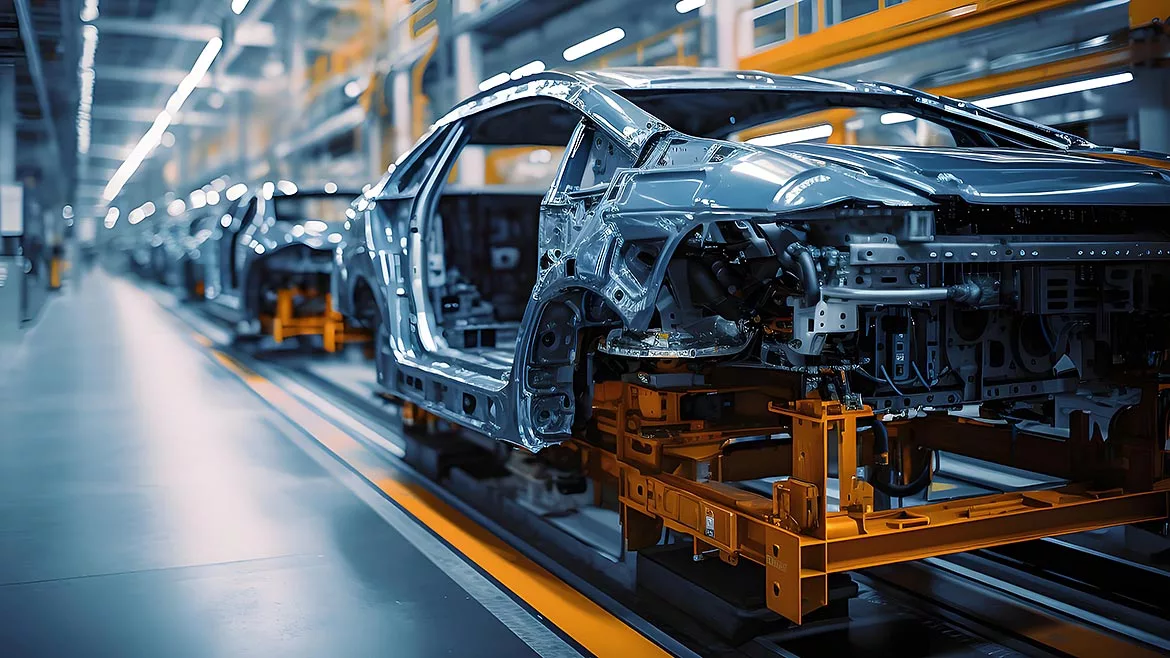
Image courtesy of Phoenix Jiangsu
In modern manufacturing, the demand for precision and efficiency constantly challenges the limits of traditional detection methods. High speed machine vision technology - combining ultra high-speed imaging systems with advanced algorithms - has become a revolutionary tool for capturing transient processes and micrometer level defects.
This article systematically explores how high-speed imaging technology empowers industrial quality inspection from three dimensions: technical principles, industrial applications, and development trends, and explores the challenges and breakthrough paths it faces.
Development of visual technology
Initially, we relied on human eyes to discover this world. Natural imaging system can distinguish millions of colors and adapt to dynamic and multi field environments. But, the human eye cannot see objects that are so small, so fast, with non-visible light, sometimes immeasurable, we need some instruments to help us at this point. For example, microscopes bring us to a microscopic world. Spectrometers, IR thermal imagers, and other instruments help us to explore the world of non-visible light.
Those traditional instruments have solved most of the problems, but they cannot exceed the speed limit. High-speed machine vision has emerged in response to the demands of intelligent manufacturing, which can increase time resolution from milliseconds to microseconds or even nanoseconds. In a sense, a high-speed camera is called a microscope of time.

Fundamentals of High-Speed Imaging Technology
Data acquisition and processing are the core technologies of a high-speed camera, it can generate tens of GB of data per second. It is too large. So how does it work? It has three steps with three core modules. Firstly, image sensor, we call it CMOS. CMOS converts light into electrical signals, forming the fundamental components necessary for generating image data. However, imaging is not yet complete at this stage. Secondly,Data Processor, which deal with and generate digital images based on the data from CMOS, and perform various image processing in this section. Thirdly, Storage Module, with undertake the task of storing the data generated by the image processor.
However, completing all those steps requires complex circuit design to ensure no errors occurred in those programs. It is interesting but challenging at the same time.
Industrial application scenarios: solving complex quality problems
Let’s start with a question from daily life: in recent years, whether you use smartphones from Apple, Samsung, Huawei, Xiaomi, or other brands, even though they have larger screens and more complex structures, in fact, when they fall from high places to the ground, most of the time only minor flaws are produced, and the screens are even intact. Ten years ago, this was unimaginable.
According to a statistics, in the 1.5-meter drop test of a well-known brand’s flagship mobile phone in 2014, the screen breakage rate was as high as 70%, and the internal parts looseness rate was also as high as 50%. By 2024, this number can be controlled within 10%. Why are our phones becoming more and more resistant to drops?
Behind this huge transformation, high-speed cameras play a crucial role. When the phone slides from the hand and touches the ground, the time is very short, less than a few hundred microseconds, and the high-speed camera can capture many details of this process. Under the ultra slow lens of a high-speed camera, one can clearly see how the cushioning material of the phone rapidly deforms and cleverly disperses the impact force when it comes into contact with the ground; How can strengthened glass screens resist the rapid spread of cracks during collisions based on their own characteristics. By capturing images with these high-speed cameras and using high-precision image processing software to quantitatively analyze the stress concentration points at each drop moment, engineers are able to conduct in-depth analysis and improvement, continuously optimizing the structure and materials of mobile phones.

In the era of intelligent manufacturing, with the increasing demands for efficiency and precision, industrial research and testing are facing unprecedented challenges. For example, the fluctuation of the welding pool and the splashing of welding slag are lost in an instant, while the vibration of precision machinery is conducted at the micrometer level. These changes are hidden within every millimeter of time scale and are important factors affecting research and production quality. When the physiological limits of human vision encounter smaller time scale process windows, high-speed cameras with their ability to capture thousands of frames per second are reshaping the underlying logic of industrial quality control.
As one of the most professional photogrammetric instruments in the field of scientific research, high-speed cameras have also been increasingly used in industrial settings in recent years.
In the biomedical field, high-speed cameras can help us obtain dynamic data of blood glucose meters during the process of blood collection needle puncture.
In the field of EV lithium battery testing, high-speed cameras can help engineers observe the time and position relationship between the bulging point and the ignition point during the battery puncture process.
In the field of 3C research and development, high-speed cameras can help engineers analyze the stress concentration points when a phone or a pad falls from a high place to the ground, and provide them with the necessary data to design a more durable phone.
In the field of semiconductor manufacturing, high-speed cameras can quickly detect and locate chip defects, improving the yield of defective products in the chip production process.
In the field of welding, by combining high-speed cameras with special filtering methods, we can observe the transition of molten droplets, the state of the molten pool, and the splashing trajectory of welding slag through strong light during the welding process, thereby helping engineers analyze the optimal welding voltage and current to improve welding quality.
In the field of automotive collision testing, high speed cameras capture the details of vehicle impact moments, from the degree of deformation of the body to the splashing trajectory of components, all of which can be clearly recorded, providing key data for the evaluation and improvement of automotive safety performance.
There are so many such applications, which will not be listed one by one here. In summary, high-speed machine vision is playing an increasingly important role in the field of industrial inspection.

Future Trends
High-speed machine vision based on high-speed cameras is driving industrial inspection from “post” to “process monitoring,” from “macro statistics” to “micro traceability.” With the continuous advancement of sensor technology and multi physics modeling, this technology will unleash its potential in higher value scenarios, providing a zero defect quality foundation for intelligent manufacturing.
However, large-scale real-time data processing technology is still in the development stage. Despite facing severe challenges, with the maturity of heterogeneous computing architectures and the development of GPU and AI technologies, lower cost solutions are expected to make breakthroughs and be widely applied in the future. The progress in this field will not only drive the development of imaging technology itself, but also profoundly affect artificial intelligence, automation, and basic scientific research.
SinceVision is a world-class sensor and high-speed camera technology manufacturer. Our sensor technology is designed for various industries with specific applications. We work across diverse sectors, including food, pharmaceuticals, consumer electronics, lithium battery, semiconductor, photovoltaic, automotive, aerospace, civil engineering, and many more. Our solutions includes 3D laser profilers, high-speed cameras, laser displacement sensors, spectral confocal displacement sensors, full-spectrum sensors, and through-beam edge sensors.
Looking for a reprint of this article?
From high-res PDFs to custom plaques, order your copy today!