Industry 4.0
Setting Up Data Capture and Digitalization with IO-Link
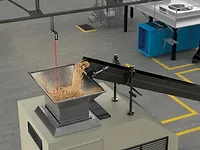
As industries increasingly adopt the principles of Industry 4.0, the need for reliable, real-time communication between sensors, actuators, and control systems becomes crucial.

Image Source: Baumer
In today’s rapidly evolving industrial landscape, data capture and digitalization are pivotal in driving efficiency, enabling predictive maintenance, and making informed decisions. As industries increasingly adopt the principles of Industry 4.0, the need for reliable, real-time communication between sensors, actuators, and control systems becomes crucial. IO-Link, a standardized I/O technology, offers a powerful solution for seamless data exchange across various devices within an industrial network. This paper explores the essential components and steps required to set up an IO-Link system for data capture and digitalization, highlighting the benefits it can bring to modern industrial operations.
Core Components of an IO-Link System
An effective IO-Link setup requires several key components, each playing a crucial role in ensuring smooth and reliable data capture and communication. At the heart of this system is the IO-Link master. This device acts as the central hub, interfacing between IO-Link devices – such as sensors and actuators – and the control system. The IO-Link master connects to a higher-level fieldbus or industrial Ethernet network, which facilitates the efficient transfer of data to and from the control system. The selection of an appropriate IO-Link master is vital, depending on the specific network protocol employed in the industrial environment, whether it be PROFINET, EtherNet/IP, Modbus, or other protocol. The IO-Link master must be compatible with these protocols to ensure seamless integration into the existing network infrastructure.
Equally important are the IO-Link devices themselves, which include a wide range of sensors and actuators equipped with IO-Link interfaces. These devices are responsible for capturing diverse types of data, such as temperature, pressure, flow, proximity, and more, depending on the application. When selecting IO-Link devices, it is essential to ensure they are fully compatible with the IO-Link system and can support the required data rates and features necessary for the specific industrial application. The versatility of IO-Link technology allows for the integration of a broad spectrum of sensors, making it suitable for various industrial environments, from manufacturing to process automation.
To connect these devices to the IO-Link master, standardized 3-wire unshielded cables are typically used. These cables, combined with robust M12 connectors, ensure reliable and straightforward connections within the system. The sensor to master cable connections have a maximum length of 20m, but one can daisy chain masters together if necessary. M12 connectors are particularly favored in industrial settings due to their durability and ease of use, contributing to a more efficient installation process and ensuring the physical integrity of the network.
A stable power supply is another critical component of the IO-Link system. It is essential to ensure that the power supply meets the voltage and current requirements of the IO-Link master and all connected devices. A reliable power source is vital for maintaining the stability of the network and preventing data inaccuracies or system failures due to power fluctuations or interruptions.
At the core of managing the IO-Link network is the control system, often embodied by a programmable logic controller (PLC). The control system is responsible for orchestrating the overall operation and data processing within the network. It must be compatible with the fieldbus or Ethernet network utilized by the IO-Link master, ensuring that data can flow seamlessly between the devices and the control system. The control system’s role is not only to process the data captured by the IO-Link devices but also to integrate this data into higher-level decision-making processes, making it a crucial element of the system.
RELATED ARTICLES
Another component in an IO-Link system is the IO Device Description (IODD) file. The IODD file serves as a blueprint that provides all the necessary information about an IO-Link device, including its capabilities, parameters, and communication protocols. These XML-based files are standardized, ensuring that they can be interpreted across different platforms and devices. When integrating a new IO-Link device into the system, the IODD file is used by the control system or configuration software to recognize the device, understand its functions, and configure it accordingly. This includes details such as the device’s identification data, process data structure, diagnostic information, and parameter settings. The use of IODD files simplifies the integration process, allowing for easy configuration and ensuring that the IO-Link master and control system can communicate effectively with the device. This standardization also facilitates the quick replacement of devices, as the control system can automatically configure a new device using its IODD file, minimizing downtime and reducing the complexity of system maintenance.
Steps to Implement an IO-Link System
Successfully implementing an IO-Link system begins with a planning and design phase. The initial phase involves identifying the specific types and number of IO-Link devices required for the application. Once the devices are selected, the next step is to design the network layout. This involves determining the optimal placement of the IO-Link master and devices to maximize communication efficiency.
Following the planning phase, the physical installation of the IO-Link master and devices takes place. This involves mounting the devices in their designated locations, ensuring they are securely connected to the IO-Link master using the appropriate cables and connectors. The physical connection between the IO-Link master and the control system is then established via the selected fieldbus or Ethernet network.

Once the physical installation is complete, the configuration phase begins. During this phase, the communication parameters for each IO-Link device are defined using the configuration software. Device IDs are assigned, and crucial settings such as data transmission rates and sensor thresholds are configured to align with the operational requirements. This phase is where the control system is integrated with the IO-Link master and devices, creating a unified network that allows data to flow seamlessly between all components.
Testing and validation are essential steps that ensure the system operates as intended. Initial tests should be conducted to verify that data is accurately captured and transmitted from the IO-Link devices to the control system. Diagnostic tools are employed to monitor the status of each device, checking for any potential issues that could affect the system’s performance. Any issues identified during this phase should be addressed promptly to avoid future disruptions.
Following successful testing and validation, the focus then shifts to data integration and analysis. Software tools can be implemented to analyze data, providing valuable insights that can inform decision-making and operational strategies. The integration of feedback loops or control actions based on this analysis can further enhance the efficiency and responsiveness of the system, enabling real-time adjustments to be made in response to changing conditions.
The Strategic Advantages of IO-Link
The implementation of an IO-Link system for data capture and digitalization offers numerous strategic advantages that extend beyond the immediate operational benefits. One of the most significant benefits is the improved data accuracy that IO-Link provides. By enabling high-quality, real-time data capture from sensors and actuators, IO-Link enhances the precision of information available for decision-making. This level of accuracy is particularly critical in applications where precise measurements and control are essential, such as in manufacturing and process automation. The ability to rely on accurate data leads to better-informed decisions, ultimately driving greater efficiency and productivity.

Another substantial advantage of IO-Link systems is the enhanced diagnostics capability. IO-Link technology provides detailed diagnostic information that supports predictive maintenance and efficient troubleshooting. By continuously monitoring the status and performance of devices within the network, potential issues can be detected early, preventing costly downtime and ensuring consistent operational reliability. This proactive approach to maintenance not only reduces the likelihood of unexpected failures but also extends the lifespan of the equipment, further contributing to cost savings.
The flexibility and scalability of IO-Link networks make them an ideal choice for dynamic industrial environments that require adaptability. The ease with which devices can be added or replaced within the network without major modifications allows for scalable solutions that can grow alongside the business. This flexibility minimizes disruption and reduces the time and cost associated with system upgrades, making IO-Link a future-proof solution that can evolve with changing industrial needs.
Finally, IO-Link systems offer significant cost efficiency by reducing wiring and installation expenses. The use of standardized 3-wire cables simplifies the installation process, while the ability to integrate multiple devices into a single IO-Link master reduces the need for extensive cabling. These factors contribute to lower overall installation costs, making IO-Link a cost-effective choice for industrial data capture and digitalization. Moreover, the long-term operational efficiencies gained through improved data accuracy, enhanced diagnostics, and system flexibility further amplify the cost benefits of implementing an IO-Link system.
Conclusion
The deployment of IO-Link technology for data capture and digitalization represents a transformative step toward fully realizing the benefits of Industry 4.0. By enabling seamless communication and data exchange across a wide range of devices, IO-Link enhances operational efficiency, improves diagnostics, and offers the flexibility needed to adapt to evolving industrial demands. Through careful planning, installation, configuration, and maintenance, industries can leverage the full potential of IO-Link systems, leading to more informed decision-making, greater overall productivity, and a competitive edge in today’s fast-paced industrial landscape.
Looking for a reprint of this article?
From high-res PDFs to custom plaques, order your copy today!