Quality Magazine logo
search
cart
facebook twitter linkedin youtube
  • Sign In
  • Create Account
  • Sign Out
  • My Account
Quality Magazine logo
  • NEWS
  • PRODUCTS
    • FEATURED PRODUCTS
    • SUBMIT YOUR PRODUCT
  • CHANNELS
    • AUTOMATION
    • MANAGEMENT
    • MEASUREMENT
    • NDT
    • QUALITY 101
    • SOFTWARE
    • TEST & INSPECTION
    • VISION & SENSORS
  • MARKETS
    • AEROSPACE
    • AUTOMOTIVE
    • ENERGY
    • GREEN MANUFACTURING
    • MEDICAL
  • MEDIA
    • A WORD ON QUALITY PUZZLE
    • EBOOK
    • PODCASTS
    • VIDEOS
    • WEBINARS
  • EVENTS
    • EVENT CALENDAR
    • IMTS
  • DIRECTORIES
    • BUYERS GUIDE >
      • Supplier Insights
    • NDT SOURCEBOOK
    • VISION & SENSORS
    • TAKE A TOUR
  • INFOCENTERS
    • Digital Quality Management Systems
    • NEXT GENERATION SPC & QUALITY ANALYTICS
  • AWARDS
    • ROOKIE OF THE YEAR
    • PLANT OF THE YEAR
    • PROFESSIONAL OF THE YEAR
  • MORE
    • Expert Columns
    • NEWSLETTERS
    • QUALITY STORE
    • INDUSTRY LINKS
    • SPONSOR INSIGHTS
  • EMAG
    • eMAGAZINE
    • ARCHIVES
    • CONTACT
    • ADVERTISE
  • SIGN UP!
The Quality Industry Voices ManagementSpeaking of Quality

Speaking of Quality | Jim Spichiger

My Favorite of the Seven Basic Quality Tools

ASQ identifies the basic quality tools as: data collection sheets, histograms, Pareto charts, scatter diagrams, cause and effect diagrams, flow charts/process maps, and control charts.

By Jim Spichiger
Businessman using a computer with a virtual image of an analysis for process and workflow automation flowchart floating above his laptop.

Image Source: Khanchit Khirisutchalual / iStock / Getty Images Plus

October 3, 2024

ASQ Fellows are recognized as experts within the quality field because to attain this status one must publish, train, present, serve, and attain a certain level of profession prominence. One of the distinct privileges of being a Fellow is being invited to share knowledge and expertise. This month I have the honor to speak at the ASQ Columbus (Ohio) Section’s annual conference; a one-day conference that has consistently drawn over 150 attendees. To address this year’s theme, “What is in Your Toolbox?”, I chose to speak about the seven basic quality tools. ASQ identifies the basic quality tools as: data collection sheets, histograms, Pareto charts, scatter diagrams, cause and effect diagrams, flow charts/process maps, and control charts. A Google search on “ASQ seven basic quality tools” will provide you an extensive and exhaustive source of valuable information; please do so.

In my 30+ years’ experience as a quality professional I have used all of these tools, some a few times but most on innumerable occasions. Unlike my children, I have a favorite, the process map because I have found it simple to use, easy to explain and frankly, most helpful to me, especially when facilitating Kaizens and Lean Six Sigma projects. For those who do not know, ASQ’s quality glossary defines flow chart as “a graphical representation of the steps in a process.” Simply, it is a visual depiction of each step of a process, shown in sequential order. It shows how the input(s) of a process are transformed into the output(s).

MORE SPEAKING OF QUALITY COLUMNS

  • Collaboration is the Biggest Challenge
  • Creating a Space for NextGens
  • Businesses Have Endless Supply of Maladies that Need to be Addressed

Process maps are similar to flow charts but generally provide more detail; I describe a process map “as a flow chart on steroids.” When I create a process map, I typically use Post-It notes and lay out the flow, step-by-step, and then go back and add pertinent information describing who or what (if automated) performs the task, how the task is performed (Is it a discussion? Is it an email? etc.), what equipment/tools is used (e.g. phone, specific software, etc.), what documents are used (Form XYZ, Procedure 123, etc.). If applicable, I also include the metrics associated with each process step, and lastly document relevant information, notes, etc.

On the first day of a project, I know little to nothing about my coworker’s process but after creating a process map I know exactly what is happening.

Why is the process map my favorite tool? There are several reasons. First and foremost, it provides me a visual representation of the process which allows me to quickly understand what is happening. Often, I am asked to facilitate a Kaizen and Lean Six Sigma project in order to help associates within my company solve a difficult problem. On the first day of a project, I know little to nothing about my coworker’s process but after creating a process map within an hour or two, I know exactly what is happening. The completed process map shows the inputs, each step of the process, who does what, how they do it, what tools and documents they use, what metrics are tracked, the process outputs, etc. Typically, once seeing the entire process laid out in front of them, the process owner(s) will also gain a better understanding of the intricacies of their process.

Upon reviewing a process map, one should be able to identify waste, bottlenecks, delays, redundancies, illogical sequences, gaps and disconnects, and opportunities for both errors and improvement. Identifying these pain points is one advantage for taking the time to create a process map. Often, once the process map has been created, process owners will return to work and make quick adjustments in order to immediately make an improvement. Simple and easy fixes that can add value without causing harm may be done anytime during a Lean Six Sigma project; there is no need to wait until project completion in order to make a change that will better serve the customer.

Besides gaining a complete understanding of the process and quick wins, the other reasons that the process map is my favorite tool are its simplicity and the fact they are fun to create! Formal training is not required to create or work with a process map because it only takes a few minutes, probably less, for people to understand the concept of laying out sequential flow. The fun part is unraveling the puzzle. You start with a blank sheet (or conference room wall) and then methodically work through process by slapping up Post-It notes. These sticky notes allow for quick adjustments in case one forgets a step, or wishes to break down a task into more detail.

Where can you find more information about process maps and the other basic quality tools? I always start with ASQ. Not only does ASQ’s quality glossary provides an extensive list of information but ASQ’s web site has information on e-learning and face-to-face training courses, webcasts, articles, books, and much, much more.

My advice to those who wish to make improvements within their organization is to start by using the basic quality tools; move on to the more complexity quality tools when it is necessary. You will see that creating and analyzing a process map will do wonders quickly and easily. Keeping it simple is always best. Good luck with your continuous improvement efforts.


    KEYWORDS: American Society for Quality (ASQ) data collection manufacturing metrology Pareto principle

    Share This Story

    Looking for a reprint of this article?
    From high-res PDFs to custom plaques, order your copy today!

    Qm0620 clmn speaking of quality author james spichiger

    Jim Spichiger is a Lean Six Sigma Master Black Belt with over 35 years of experience in quality. He is the past chair of the ASQ Inspection Division and a long time ASQ member leader.

    Recommended Content

    JOIN TODAY
    to unlock your recommendations.

    Already have an account? Sign In

    • 2024 Quality Rookie of the Year Justin Wise 1440x750px banner with "Quality Rookie of the Year" logo inset

      Meet the 2024 Quality Rookie of the Year: Justin Wise

      Justin Wise is an exceptional individual who has been...
      Aerospace
      By: Michelle Bangert
    • Man with umbrella and coat stands outside while it rains at night looking at a building.

      Nondestructive Testing: Is there an ethics problem?

      I was a whistleblower who exposed fraudulent activities...
      NDT
      By: Dale Norwood
    • Unraveling Deflategate: Football stadium with closeup of football on field

      Unraveling the Tom Brady Deflategate

      The Deflategate scandal erupted following the 2014 AFC...
      Measurement
      By: Greg Cenker and Henry Zumbrun
    Manage My Account
    • eMagazine Subscriptions
    • Newsletters
    • Online Registration
    • Subscription Customer Service
    • Manage My Preferences

    More Videos

    Sponsored Content

    Sponsored Content is a special paid section where industry companies provide high quality, objective, non-commercial content around topics of interest to the Quality audience. All Sponsored Content is supplied by the advertising company and any opinions expressed in this article are those of the author and not necessarily reflect the views of Quality or its parent company, BNP Media. Interested in participating in our Sponsored Content section? Contact your local rep!

    close
    • Key Takeaways for Quality Leaders
      Sponsored byComplianceQuest

      Key Takeaways for Quality Leaders from the 2026 Gartner Magic Quadrant™ for QMS

    • This image shows a person seated next to a Bobcat T66 compact track loader.
      Sponsored byPolyWorks by InnovMetric

      Supercharging Digital Gauging at Bobcat North America

    • Dorsey Calibration Lab photo by Tom LaBarbera Picture this Studios
      Sponsored byDorsey Metrology International

      Ensuring Product Quality in a Competitive Manufacturing Landscape

    Popular Stories

    This image shows a person seated next to a Bobcat T66 compact track loader.

    Supercharging Digital Gauging at Bobcat North America

    a professional in the aviation field performing maintenance, repair, and overhaul (MRO) work

    Manufacturing Retention: Strategies for Improving Company Culture, Engagement and Skill Development

    Dorsey Calibration Lab photo by Tom LaBarbera Picture this Studios

    Ensuring Product Quality in a Competitive Manufacturing Landscape

    2026 Quality Professional of the Year!

    Events

    June 22, 2026

    Automate 2026

    Automate is North America's largest robotics and automation event — and the best place to take your ideas from insight to impact.
     
    Our show floor features the world’s leading automation solutions, from AI and robotics to motion control, vision systems, and more. Plus, our educational conference is second to none, led by the brightest minds in automation today.
     
    Ready to transform the way you work? Take the next step at Automate.
    July 14, 2026

    Quality Leaders Forum: Better Communication, Better Quality Data

    The Quality Leaders Forum is a quarterly, editor-moderated fireside chat series hosted by Quality Magazine, featuring candid conversations with senior manufacturing and operations executives shaping enterprise-level quality.

    View All Submit An Event

    Products

    Lean Manufacturing and Service Fundamentals, Applications, and Case Studies

    Lean Manufacturing and Service Fundamentals, Applications, and Case Studies

    See More Products
    Quality Podcast Channel Custom Content

    Related Articles

    • Two professional technicians working in an industrial plant, one holding a tablet.

      Data Integrity: Use quality tools and principles for greater data accuracy.

      See More
    • High-tech tool in operation with sparks flying.

      The Seven Quality Management Principles

      See More

    Related Products

    See More Products
    • ZEuCDwAAQBAJ.jpg

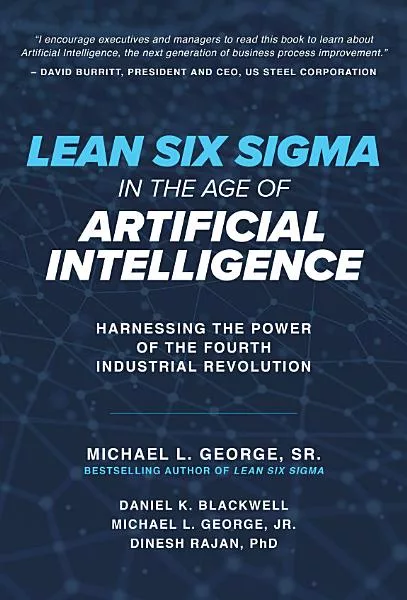
      Lean Six Sigma In The Age Of Artificial Intelligence: Harnessing The Power Of The Fourth Industrial Revolution

    • certified.jpg

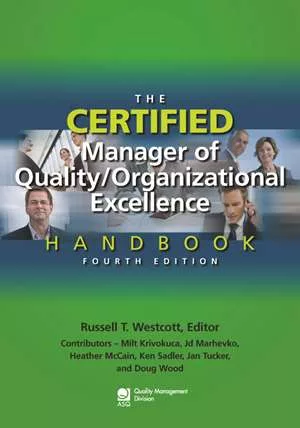
      The Certified Manager of Quality / Organizational Excellence Handbook, 4th Edition

    See More Products

    Related Directories

    • OpusWorks by The Quality Group

      OpusWorks accelerates enterprise transformation with scalable training, project management, and AI-powered insights. Our platform delivers role-based learning and STATWORKS! to drive Continuous Improvement. Open Enrollment supports data-driven decision-making and performance optimization. CPI Portal complements this by offering access to enterprise tools, pre-configured classes and resources for individuals and teams.
    ×

    Stay in the know with Quality’s comprehensive coverage of
    the manufacturing and metrology industries.

    Newsletters | Website | eMagazine

    JOIN TODAY!
    • RESOURCES
      • Advertise
      • Contact Us
      • Directories
      • Manufacturing Division
      • Store
      • Want More
    • SIGN UP TODAY
      • Create Account
      • eMagazine
      • Newsletters
      • Customer Service
      • Manage Preferences
    • SERVICES
      • Marketing Services
      • Market Research
      • Reprints
      • List Rental
      • Survey/Respondent Access
    • STAY CONNECTED
      • LinkedIn
      • Facebook
      • YouTube
      • X (Twitter)
    • PRIVACY
      • PRIVACY POLICY
      • TERMS & CONDITIONS
      • DO NOT SELL MY PERSONAL INFORMATION
      • PRIVACY REQUEST
      • ACCESSIBILITY

    Copyright ©2026. All Rights Reserved BNP Media, Inc. and BNP Media II, LLC.

    Design, CMS, Hosting & Web Development :: ePublishing