Quality Magazine logo
search
cart
facebook twitter linkedin youtube
  • Sign In
  • Create Account
  • Sign Out
  • My Account
Quality Magazine logo
  • NEWS
  • PRODUCTS
    • FEATURED PRODUCTS
    • SUBMIT YOUR PRODUCT
  • CHANNELS
    • AUTOMATION
    • MANAGEMENT
    • MEASUREMENT
    • NDT
    • QUALITY 101
    • SOFTWARE
    • TEST & INSPECTION
    • VISION & SENSORS
  • MARKETS
    • AEROSPACE
    • AUTOMOTIVE
    • ENERGY
    • GREEN MANUFACTURING
    • MEDICAL
  • MEDIA
    • A WORD ON QUALITY PUZZLE
    • EBOOK
    • PODCASTS
    • VIDEOS
    • WEBINARS
  • EVENTS
    • EVENT CALENDAR
    • IMTS
  • DIRECTORIES
    • BUYERS GUIDE >
      • Supplier Insights
    • NDT SOURCEBOOK
    • VISION & SENSORS
    • TAKE A TOUR
  • INFOCENTERS
    • Digital Quality Management Systems
    • NEXT GENERATION SPC & QUALITY ANALYTICS
  • AWARDS
    • ROOKIE OF THE YEAR
    • PLANT OF THE YEAR
    • PROFESSIONAL OF THE YEAR
  • MORE
    • Expert Columns
    • NEWSLETTERS
    • QUALITY STORE
    • INDUSTRY LINKS
    • SPONSOR INSIGHTS
  • EMAG
    • eMAGAZINE
    • ARCHIVES
    • CONTACT
    • ADVERTISE
  • SIGN UP!
Quality News

Quality Headline

Impact of Tariffs on Manufacturing
By Sunderesh S. Heragu
GettyImages-2189862167.jpg
April 25, 2025

The U.S. and China are the world’s largest trading partners. Almost $439 billion worth of goods were imported by the U.S. from China in 2024. Trade in the opposite direction was valued at $144 billion. The imports from China to the U.S. represent 13.3% of the total goods imported by the U.S.

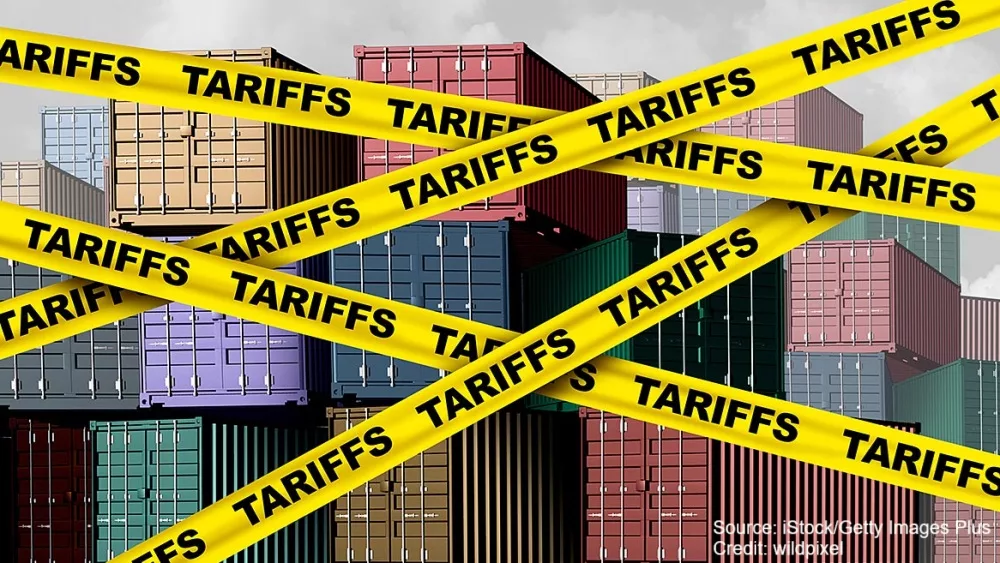
President Trump announced tariffs on China and 57 other countries recently but announced a pause for 90 days after the bond market spiked and the stock market saw a steep decline. The tariff regime appears to change on a day-to-day basis. It is neither easy to understand the real reasons for them nor predict the end results. As they stand today, tariffs on Chinese products imported to the U.S. will jump to 125%. For all other countries, the new tariffs are set at 10% for 90 days.

The U.S. is heavily dependent on China for much of its commodity items. These range from items found in a hardware to furniture to electronics to clothing stores and many more. It is also dependent upon its immediate neighbors – Canada and Mexico – for a variety of items, including those imported from China, but also autos, auto parts, potash, fruits, vegetables, nuts, beer, liquor, lumber, crude oil, and so on.

I fully anticipate prices for a vast majority of the items consumers purchase will go up significantly. These prices increases will be felt by consumers within the next four to six weeks. Supply chains cannot be turned off and on like a light switch. It takes years to develop and deploy a strong and stable supply chain with vendors. It requires good faith negotiations on price, quality, reliable and timeliness of delivery. It also requires all the parties in the supply chain to be constantly working in concert, not only to satisfy their own goals but also that of their supply chain partners. Many aspects of design, manufacturing, sourcing, assembly, and logistics must come together perfectly to deliver what the consumer needs at a low cost, but at high quality. The current models of supply chain not only help us achieve economies of scale, but also economies of scope. Product innovations can also occur at a faster rate when these chains are stable. Apple would not have been able to keep innovating if it were not for its ability to design unique products and scour the world for sourcing, manufacturing, assembly, packaging, and delivery partners.

The Trump administration has called for making all the products consumed by Americans to be produced in the U.S. Consider the example of iPhones. Making them entirely in the U.S. – from design to delivery – is easier said than done. To shift the entire supply chain into the United States – even in a matter of ten years – is unrealistic. It is also not effective. Dismantling existing supply chains and re-drawing new ones is not easy, especially in the high-tech sector. While we have the talent to design chips and smartphones in the U.S., we need to build up sufficient capacity to manufacture semiconductor chips, make them, assemble the components in the U.S. and deliver from these assembly factories to consumers. There are several flaws in this thought process. First, design is a high-value service and done well in the U.S. by American companies and American employees. Making chips in the U.S., also a high-value item, is a good goal, but the infrastructure to build it will take years to accomplish. Companies such as Nvidia, AMD, Qualcomm, and others only design their chips in the U.S. and have companies like Taiwan Semiconductors or Samsung perform the manufacturing. There are economies of scale and scope to contend with. The CHIPS and Science Act, signed into law by the Biden administration in 2022, is a step in the right direction with respect to making high-end chips, especially those used in the defense sector and for competitive artificial intelligence (AI) applications. Currently, a vast majority of the semiconductor chips are made in Taiwan, South Korea, and China, with more than two-thirds of the supply of semiconductor chips coming from the “big three.” The U.S. and a few other countries also make chips. With regard to assembly of smartphones, much of that is done in China and Vietnam. Recently, Apple has begun making iPhones in India. Thailand and the U.S. are also locations for assemblies, albeit at lower levels. Past experiments aimed at assembling high-tech devices in the U.S. have not worked well. Recall the $10 billion investment by Foxconn to produce liquid crystal displays (LCDs) never materialized. 

Unless there is a heavy investment in automation of the smartphone assembly process, the cost of assembling smartphones in the U.S. is going to be significantly higher than in low-cost countries. Already, there is much labor shortage in many sectors of our economy. The recent changes with respect to immigration policy also mean that we will have fewer laborers to operate the farms and factories, including high-tech factories. This will in turn raise the labor cost even more. Even if we were able to shift the entire supply chain to the U.S., this will only help meet the demand of the consuming U.S. population. We will not be able to sell to other countries because they will have their own protective measures. Countries such as China and Korea may get better at designing devices and making them cheaper. The U.S. consumer then is put at a significant disadvantage with respect to availability and superiority of high-tech products. While I have cited smartphones as an example, this analogy can be applied to automobiles, clothing, furniture, machinery, and a host of other consumer goods.

In my opinion, tariffs are a waste of time and talent because the world is not focused on bringing more efficient and effective goods and services in a sustainable and profitable manner to a world population that is growing and now stands at more than 8.2 billion. Instead, we are focused on disruptive tariff wars that do not seem to have a positive outcome for anyone.

KEYWORDS: manufacturing metrology tariffs

Share This Story

Looking for a reprint of this article?
From high-res PDFs to custom plaques, order your copy today!

Sunderesh S. Heragu is Senior Advisor to the Dean in the College of Engineering, Architecture and Technology (CEAT) at Oklahoma State University (OSU), where he is a Regents Professor and holds the John Hendrix Chair. He is also a member of the Institute for Operations Research and the Management Sciences (INFORMS).

Recommended Content

JOIN TODAY
to unlock your recommendations.

Already have an account? Sign In

  • 2024 Quality Rookie of the Year Justin Wise 1440x750px banner with "Quality Rookie of the Year" logo inset

    Meet the 2024 Quality Rookie of the Year: Justin Wise

    Justin Wise is an exceptional individual who has been...
    Aerospace
    By: Michelle Bangert
  • Man with umbrella and coat stands outside while it rains at night looking at a building.

    Nondestructive Testing: Is there an ethics problem?

    I was a whistleblower who exposed fraudulent activities...
    NDT
    By: Dale Norwood
  • Unraveling Deflategate: Football stadium with closeup of football on field

    Unraveling the Tom Brady Deflategate

    The Deflategate scandal erupted following the 2014 AFC...
    Measurement
    By: Greg Cenker and Henry Zumbrun
Manage My Account
  • eMagazine Subscriptions
  • Newsletters
  • Online Registration
  • Subscription Customer Service
  • Manage My Preferences

More Videos

Sponsored Content

Sponsored Content is a special paid section where industry companies provide high quality, objective, non-commercial content around topics of interest to the Quality audience. All Sponsored Content is supplied by the advertising company and any opinions expressed in this article are those of the author and not necessarily reflect the views of Quality or its parent company, BNP Media. Interested in participating in our Sponsored Content section? Contact your local rep!

close
  • Key Takeaways for Quality Leaders
    Sponsored byComplianceQuest

    Key Takeaways for Quality Leaders from the 2026 Gartner Magic Quadrant™ for QMS

  • This image shows a person seated next to a Bobcat T66 compact track loader.
    Sponsored byPolyWorks by InnovMetric

    Supercharging Digital Gauging at Bobcat North America

  • Dorsey Calibration Lab photo by Tom LaBarbera Picture this Studios
    Sponsored byDorsey Metrology International

    Ensuring Product Quality in a Competitive Manufacturing Landscape

Popular Stories

a titanium diaphragm speaker driver

The One Thing Elon Gets Right Is Designed to Scare You

This image shows a person seated next to a Bobcat T66 compact track loader.

Supercharging Digital Gauging at Bobcat North America

Dorsey Calibration Lab photo by Tom LaBarbera Picture this Studios

Ensuring Product Quality in a Competitive Manufacturing Landscape

2026 Quality Professional of the Year!

Events

June 9, 2026

Future-Proof your Quality Processes with Advanced 3D Optical CMM Technology

Discover how to effortlessly capture complex data, leverage true multi-sensor automation, and ensure continuous operation without creating inspection delays.

June 22, 2026

Automate 2026

Automate is North America's largest robotics and automation event — and the best place to take your ideas from insight to impact.
 
Our show floor features the world’s leading automation solutions, from AI and robotics to motion control, vision systems, and more. Plus, our educational conference is second to none, led by the brightest minds in automation today.
 
Ready to transform the way you work? Take the next step at Automate.
View All Submit An Event

Products

Lean Manufacturing and Service Fundamentals, Applications, and Case Studies

Lean Manufacturing and Service Fundamentals, Applications, and Case Studies

See More Products
Quality Podcast Channel Custom Content

Related Articles

  • MFG.com Survey Assesses Impact of Trump Administration on Manufacturing

    See More
  • Robot assembly line with electric car battery cells module on platform

    The Impact of Electric Vehicles on Automotive Manufacturing: The Role of First-Time Quality, Digital Twins, and Dimensional Engineering

    See More
  • This image shows a container terminal, a crucial node in global supply chain logistics where cargo ships are loaded and unloaded.

    The Shifting Tariffs Landscape: Impact on Small Business, Manufacturing, and Supply Chains

    See More

Related Products

See More Products
  • Fundamentals of Manufacturing, 3rd Edition

  • Fundamentals of Manufacturing Cell Planning DVD Package

See More Products
×

Stay in the know with Quality’s comprehensive coverage of
the manufacturing and metrology industries.

Newsletters | Website | eMagazine

JOIN TODAY!
  • RESOURCES
    • Advertise
    • Contact Us
    • Directories
    • Manufacturing Division
    • Store
    • Want More
  • SIGN UP TODAY
    • Create Account
    • eMagazine
    • Newsletters
    • Customer Service
    • Manage Preferences
  • SERVICES
    • Marketing Services
    • Market Research
    • Reprints
    • List Rental
    • Survey/Respondent Access
  • STAY CONNECTED
    • LinkedIn
    • Facebook
    • YouTube
    • X (Twitter)
  • PRIVACY
    • PRIVACY POLICY
    • TERMS & CONDITIONS
    • DO NOT SELL MY PERSONAL INFORMATION
    • PRIVACY REQUEST
    • ACCESSIBILITY

Copyright ©2026. All Rights Reserved BNP Media, Inc. and BNP Media II, LLC.

Design, CMS, Hosting & Web Development :: ePublishing