Metrology Corner
The Emergence of the Metric System
The history of the METER before and after the Treaty of Meter
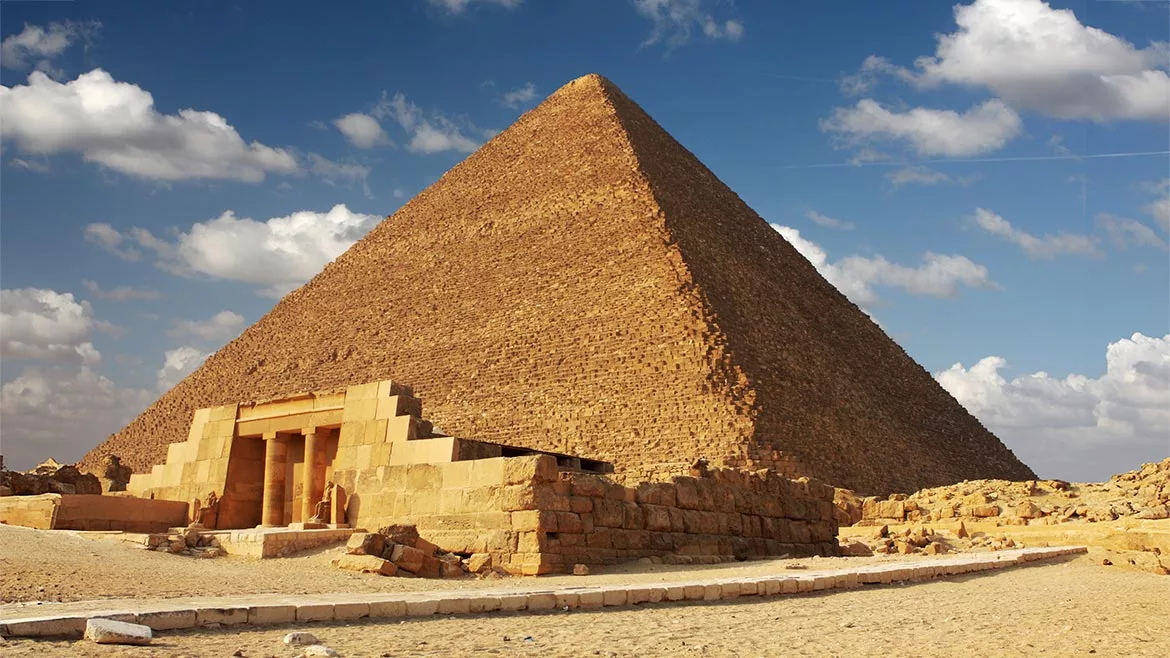
Image Source: sculpies / iStock / Getty Images Plus
Dedicated to the 150th anniversary of signing of the Treaty of Meter (May 20, 2025)
The Egyptians had the natural cubit, then the Elephantine cubit, and later the sacred cubit, which was 1/400 of the base length of the pyramid of Cheops, thus linking it to an element of nature, with the base of the pyramid being considered a well-defined part of a terrestrial degree — specifically 1/500 of one degree of the meridian. The cube of half that cubit gives the unit of volume, and that cube filled with water gives the unit of mass.
The Egyptian system was transmitted to the Hebrews, Persians, Indians, and even to the Romans and Greeks.
There are eight definitions of meter, since its creation. Here they are.
In the late 18th century, international trade and science demanded a uniform system of measurement. In the second half of the 18th century, several natural quantities were proposed as fundamental units: the length of the pendulum, the length of a meridian arc, the wavelength of light, the length of the seconds pendulum, etc.
In the year 1790, in the National Assembly of France, the proposal was made to create a new system of measures, which would be based on a natural and invariable unit, one that could be accepted by all peoples and would be easy to use.
To put this idea into practice, the National Assembly tasked the Academy of Sciences with selecting the length for the fundamental unit, and the academy, after comparing several variants, decided that the most appropriate solution would be to choose one ten-millionth of the distance from the North Pole to the equator, measured on the meridian arc passing through Paris.
This unit was called the meter, and it was legislated in 1791 by the National Assembly.
In 1792, under the direction of the French astronomers Delambre and Méchain, measurements began of the length of the meridian arc from the north of Paris, along the meridian arc from Dunkirk (France) to Barcelona (Spain). The work and final calculations were completed in 1799, when the standard model of the unit of length, called the meter, was executed in the form of a platinum bar, as well as the unit of mass, called the kilogram, defined as the mass of one cubic decimeter of pure water at the temperature of maximum density (+4°C), and materialized in the form of a platinum cylinder with polished edges.
These models were deposited in 1799 for preservation in the Archives of the French Republic, and they received the names: “the meter of the Archives” and “the kilogram of the Archives.” Decimal-based prefixes were adopted for ease of calculation and universality. The metric system spread globally, supported by international cooperation.
In 1872 The International Meter Commission decided that the meter of the Archives would be the unit of length, and the kilogram of the Archives would be the unit of mass, even though these differed from the theoretical definitions, because the reproduction of natural units is not a feasible task — since reproducing one ten-millionth of the meridian quadrant proved to be an unrealizable effort. The meridian quadrant was found to be 10.000.856 meters value, not 10.000.000 as expected, an unacceptable difference.
Likewise, the work for determining the unit of mass through the density of water yielded differences ranging from 27 to 28 mg.
These considerations led to abandoning natural units and to the fixing of international units as the accepted forms of those from the Archives, meaning:
- the X-shaped cross-section for the meter,
- and the cylindrical form for the kilogram.
As material, platinum with 10% iridium was used.
In 1872, the International Meter Commission developed the idea of establishing an International Bureau of Weights and Measures as an international scientific institution that would deal with the preservation and comparison of international and national standards.
On the date of March 1, 1875, a diplomatic conference was convened to create such a Bureau of Weights and Measures, to which 20 state delegates were invited. On May 20, 1875, a number of 17 states signed the Meter Convention, which included the following main provisions:
- The signatory countries commit to maintain the International Bureau of Weights and Measures, which would operate under their exclusive supervision and management through the International Committee of Weights and Measures, and in turn, the latter would be subordinate to the General Conference of Weights and Measures.
- The General Conference would consist of representatives from all signatory countries, and would be convened every six years.
The International Committee was to be composed of 14 permanent members, scientific experts elected by the General Conference from among the representatives of the signatory states.
The International Bureau of Weights and Measures was entrusted with the preservation, verification, and comparison of international standards of the meter and kilogram, periodic comparison with national standards, preparation of prototypes, and scientific and technical research to improve the metric system used in different countries.
The installation of the Bureau was to take place in the year 1878, at Sèvres, near Paris.
As early as 1875, the diplomatic Meter Conference decided that the prototypes deposited at the Archives, which had in fact become international standards, would be replaced with new prototypes.
The international prototype of the meter was to reproduce exactly the length of the archived meter and was to be made in such a way that its quality and stability over time would be guaranteed.
Out of ten bars made from a platinum-iridium alloy, the most suitable one was selected for stability and precision. Its length was determined using interference methods, and all markings were made under strict optical conditions in a homogeneous and stable temperature environment.
The Meter of the Archives was built as a flat, rigid ruler, lacking flexibility and deformation. It is a terminal-type measure, i.e., the meter is defined by the distance between the two terminal faces, which had to be made very flat and parallel — something extremely difficult to achieve.
The new prototype was constructed from a more durable material, with a 50% greater hardness than the old one, and it was made of a platinum-iridium alloy.
The new shape adopted for the prototype was the X cross-section. At the same time, the meter length was no longer determined by the terminal faces, but by two fine lines, engraved on a section of the upper surface polished like a mirror.
The total length is 102 cm, of which the meter is located centrally, between the two markings, all placed in the neutral plane of the bar — this way, the bar’s support does not influence the measured length.
However, gravity causes any long bar to bend slightly under its own weight if not perfectly supported. Even this microscopic sag could alter the length being measured.
To solve this, the meter bar had to be:
- Supported at two points, precisely located to minimize deformation,
- And placed on a stable support plane, under controlled conditions.
These ideal support points — where the bar could “rest” without distorting the measured distance — are called Bessel points.
Other measurement conditions were specified for the meter standard:
– The standard must be suspended horizontally (if it were suspended vertically, its length would change by 0.65 µm, and if it were supported vertically, by –0.65 µm);
– The atmospheric pressure must be normal (760 mm Hg).
It was calculated that in a vacuum, the international prototype would be longer by 0.48 µm, and the precision with which it is determined is 0.1 µm, that is, an accuracy of one ten-millionth of a meter.
In 1889, the International Conference of Weights and Measures chose one of the bars constructed, number 6, as the most suitable, and declared it the international prototype.
The other bars, selected by lottery, were distributed to signatories of the Meter Convention of 1875.
Evolution and Modern Definition of the Metric System
In 1960, the 11th General Conference on Weights and Measures redefined the meter as “...the meter is the length equal to 1,650,763.73 wavelengths in vacuum of the radiation corresponding to the transition between the energy levels 2p₁₀ and 5d₅ of the krypton-86 atom.”
In the same year, the system based on the six base units is designated by the name International System of Units and the international abbreviation of the name of this system is SI.
In 1983 a new definition was adopted and modified slightly in 2002 to clarify that the meter is a measure of proper length. From 1983 until 2019, the meter was formally defined as the length of the path travelled by light in vacuum in 1299792458 of a second.
Since 2019, the meter has been defined as the length of the path travelled by light in vacuum during a time interval of 1/299792458 of a second, where the second is defined by a hyperfine transition frequency of cesium.
And this is how we maintain the high quality.
Looking for a reprint of this article?
From high-res PDFs to custom plaques, order your copy today!