Metrology Corner
Metrology and Art
The intersection of metrology and art can create new perspectives on both human expression and scientific understanding.
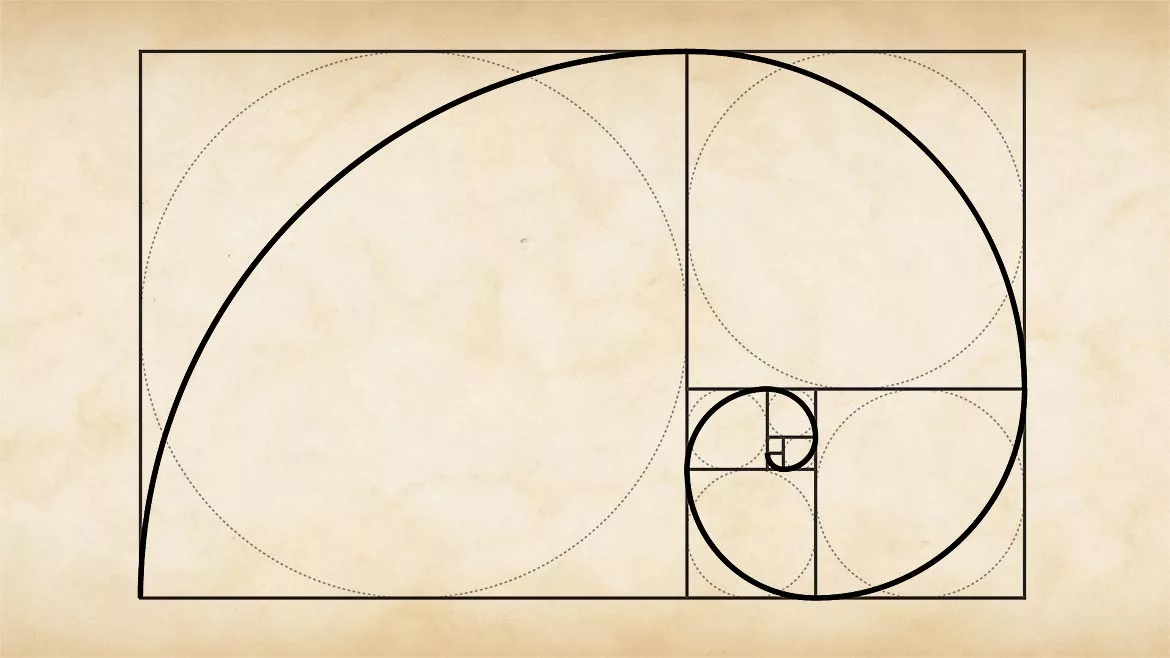
Image Credit: iSidhe Creative #: 1180187715 License type: Royalty-free Collection: iStock / Getty Images Plus
This may seem like two very different fields, but they surprisingly intersect, combining the precision and accuracy of measurements with the creativity and subjectivity of artistic expression.
Here’s an overview of how these two domains can converge.
Precision in Artistic Creation
Proportion and Scale: Artists rely on metrological principles to achieve accurate proportions, symmetry, and scale in their works. For instance, the use of the golden ratio, Fibonacci sequences, or specific scaling techniques (like foreshortening) involve careful measurements to maintain visual harmony.
Fibonacci (1170-1250) is a shortening of the Latin “filius Bonacci”, meaning “the son of Bonaccio”. He is now known by his nickname Fibonacci.
The Fibonacci sequence, a series of numbers where each number is added to the last. The Fibonacci numbers are 0, 1, 1, 2, 3, 5, 8, 13, 21, etc. The ratio of each number and the previous number progressively get closer to φ (phi) = 1.61803398875.
Golden Rectangle and Spiral: Here’s a visual demonstration of the Golden Ratio using a Golden Rectangle and an inscribed Golden Spiral. The rectangles show successive divisions according to the Golden Ratio, while the spiral illustrates the curve that fits perfectly within the structure of these rectangles.
The Golden Spiral is a geometric representing the Fibonacci series. It can be found in nature, if not always perfectly, in pinecones, nautilus and snail shells, pineapples, and more.
The scales on a pine cone form spirals that follow the Fibonacci sequence, meaning the number of spirals in each direction often corresponds to consecutive Fibonacci numbers like 5 and 8, or 8 and 13
Nautilus and snail shells are amazing close representation of Fibonacci sequence. Each chamber of the nautilus shell grows in size following the Fibonacci numbers, creating a visually spiral that is both metrological and aesthetically pleasing.
One can decipher spiral patterns in pineapples and cauliflower that also reflect the Fibonacci sequence in this manner. In plants, this may mean maximum exposure for light-hungry leaves or maximum seed arrangement.
The Fibonacci sequence has been used also to describe the patterns of reproduction in populations of rabbits and bees.
Measurement tools used in art such as compasses, grids, calipers, and rulers are standard in art creation, especially in architecture, sculpture, and even digital art, ensuring that the final product aligns with the artist’s vision.
Color and Light Measurement: The use of devices such as colorimeters and photometers ensure consistency in color reproduction, particularly in digital art, photography, and restoration.
Metrology in Art Conservation and Restoration
Scientific Analysis: Metrological tools like 3D scanners, spectrometers, and X-ray fluorescence (XRF) are used to analyze the material composition and structural integrity of artwork. This helps in making decisions for conservation without altering the original piece.
Authentication and Provenance: Measuring the age of materials (e.g., using radiocarbon dating) and analyzing surface characteristics can help establish the authenticity of artworks and trace their provenance.
Quantifying Artistic Value and Experience: Perception and Psychology: Metrology can be used to quantify human perception in art, such as how color, shape, or spatial organization affect emotions and aesthetic appreciation. Studies on visual perception often use precise measurements to understand how different visual stimuli are interpreted by the brain.
Digital Art and AI: With the rise of digital art, metrology plays a role in standardizing digital formats, resolution, and color profiles. This is crucial in preserving the integrity of digital artwork across different display platforms.
Artistic Interpretations of Metrology - Conceptual Art: Some artists use measurement and precision as conceptual tools. For example, works like Sol LeWitt’s wall drawings are based on precise instructions and measurements that emphasize the idea of measurement as a form of art.
Mathematics and Geometry in Visual Arts: Geometry, symmetry, and mathematical constructs have long been a part of visual arts, from the use of geometric shapes in Islamic art to the precision of perspective in Renaissance paintings. These artistic choices are often grounded in precise mathematical and metrological principles.
Art Inspired by Scientific Instruments: Metrological instruments themselves, with their elegant dials, gages, and intricate mechanisms, can be seen as works of art. Many scientific instruments from the 18th and 19th centuries are on display in museums for their aesthetic as well as functional value.
Interdisciplinary Collaborations: Modern artists often collaborate with scientists and engineers to create artworks that explore the nature of measurement, the limits of precision, and the philosophical implications of quantifying reality.
Exhibitions and Installations: There are exhibitions that focus specifically on the intersection of art and science, such as the “Art and Metrology” exhibitions at science museums, where pieces inspired by measurement are displayed alongside scientific instruments.
Overall, the intersection of metrology and art is a rich field that explores how precise measurements and artistic creativity can complement and enhance each other, creating new perspectives on both human expression and scientific understanding.
Golden Ratio: Description and Explanation
Close related with Fibonacci sequence, the Golden Ratio, denoted by the Greek letter φ(phi), is a mathematical ratio that has been considered aesthetically pleasing and appears frequently in nature, art, and architecture. The value of the Golden Ratio is approximately 1.61803398875.
Definition: If a line is divided into two parts, such that the longer part (a) divided by the shorter part (b) is equal to the sum of (a) and (b) divided by (a), then the ratio is a Golden Ratio.
Fibonacci Sequence: The ratio of consecutive Fibonacci numbers approaches the Golden Ratio as the numbers increase. For example, 8/5 = 1.6, 13/8 = 1.625, and so on.
Demonstration of the Golden Ratio
Line Segment Division: If you have a line segment of length 1.618 units, you can divide it into two parts such that the longer part is 1 unit, and the shorter part is 0.618 units. The ratio of the longer part to the shorter part will be approximately 1.618.
Golden Rectangle: A Golden Rectangle is a rectangle whose side lengths are in the Golden Ratio. If the longer side is “a” and the shorter side is “b”, then:
ab=1.618\frac{a}{b} = 1.618ba=1.618
Certainly! The Golden Ratio, represented as φ(phi), appears in various domains such as nature, architecture, design, and even financial markets. Here are some interesting examples and uses of φ in different contexts.
Golden Ratio in Nature. Flower Petals and Seed Heads:
The number of petals in many flowers is often a Fibonacci number (e.g., 3, 5, 8), and the arrangement of seeds in a sunflower follows a spiral pattern that respects the Golden Ratio. This optimizes packing and distribution of seeds.
Animal Proportions: The proportions of different parts of animal bodies, such as the length of bones, often approximate the Golden Ratio. For example, the ratio of a turtle’s shell segments tends to follow ϕ.
Golden Ratio in Human Anatomy
Leonardo da Vinci’s “Vitruvian Man”: This famous drawing is a study of the measurements of the human body, and many of these proportions are based on the Golden Ratio.
Body Proportions: Some aspects of human anatomy, such as the ratio of the length of the forearm to the hand or the height of the navel to the height of the entire body, tend to approximate the Golden Ratio.
Facial Proportions: The distance between facial features (e.g., the width of the nose compared to the distance between the eyes) can often reflect φ, which is why it is sometimes used in aesthetic or reconstructive surgery.
People perceive it to be most attractive when the circumference of a man’s shoulders are 1.6 times the circumference of his waist.
Golden Ratio in Art
Renaissance Artworks: Artists like Michelangelo and Raphael used φ in the composition of their paintings, dividing canvases into sections that reflect the ratio.
Graphic Design: In modern graphic design, grids based on the Golden Ratio are used to lay out elements harmoniously, from web pages to logos.
Golden Ratio in Financial Markets
Fibonacci Retracement Levels: Traders use Fibonacci retracement levels (23.6%, 38.2%, 61.8%) to identify potential support and resistance levels in financial charts. These levels are derived from the ratios related to the Fibonacci sequence and thus the Golden Ratio.
Golden Ratio in Music and Acoustics
Musical Harmony: The Golden Ratio is used in musical compositions, for example, in the timing of movements or the subdivision of musical phrases. It’s also present in the design of musical instruments like the violin, where the proportions are close to the Golden Ratio.
Acoustic Design: When designing concert halls and auditoriums, architects and engineers sometimes use the Golden Ratio to optimize the distribution of sound.
Golden Ratio in Design and Technology
Product Design: Apple’s iconic iPod and other products have been designed with proportions approximating the Golden Ratio.
Typography: The sizes of text in a well-proportioned font hierarchy (e.g., headings to body text) can be based on the Golden Ratio, making content more readable and aesthetically pleasing.
Golden Ratio in Branding and Logo Design
Many famous logos are constructed using the Golden Ratio to ensure visual appeal and proportion, including Pepsi.
The Pepsi logo was redesigned with a grid based on φ. Pepsi spent $1 million to redesign its logo in 2008. A document from the agency included references to the Golden Ratio and a scientific color palette.
Golden Spirals and Patterns
The Golden Spiral, a logarithmic spiral whose growth factor is the Golden Ratio, can be observed in:
Galaxies: The Milky Way’s spiral arms.
Hurricanes: The shape of the spiral bands.
The eye of the storm is like the 0 or 1 in the Fibonacci sequence, as you go on in the counter clockwise spiral you find it increasing at a consistent pattern. This pattern is much like the Golden Ratio.
Each of these examples shows the indubitable connection and presence of measurement (metrology) not only in the surrounding world, but also in the entire universe.
Looking for a reprint of this article?
From high-res PDFs to custom plaques, order your copy today!