Quality Magazine logo
search
cart
facebook twitter linkedin youtube
  • Sign In
  • Create Account
  • Sign Out
  • My Account
Quality Magazine logo
  • NEWS
  • PRODUCTS
    • FEATURED PRODUCTS
    • SUBMIT YOUR PRODUCT
  • CHANNELS
    • AUTOMATION
    • MANAGEMENT
    • MEASUREMENT
    • NDT
    • QUALITY 101
    • SOFTWARE
    • TEST & INSPECTION
    • VISION & SENSORS
  • MARKETS
    • AEROSPACE
    • AUTOMOTIVE
    • ENERGY
    • GREEN MANUFACTURING
    • MEDICAL
  • MEDIA
    • A WORD ON QUALITY PUZZLE
    • EBOOK
    • PODCASTS
    • VIDEOS
    • WEBINARS
  • EVENTS
    • EVENT CALENDAR
    • IMTS
  • DIRECTORIES
    • BUYERS GUIDE >
      • Supplier Insights
    • NDT SOURCEBOOK
    • VISION & SENSORS
    • TAKE A TOUR
  • INFOCENTERS
    • Digital Quality Management Systems
    • NEXT GENERATION SPC & QUALITY ANALYTICS
  • AWARDS
    • ROOKIE OF THE YEAR
    • PLANT OF THE YEAR
    • PROFESSIONAL OF THE YEAR
  • MORE
    • Expert Columns
    • NEWSLETTERS
    • QUALITY STORE
    • INDUSTRY LINKS
    • SPONSOR INSIGHTS
  • EMAG
    • eMAGAZINE
    • ARCHIVES
    • CONTACT
    • ADVERTISE
  • SIGN UP!
AutomationVision & Sensors

Machine Vision

AI in CNC Manufacturing: When Vision Systems Start to Understand

AI-driven machine vision changes how factories perceive and process parts.
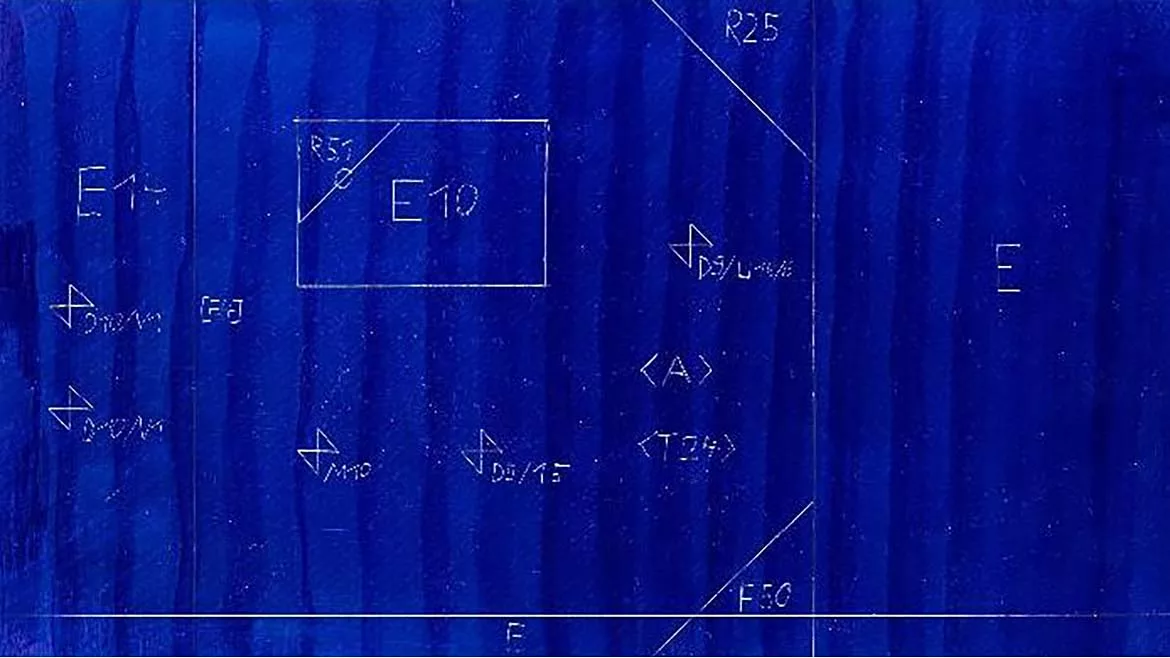
By EVT – Eye Vision Technology
The image displays a blueprint or technical drawing featuring various alphanumeric codes and symbols
Source: EVT
January 24, 2026
✕
Image in modal.

Industrial automation has traditionally relied on precise rules: if an edge is here, measure it; if a label is missing, stop the line. This worked well as long as production stayed uniform and predictable. But modern factories are not static anymore. Products change quickly, variants multiply, and batch sizes shrink. In this environment, classical automation reaches its limits.

Artificial intelligence in machine vision now fills this gap. Instead of telling machines exactly what to look for, systems learn patterns and interpret meaning. This shift transforms not only inspection tasks but also how CNC machines are programmed, how robots pick objects, and how small-batch production becomes affordable.

Why Traditional Image Processing Struggles

Conventional vision systems work like highly disciplined inspectors: they follow strict rules and expect consistent conditions. They perform brilliantly with identical parts and stable lighting. However, they often fail when:

  • surfaces vary from part to part,
  • shapes deviate from drawings,
  • handwriting or symbols appear on raw material,
  • objects overlap or reflect light.

Every change forces engineers to adjust thresholds, rewrite rules or redesign inspection tools. This takes time and requires trained specialists.

AI takes a different path. Instead of predefined rules, neural networks learn visual features from examples. They can recognize scratches, dents, handwritten markings or packaging variations without being explicitly programmed for every detail. This makes them flexible where classical logic becomes fragile.

When 2D and 3D Are Not Enough

A common challenge is separating objects that visually merge. Pallets full of boxes are a typical case: in 2D the boxes may blend into one large rectangle, and in 3D the point cloud might not clearly show individual edges.

AI models trained to detect boxes can identify each one even when they touch, overlap or deform. The software learns what a box looks like beyond just edges and corners: tape, print, surface texture and compression patterns become helpful signals.

This capability makes robot depalletizing and sorting more reliable and reduces the need for manual intervention or custom grippers.

2D/3D Fusion for Robot Guidance

Modern robotic applications often use both 2D image information and 3D depth data. Combining the two creates a complete picture: each pixel in the camera image has a matching depth value.

The process looks simple but is technically powerful:

  1. A camera or sensor scans the scene in 2D and 3D.
  2. AI separates objects and classifies them.
  3. Their exact position (X, Y, Z) and orientation are calculated.
  4. That data is sent directly to the robot.

The result: robots can reliably pick parts from mixed bins, load and unload pallets, and handle changing product types without time-consuming reprogramming.

CNC Without Manual Programming

AI is not only improving logistics but enabling a new approach to CNC machining. Traditionally, making a new part requires a computer-aided design (CAD) drawing, followed by toolpath programming in CAM software and manual setup on the CNC machine. For single parts or very small batches, this process is expensive and slow.

With AI-supported vision, programming can be generated directly from sensor data:

  • A raw metal piece is scanned in 3D.
  • Handwritten notes, drawn outlines or reference marks on its surface are captured.
  • AI interprets these shapes and notes.
  • The system generates a CNC program automatically.

The advantage is clear: no CAD designer, no CAM programming, and minimal setup time. This approach makes small series production and even lot-size-1 manufacturing practical without specialized staff.

After milling, a 3D scan checks the finished part and compares it against the intended geometry. This closes the loop between planning, machining and quality control.
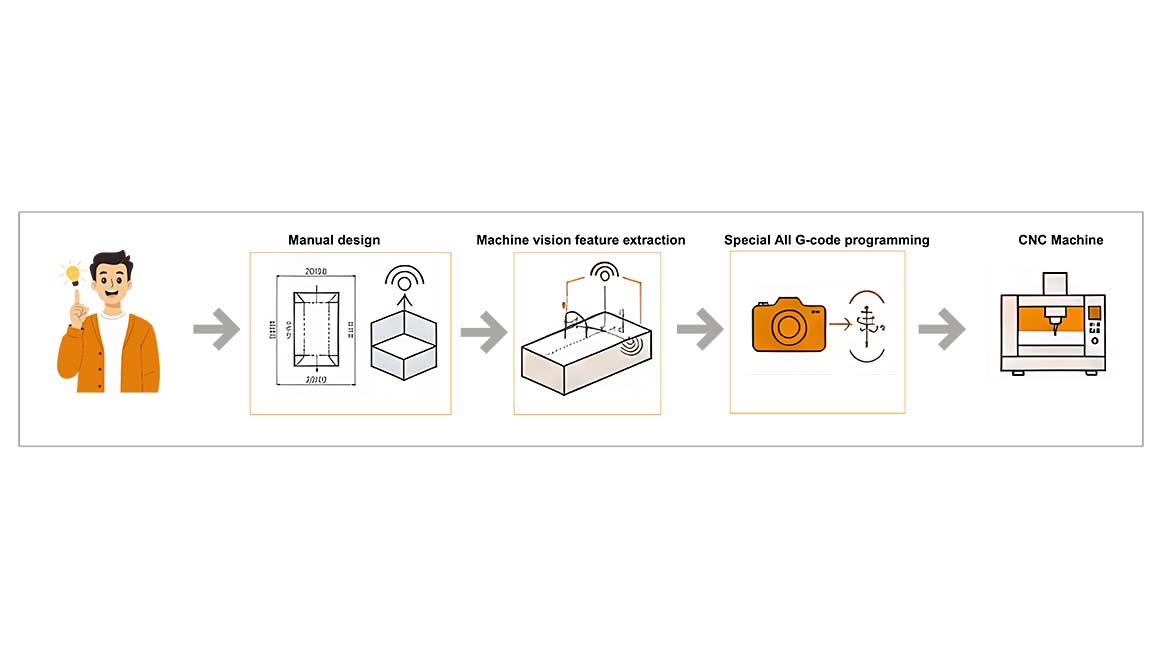
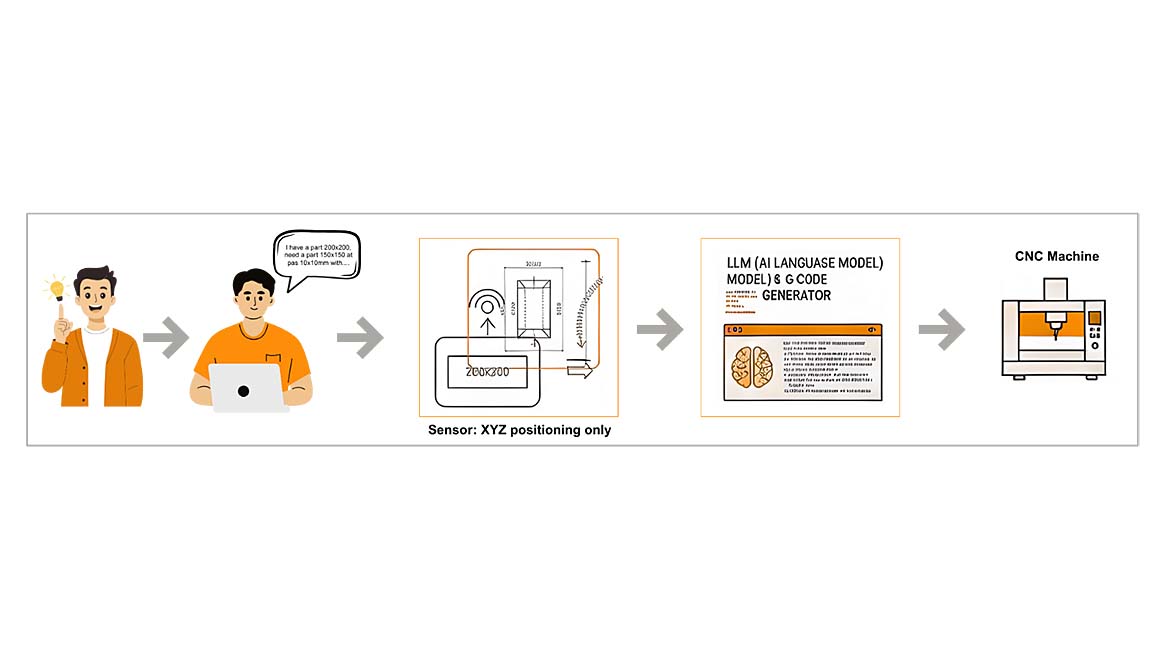
The image illustrates a process for creating designs for a CNC (Computer Numerical Control) machine The image illustrates a process for using a Large Language Model (LLM) to generate G-code for a Computer Numerical Control (CNC) machine
Source: EVT

Faster Deployment Through Pre-trained AI

A key factor in making AI useful in real production is the availability of pretrained networks. Instead of training models from zero, manufacturers start with networks already taught to recognize common industrial parts—such as screws, chips, food products, springs or cosmetic packaging—and simply adapt them.

Only a small amount of example data is needed to fine-tune the model to a specific product. This makes installation faster and lowers the barrier for companies that do not have their own AI specialists.

Open Hardware and Industrial Standards

Modern vision platforms do not assume a fixed hardware setup. They support industrial PCs, embedded processors, smart cameras and dedicated accelerators. This flexibility matters because factories adopt technology in stages, not all at once.

Different camera types can be combined: 2D color, 3D depth, thermal imaging, hyperspectral sensors and more. Standard industrial interfaces such as OPC UA, ProfiNet, EtherCAT and Ethernet/IP allow smooth communication with CNC machines, robots and production control systems.

Companies can add new sensors or upgrade computing hardware without replacing the entire vision system. This keeps integration costs predictable.

A Shift From Automation to Adaptation

The biggest change AI brings is philosophical: automation no longer means repeating the same task efficiently—it means adjusting to new tasks without starting over.

Classical image processing remains valuable for precise measurements and tolerance checks. AI complements it by interpreting surfaces, handwriting, texture and shape variation. Together they create a toolbox that fits the real world, not just ideal conditions.

Conclusion

AI-driven machine vision changes how factories perceive and process parts. Robots can distinguish overlapping objects, CNC machines can receive toolpaths directly from sensor data, and inspection systems react to change rather than resisting it.

In short, automation becomes adaptive. Tasks that once required expert programmers and hours of setup transform into streamlined workflows. And the long-standing dream of economical small-batch and single-piece manufacturing moves from theory into daily production.


EVT – Eye Vision Technology

For more information, call +49 721 668 004 23 0, email [email protected] or visit www.evt-web.com. LinkedIn: https://www.linkedin.com/company/evtvision.

READ MORE

  • Five Ways Advanced Imaging is Improving Quality 
  • Talking Automation Trends with the President of the Association for Advancing Automation 
  • Growing Role of AI in Manufacturing 
KEYWORDS: Artificial Intelligence (AI) manufacturing metrology quality

Share This Story

Looking for a reprint of this article?
From high-res PDFs to custom plaques, order your copy today!

EVT – Eye Vision Technology

For more information, call +49 721 668 004 23 0, email [email protected] or visit www.evt-web.com. LinkedIn: https://www.linkedin.com/company/evtvision.

Recommended Content

JOIN TODAY
to unlock your recommendations.

Already have an account? Sign In

  • 2024 Quality Rookie of the Year Justin Wise 1440x750px banner with "Quality Rookie of the Year" logo inset

    Meet the 2024 Quality Rookie of the Year: Justin Wise

    Justin Wise is an exceptional individual who has been...
    Aerospace
    By: Michelle Bangert
  • Man with umbrella and coat stands outside while it rains at night looking at a building.

    Nondestructive Testing: Is there an ethics problem?

    I was a whistleblower who exposed fraudulent activities...
    NDT
    By: Dale Norwood
  • Unraveling Deflategate: Football stadium with closeup of football on field

    Unraveling the Tom Brady Deflategate

    The Deflategate scandal erupted following the 2014 AFC...
    Measurement
    By: Greg Cenker and Henry Zumbrun
Manage My Account
  • eMagazine Subscriptions
  • Newsletters
  • Online Registration
  • Subscription Customer Service
  • Manage My Preferences

More Videos

Sponsored Content

Sponsored Content is a special paid section where industry companies provide high quality, objective, non-commercial content around topics of interest to the Quality audience. All Sponsored Content is supplied by the advertising company and any opinions expressed in this article are those of the author and not necessarily reflect the views of Quality or its parent company, BNP Media. Interested in participating in our Sponsored Content section? Contact your local rep!

close
  • Key Takeaways for Quality Leaders
    Sponsored byComplianceQuest

    Key Takeaways for Quality Leaders from the 2026 Gartner Magic Quadrant™ for QMS

  • This image shows a person seated next to a Bobcat T66 compact track loader.
    Sponsored byPolyWorks by InnovMetric

    Supercharging Digital Gauging at Bobcat North America

  • Dorsey Calibration Lab photo by Tom LaBarbera Picture this Studios
    Sponsored byDorsey Metrology International

    Ensuring Product Quality in a Competitive Manufacturing Landscape

Popular Stories

This image shows a person seated next to a Bobcat T66 compact track loader.

Supercharging Digital Gauging at Bobcat North America

a professional in the aviation field performing maintenance, repair, and overhaul (MRO) work

Manufacturing Retention: Strategies for Improving Company Culture, Engagement and Skill Development

Dorsey Calibration Lab photo by Tom LaBarbera Picture this Studios

Ensuring Product Quality in a Competitive Manufacturing Landscape

2026 Quality Professional of the Year!

Events

June 22, 2026

Automate 2026

Automate is North America's largest robotics and automation event — and the best place to take your ideas from insight to impact.
 
Our show floor features the world’s leading automation solutions, from AI and robotics to motion control, vision systems, and more. Plus, our educational conference is second to none, led by the brightest minds in automation today.
 
Ready to transform the way you work? Take the next step at Automate.
July 14, 2026

Quality Leaders Forum: Better Communication, Better Quality Data

The Quality Leaders Forum is a quarterly, editor-moderated fireside chat series hosted by Quality Magazine, featuring candid conversations with senior manufacturing and operations executives shaping enterprise-level quality.

View All Submit An Event

Products

Lean Manufacturing and Service Fundamentals, Applications, and Case Studies

Lean Manufacturing and Service Fundamentals, Applications, and Case Studies

See More Products
Quality Podcast Channel Custom Content

Related Articles

  • Machine Vision Market in North America Has Record Start to 2015

    See More
  • Key to Quality: Understand COTS, Prevent Disaster

    See More

Related Products

See More Products
  • Lean Manufacturing in a Small Shop DVD

  • Managing Teams in Manufacturing DVD

See More Products
×

Stay in the know with Quality’s comprehensive coverage of
the manufacturing and metrology industries.

Newsletters | Website | eMagazine

JOIN TODAY!
  • RESOURCES
    • Advertise
    • Contact Us
    • Directories
    • Manufacturing Division
    • Store
    • Want More
  • SIGN UP TODAY
    • Create Account
    • eMagazine
    • Newsletters
    • Customer Service
    • Manage Preferences
  • SERVICES
    • Marketing Services
    • Market Research
    • Reprints
    • List Rental
    • Survey/Respondent Access
  • STAY CONNECTED
    • LinkedIn
    • Facebook
    • YouTube
    • X (Twitter)
  • PRIVACY
    • PRIVACY POLICY
    • TERMS & CONDITIONS
    • DO NOT SELL MY PERSONAL INFORMATION
    • PRIVACY REQUEST
    • ACCESSIBILITY

Copyright ©2026. All Rights Reserved BNP Media, Inc. and BNP Media II, LLC.

Design, CMS, Hosting & Web Development :: ePublishing