Management
Don’t Let Others Manage Your Career
We must make sure we are the ones managing our career, not HR, not the plant manager, not anyone else, but us.

As quality professionals, we are sometimes undervalued by our organizations.
We are associated with problems, even though we are rarely the ones who caused them, but the ones that will solve them.
In that scenario it becomes very important that we make sure we are the ones managing our career, not HR, not the plant manager, not anyone else, but us.
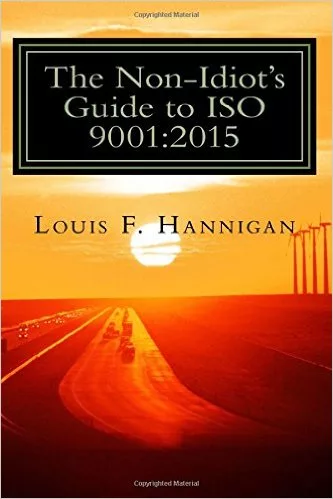
In my books “The Quality Letters” I captured several situations that illustrate this reality, and I have selected a few stories for your consideration.
You Need a Mustang
In 1985 I read Lee Iacocca’s book: “Iacocca: An Autobiography”, which could easily be called “I Love Myself”.
If you have not read it, the theme is Iacocca’s personal experiences in his automotive industry career.
Since my intent is not to present a book review, I will focus on one point:
- His career is strongly based on a couple of successes to which he was associated.
- Particularly he claims to be the “Father of the Mustang”, forever connecting his name to that successful story.
- Even without doing a DNA test to confirm his claim, the truth is that association was the springboard to his career.
I have used this parallel to discuss career development with some young colleagues:
- I have seen very competent individuals go almost unnoticed in the professional environment.
- That may happen when a person gets trapped by the daily tasks and never does anything remarkable
- Yes, the daily tasks need to be done, but they cannot suck your entire day
So, stop and think:
- What could I do to create a durable improvement?
- What would I tell my spouse this evening during dinner about what I did at work?
- What would I be remembered for in the company?
By the way, Iacocca had a second success with his fingerprint:
He became the force behind the launch of the minivan. A product that saved a company.
You don’t need to come up with a new vehicle.
It could be a system, it could be a remarkable training class, it could be a person you mentor…
Create something better, leave a mark, and love yourself.
Reinvent Yourself
Most of the time I am very passionate about what I do, but I have had phases in my career when I questioned the value of my work. I didn’t feel I was being heard and my projects were not moving as I hoped. Have you been there? Are you there now?
That is when we start blaming Management, the Team, the Customers, the Weather, whatever we can find. I remember a time when I became quite bitter, and I was complaining about everything. But the truth is: nobody likes to be around a complainer.
One time I made a big list of everything I believed was wrong in our plant and went to my boss. Fortunately I had a good relationship with him, and he called my attention to fact that I was focusing on what was wrong, without offering alternatives.
I agreed and left his office determined to propose solutions to the items in my list.
This was a fantastic exercise because I could focus on positives (by the way, a few items mysteriously disappeared from my list when I tried to suggest a different approach).
I came back with a shorter list of issues and my recommendations, and I committed to work with others to get those implemented. I started working on those with all my energy. My boss stated he had never seen anybody reinvent himself like I did. I felt relevant again.
As I get older, I tend to become critical again and invest too much energy in judging the imperfections of the world. Occasionally I have to slap my own face (figuratively) and work to remain relevant.
If you are young and feel irrelevant, it is imperative that you reinvent yourself and be a positive influencer, not a complainer.
If you are old, make sure you decide when it is time to retire, not your boss.
Bigger than your Chair
Before I even describe my personal experience, I would like to say that I have seen people doing almost the opposite of the way I believe to be the best, and being successful in their careers, so analyze it for yourself.
During most of my professional life I have loved what I do. I have experienced great contentment in my job.
I typically come in the morning energized to make things better.
Yes, there have been frustrating moments, but somehow those gave me determination to be better.
Now, here comes the concept that I used:
- I did the best I could for the positions I have had in my career and prepared myself for more, but I did not push to be promoted, or to get better pay.
- When those happened, they happened as a consequence.
Many years ago, I took a management class with a fantastic professor: Pedro Mandelli, and I remember him saying we need to be “bigger than our chair”.
Meaning that someone looking at you would say: that person is ready for the next challenge.
At that point, your only “risk” is a promotion.
When someone is perceived as “too small for the chair they have been given” there are a few possibilities:
- The person will quickly grow and “fill the chair”.
- The person will be a perennial under performer.
- The person will collapse under the pressure of a job that was too big to start with.
At this point the “risk” is not a promotion (if you know what I mean).
I have seen people almost forcing the organization to give them a bigger chair, and for some that worked very well.
But I cannot recommend that method because I have not used it.
I can only talk about what worked for me:
- I have worked hard.
- I have prepared myself for my job and the next one (in case it would come).
- I patiently waited for the recognition.
It worked for me. I have been blessed with a very satisfying career. Judge for yourself.
The Competitive Advantage
In the early ‘80s I was requested to help our CEO prepare a presentation for the SAE Conference, where he was going to be the keynote speaker.
His selected topic was “The Competitive Advantage of Nations”, based on Michael Porter’s book.
To be able to help him, I had to read the whole book over a three-day weekend, when I was traveling with my family (Murphy was paying attention).
That book had a big impact on me:
- To win in the global scenario a country needs a consistent “Competitive Advantage” (location, resources, culture, etc.), which must be identified, developed, and managed.
- This concept has an easy application for companies as well: to win the organization needs its own competitive advantage (better quality, lower price, unique design, etc.), which again must be identified, developed, and managed.
I am keeping those topics short, because they are just the introduction to what I really want to talk about.
I want to bring that concept to the personal level. What is your individual competitive advantage(s)? Yes, I am talking about you, as a contributor.
- What do you offer that gives you an edge?
- Why should someone hire you (or keep you employed)?
- You may bring superior product knowledge.
- You may be an expert in statistical tools.
- You may be a great Project Manager.
- You may have a vision for how systems should work.
- You may be a charismatic leader that inspires the team.
- You may be a great problem solver.
- You may be the best communicator.
- You may be the hardest worker.
- …
What is yours?
If you can’t answer that question, please think a little harder.
If you still can’t find it, please identify your best opportunity, and develop your own competitive advantage, quickly, before it is too late.
Not a Popularity Contest
Recently I saw the title of a book that caught my attention: “The Courage to be Disliked” by Ichiro Kishimi and Fumitake Koga.
Even though I haven’t read the book yet, it made me think about our role in quality.
It is very unlikely we will win a popularity contest, while trying to do the right thing in quality.
As I frequently do in these “letters”, I need to clarify what I am not saying: I am not saying we have to be grumpy and negative, as if the whole world is conspiring against us (even if sometimes it does feel that way).
I like the title of that book because it properly captures my perspective. Sometimes we need to have the courage to face issues (and possibly people) in a way that will not help our campaign for Mister or Miss Congeniality (“the gift of getting along with others”).
Again, as the old guy sharing professional experiences, I can tell you that some of the colleagues with whom I had my strongest debates are the ones that respect me the most (note: I am not saying they like me, but they respect me).
Ensure your position is solidly based and express it assertively but diplomatically, with the courage that it may not be the position that will make everyone happy.
You may not win every debate, but you will be respected as a quality professional.
Looking for a reprint of this article?
From high-res PDFs to custom plaques, order your copy today!