Measurement
How Accurate Is Your 3D Laser Scanner? The 4 Precision Metrics That Actually Matter
A 3D scanner is only as useful as it is accurate. And accuracy, it turns out, is far more nuanced than a single number on a spec sheet.
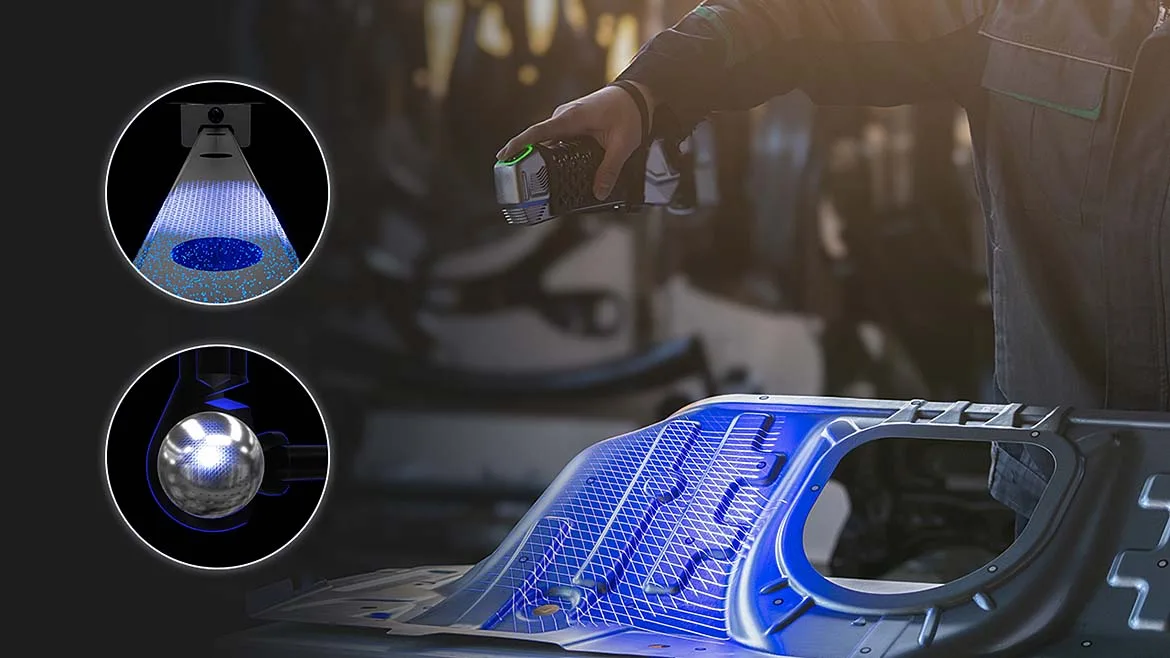
If you’ve ever watched a 3D laser scanner sweep across a car body or a centuries-old artefact and thought “But how do I know it’s measuring correctly?” — you’re asking exactly the right question.
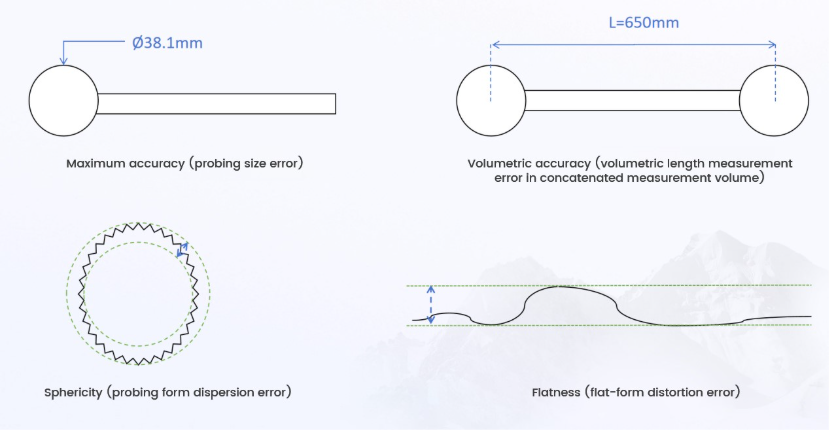
A 3D scanner is only as useful as it is accurate. And accuracy, it turns out, is far more nuanced than a single number on a spec sheet. The international standard ISO 10360-13:2021 defines a rigorous framework for evaluating scanner performance — think of it as a full medical examination rather than just height measurement. Four core metrics form the foundation of this evaluation, and understanding them will make you a far savvier buyer, operator, or engineer.
Source: SCANOLOGY
Max Accuracy — How Accurately Can It Measure an Object’s Dimensions?
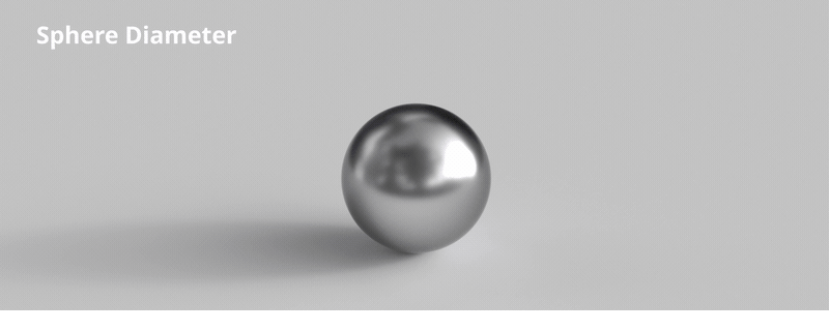
This is the most fundamental test: scan a precision reference sphere and compare the measured diameter against its nominal value. The gap between those two values is the accuracy.
Source: SCANOLOGY
A smaller accuracy value means the 3D scanner is giving you diameter readings closer to ground truth. It’s the baseline check — the equivalent of verifying that a ruler starts at zero. Without this, nothing else you measure can be trusted.
Why it matters: In quality control for machined parts, even a small deviation in diameter can mean a component falls outside tolerance. This metric is your first line of defense.
Volumetric Accuracy — How Precisely Can It Measure Distances in Space?
A scanner might nail a single measurement but drift as distances grow. Volumetric accuracy tests whether the scanner maintains geometric accuracy across its entire working volume — not just at one point. It reflects the difference between the length a scanner actually measures and the true, nominal length of the object being scanned.
Source: SCANOLOGY
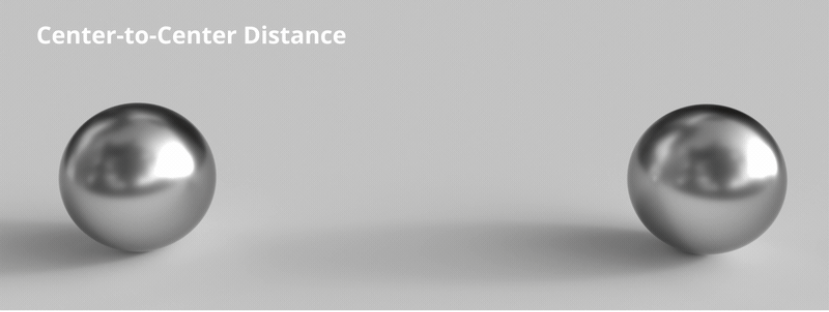
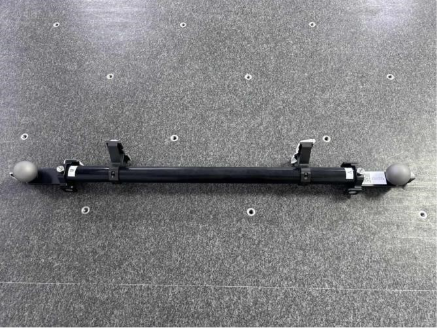
The standard test places a calibrated ball-bar (two precision spheres on a rigid rod) in 12 different positions and orientations within the scanner’s field of view, measuring the center-to-center distance each time.
Why it matters: When scanning large workpieces — aircraft fuselages, automotive body panels, large industrial assemblies — you need to trust that a point at one edge of the scan aligns accurately with a point at the opposite edge. Volumetric error tells you exactly how much drift to expect.
The standard test places a calibrated ball-bar (two precision spheres on a rigid rod) in 12 different positions and orientations within the scanner’s field of view, measuring the center-to-center distance each time.
Why it matters: When scanning large workpieces — aircraft fuselages, automotive body panels, large industrial assemblies — you need to trust that a point at one edge of the scan aligns accurately with a point at the opposite edge. Volumetric error tells you exactly how much drift to expect.
Sphericity — Can It Capture the True Shape of a Surface?
Source: SCANOLOGY
Here’s where things get genuinely interesting — and where many spec sheets fall short.
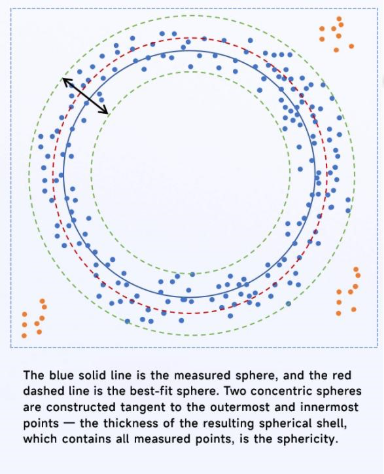
Sphericity measures how faithfully a scanner captures the shape of a surface, not just its size. It’s calculated from the thickness of the thinnest concentric shell that can contain all the scanned surface points. A perfect sphere would score zero; real scanners always produce some value above that.
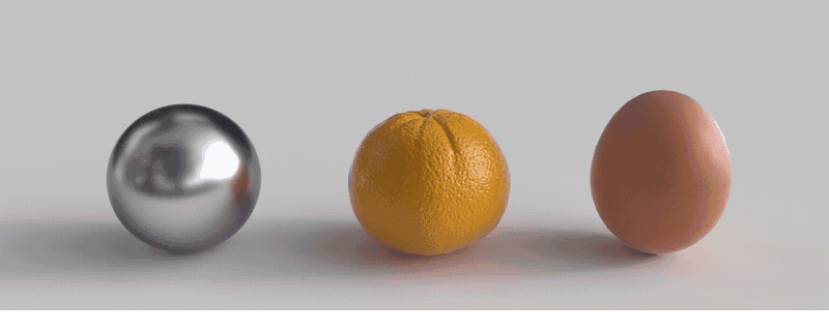
Imagine we scan a standard reference sphere and get four different results: one comes out as a perfect sphere, one as an orange-like shape with a bumpy surface, and one as an egg-like ellipsoid.
If you only measure diameter using a best-fit algorithm, all three might return an identical reading of, say, 38.1 mm. They look identical on paper. But sphericity immediately distinguishes them — the orange-peel surface will show a notably higher sphericity error (e.g., 0.1 mm) than the smooth sphere (e.g., 0.02 mm), and the egg shape higher still (e.g., 0.2 mm).
Source: SCANOLOGY
Why it matters: In industries like aerospace, medical devices, or precision optics, knowing the shape of a surface — not just its average size — is critical. A scanner with poor sphericity performance is essentially lying to you about surface geometry while reporting plausible-looking diameter numbers.
Flatness — Can It Tell You If a Surface Is Truly Flat?
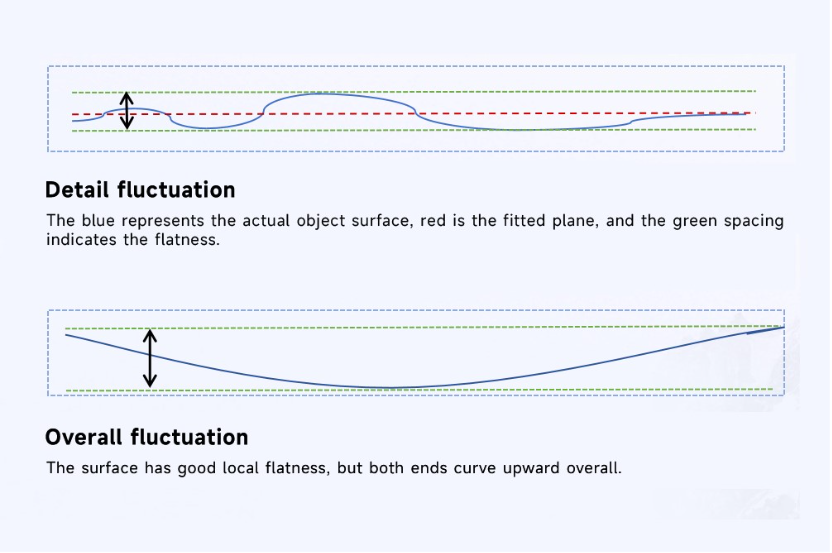
Flatness error is the measured deviation between an actual surface and a perfectly flat reference plane, introduced during machining or manufacturing. Simply put: the smaller the value, the smoother the surface. It captures the full picture of surface variation — from fine-scale irregularities like tiny ripples to large-scale distortions like end-to-end warping.
Source: SCANOLOGY
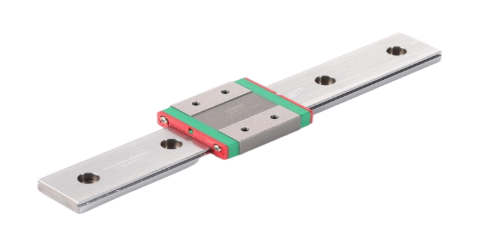
Why It Matters: Take a linear rail as a real-world example. When flatness error is high, the rail surface becomes uneven, creating excessive friction during sliding and putting strain on internal components. Over time, this compromises both workpiece stability and dimensional precision — exactly the kind of outcome precision manufacturing is designed to avoid.
Source: SCANOLOGY
The Bottom Line: The lower a scanner’s flatness value, the more accurately it reflects the true condition of functional surfaces. That means more trustworthy scan data, better-informed decisions, and fewer costly surprises downstream.
Why You Need All Four — Not Just One
High accuracy in one metric doesn’t guarantee accuracy across the board.
By combining four key accuracy metrics — maximum accuracy, volumetric accuracy, sphericity, and flatness — you get a far more complete and truthful picture of what the scanned part actually looks like in the real world.
Accuracy Doesn’t Guarantee Sphericity Performance
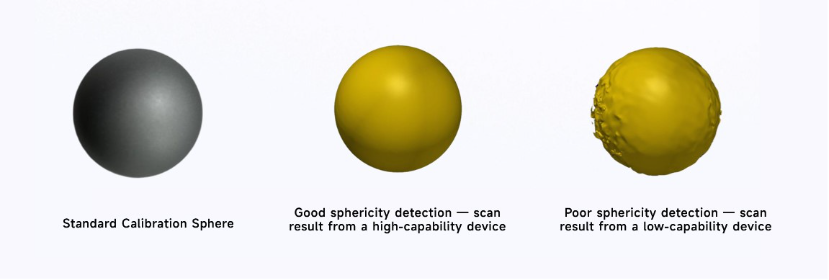
A 3D scanner can achieve high-accuracy results while still producing a poorly shaped scan. As illustrated below, a 3D scanner with strong sphericity detection captures a reference calibration sphere that closely resembles its true geometry. A 3D scanner with weak sphericity performance, however, may produce a significantly distorted shape — yet the software-fitted sphere diameter can still look perfectly accurate. This means accuracy alone doesn’t reveal how faithfully a scanner reproduces real surface geometry.
Source: SCANOLOGY
Volumetric Accuracy Doesn’t Guarantee Flatness Performance
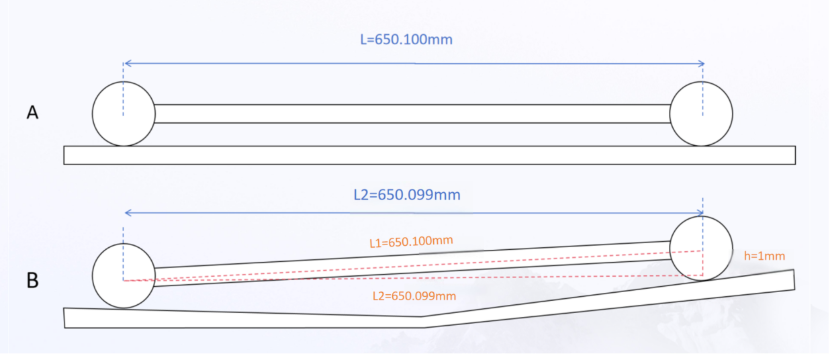
The same principle applies to volumetric accuracy. When scanning a ball bar to measure the distance between sphere centers, assume Scenario A represents the true geometry. A scanner with poor flatness control may produce Scenario B — where the bar appears to bow upward by 1 mm. The measured center-to-center distance remains nearly identical (A = 650.100 mm, B = 650.099 mm), so volumetric accuracy looks fine on paper. But the flatness deviation is significant, and the resulting scan model diverges meaningfully from reality.
Source: SCANOLOGY
Less Error Accumulation at Scale
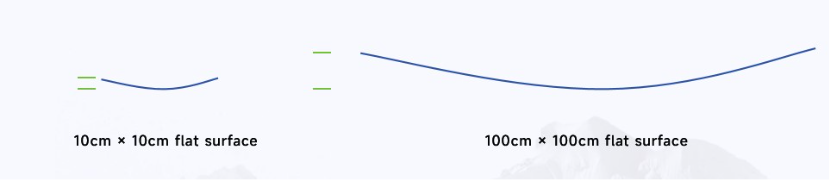
The tighter a scanner’s overall accuracy control, the less error accumulation occurs when measuring larger parts. Take flatness as an example: scanning a 10 cm × 10 cm flat surface versus a 100 cm × 100 cm flat surface of the same shape — as the size scales up, the flatness error scales up with it. This means a scanner with a smaller baseline flatness value will naturally produce smaller accumulated errors when moving to larger workpieces, keeping measurements reliable even as part size increases.
Source: SCANOLOGY
Better Repeatability, Better Reliability
The smaller a scanner’s accuracy value, the tighter its measurement variation — and the better its overall repeatability. This holds true regardless of when the scan is taken, who is operating the device, or what environment it’s used in. Consistent, low-variation readings are a direct reflection of the scanner’s stability and reliability in real-world conditions.
Some 3D scanners are now designed with this full-panel approach in mind. Their value lies in feature-level verification: functional surfaces, precision-machined geometries, and assembly-critical dimensions where GD&T tolerances leave little room for error.
How Can It Solve Problems in Real World
Understanding accuracy metrics in theory is one thing. Seeing what happens when they are put to work on a live production challenge is another. The following case illustrates what becomes possible when all four metrics — accuracy, volumetric accuracy, sphericity, and flatness — are delivered together by a scanner built for the demands of real manufacturing environments.
From One Week to One Day: How 3D Scanning Transformed Automotive Mold Inspection
Challenge: A leading precision cold stamping die manufacturer supplying Mercedes-Benz, BMW, and Toyota struggled with an inspection process that couldn’t match production demands. Full die inspections took several hours, while discrete point sampling left critical blind spots on complex curved surfaces. Without comprehensive data, engineers relied on subjective judgment to guide adjustments — resulting in tryout cycles lasting a week or more, significant material waste, and mounting pressure from tighter tolerances and faster delivery windows.
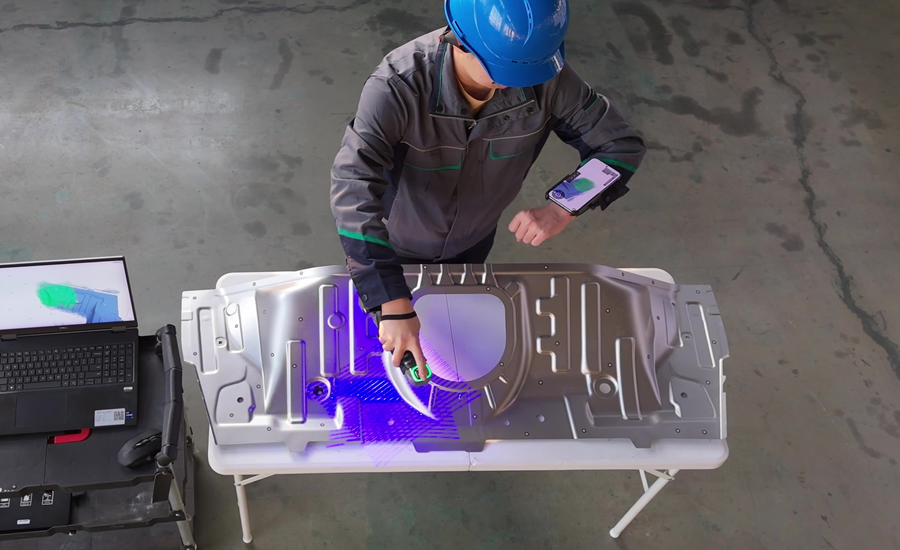
Solution: The manufacturer integrated a palm-sized handheld 3D scanner into their workflow across three use cases: quality control, repair and rework guidance, and reverse engineering. The scanner captures full-surface point clouds in approximately 10 minutes and generates automatic color deviation maps against CAD models — replacing experience-based guesswork with precise, data-driven diagnosis. Its deep hole scanning mode also reached confined cavities that conventional systems couldn’t acces
Results: The impact was immediate and measurable. A side outer panel project that would typically span a full week was completed in a single day, with the root cause of a wrinkling defect identified and resolved in two iterations. Inspection time dropped from several hours to around 10 minutes per scan. Beyond this project, the manufacturer is now exploring broader integration of 3D scanning into automated production lines.
Source: SCANOLOGY
The Takeaway
Next time you’re evaluating a 3D scanner — whether for procurement, validation, or simply understanding your existing equipment’s limitations — don’t stop at the headline accuracy figure. Ask for all four: accuracy, volumetric accuracy, sphericity, and flatness. A scanner that performs well across this full panel of tests is one you can genuinely trust, whether you’re inspecting a turbine blade, reverse-engineering a heritage artefact, or ensuring a production line stays in tolerance.
Looking for a reprint of this article?
From high-res PDFs to custom plaques, order your copy today!