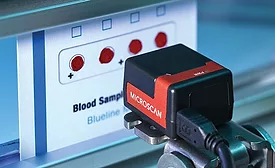
Packaging, electronics, automotive, clinical diagnostics… Smart cameras have made their way into all sorts of industries and applications. Machine vision engineers never get to rest on their laurels because there’s always some new process to improve.
Lenses are a complicated and nuanced component in imaging systems. It is not always straightforward which decisions to make when it comes time to choose a lens and what tradeoffs are made as a direct result of those decisions.
The term machine vision can imply a computer having a set of eyes for an inspection. To develop a complete solution for machine vision applications, vision engineers execute a series of tasks that usually fall into five categories: plan, design, build, integrate, and validate.
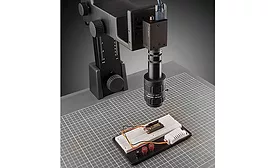
The technology group SCHOTT unconventionally relies on aspherical lenses to increase the effect of LED cold light sources in the illumination of stereomicroscopes in the area of Lighting and Imaging. This delights the experts in laboratories who can now perform microscopy more precisely.
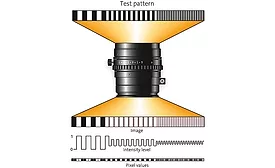
Precision lenses do an excellent job conveying contrast and color from object to image, but they can do a poor job of transferring accurate dimensions, especially if they have small focal lengths.
According to information released by Navitar, Inc., Chinese metrology machine maker, Dongguan Jiateng Instrument Co., Ltd. of China, and it’s owner Peng Xiong liang, were fined 20,000 RMB by the local Dongguan China Bureau of Administration for Industry & Commerce (AIC) for falsely advertising on its website, advertisements, and brochures that Jaten metrology inspection machines included Navitar trademarked video microscope lenses as components, when in fact, they did not.