In a technically focused organization like the American Society for Quality (ASQ), participating as a woman can be daunting at the start. While the demographics of the organization have shifted over time, many more technical roles have been seen as being “for men.”
Dealing with customer complaints presents a “moment of truth” in which frontline employees have one chance to provide a lasting impression that your organization really cares about treating them fairly and with respect.
Consolidation is something we’ve all done. It’s efficient and can help save time and space and naturally leads to greater organization and productivity.
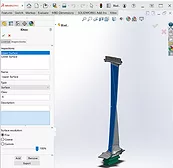
Israel-based smart visual inspection company Kitov.ai has significantly simplified the setup of robotic vision inspection systems with CAD2SCAN, a CAD-based automated inspection planning tool.
The National Institute for Metalworking Skills (NIMS) announced that it has developed a new methodology to learn, retain, and transfer knowledge for Geometric Tolerancing & Dimensioning (GDT) across an organization.
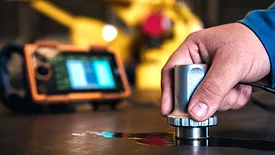
Each NDT method has its advantages and disadvantages, so knowing what your flaws of interest are and where they tend to be located can be extremely helpful.
Flaws can be found in every type of material and component, no matter the method of manufacturing, processing, or finishing used. Selecting the proper detection method is crucial, because, even if a flaw is not actually a defect, you still want to be able to detect and evaluate them.
Quality spoke with a host of NDT experts to discuss how the field has changed in recent years, trends, and challenges related to working with NDT technology.
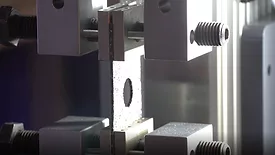
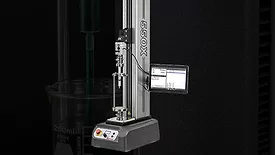
Fatigue testing is unique in that it repeatedly exposes parts to “real-world” conditions, producing data and results that helps manufacturers predict the part’s durability.
One of the last things you want to hear if you’re a manufacturer, distributor, vendor, or supplier is “your shipment is stuck and we have no idea when it’ll arrive.” What do you say to your customer?