
Articles Tagged with ''metrology''

The Quality Edge
ITAF Rule 6 Changes
The transition to the new Rules 6 must be completed by January 1, 2025, after which they will be mandatory for all audits.
Read More


NDT | Trends
Superior Battery Quality: How Automated Defect Recognition Supports Battery Manufacturers On Their Road To Excellence
Electrification will drastically change our energy consumption in the coming years, and with it our everyday lives.
Read More

NDT | Test & Inspection
Corrosion Testing: An Important Piece of the Quality Assurance Puzzle
Whether performed onsite or outsourced to an ISO 17025 accredited lab, the tests described here are great ways to screen corrosion inhibiting materials during the selection process.
Read More

NDT | Analysis
Ensuring Quality Control in Additive Manufacturing Using Advanced Elemental Analysis
Compositional analysis forms an indispensable building block within additive manufacturing.
Read More


NDT | Back2Basics
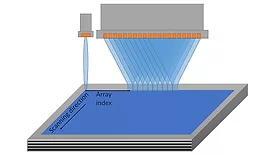
Enhancing Automated NDT: Leveraging Advanced 3D Phased Array Scanning and C-Scan Mapping Techniques for Aerospace Applications
These technologies enhance the accuracy, speed, and thoroughness of flaw detection in critical components, contributing to improved safety and reliability in aerospace operations.
Read More
Test & Inspection
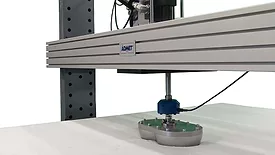
Compression Testing Fundamentals
Compression testing can be a critical diagnostic tool in all phases of the product development cycle, from prototyping through production.
Read More