NDT | Test & Inspection
Corrosion Testing: An Important Piece of the Quality Assurance Puzzle
Whether performed onsite or outsourced to an ISO 17025 accredited lab, the tests described here are great ways to screen corrosion inhibiting materials during the selection process.
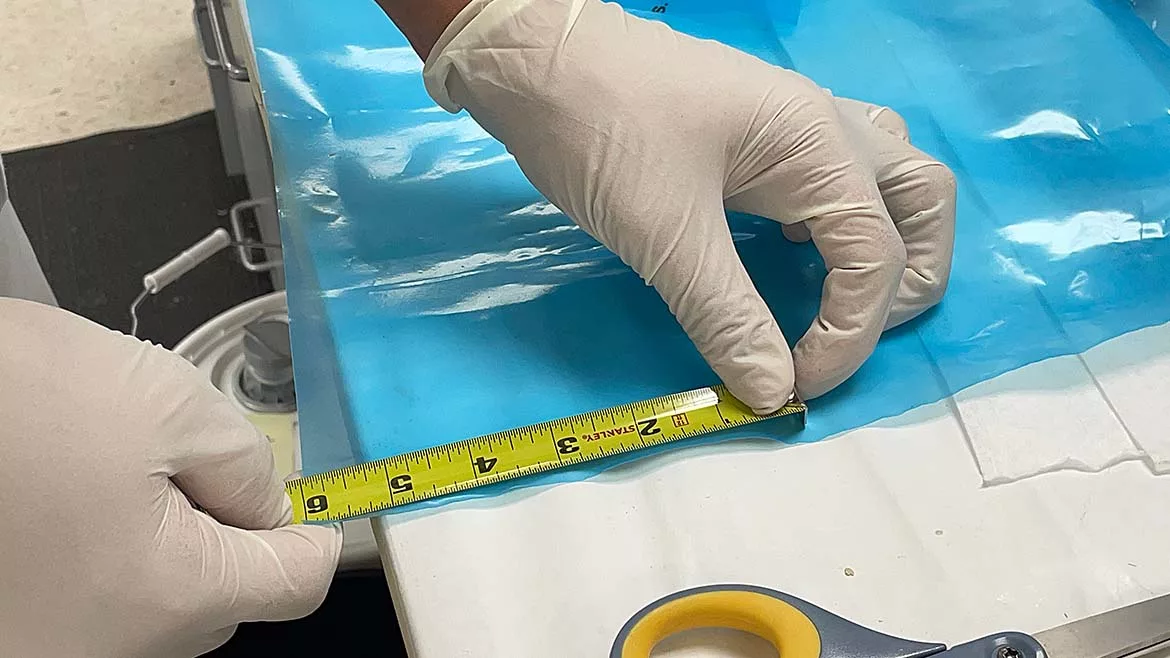
Corrosion prevention is an important piece of the quality assurance puzzle for manufacturers of metal goods. Without it, manufacturers face interrupted WIP cycles and customer complaints due to components that have rusted in-process or during shipment. To avoid these problems, manufacturers should be aware of four basic types of corrosion testing that will help them select the right corrosion protection method, confirm the effectiveness of materials used, and identify the ideal rust preventative dosage for better quality assurance. These include VIA testing, humidity and salt fog testing, and iron chip testing.

VIA Testing
VIA (vapor inhibiting ability) testing can be used to check VCI (vapor corrosion inhibitor) packaging materials for effectiveness. VCI packaging includes films, bags, papers, and other materials that emit corrosion inhibiting vapors. These vapors are attracted to metal surfaces where they form a molecular layer of corrosion inhibitors, eliminating the need to directly apply a grease or liquid rust preventative that must be removed later. Because the parts are protected in a clean, dry manner, they can be installed or used immediately after being taken out of the package.

The basic VIA testing concept comes from military guidelines that have been around since the 1970s and have crystalized into official standards such as AMPP’s NACE TM0208-2024[1] and German test method TL-8135-002.[2] Equipment varies slightly depending on whether manufacturers want to strictly adhere to NACE TM0208-2024 or want to do a simpler modified version. The test is performed in a glass jar with a special lid that holds a steel plug. A water/glycerin solution goes in the bottom of the jar, and a source of corrosion inhibiting vapors—whether VCI film, paper, or emitter—is suspended from the lid without directly touching the metal plug or the liquid (see images 1-3). The container is left overnight to allow time for the vapors to fill the jar. The next step in the AMPP standard is to pour ice cold water through a hole in the lid connected to the backside of the steel plug, then immerse the entire jar into hot water to induce condensation. A modified version of the test produces condensation by placing the jar into an oven for two hours then removing it for two hours before examining the plugs. Both the official and modified VIA tests are completed by grading the steel plugs on a scale of 0 to 3. A grade 0 plug with many corrosion spots represents failure, while a grade 3 plug showing no corrosion spots represents good corrosion protection. Although VIA testing can be performed by an accredited lab, it is a relatively simple method for manufacturers to set up on site if they want to confirm the effectiveness of each incoming batch of VCI material. This is a wise idea since many manufacturers outsource VCI film or paper production and may never test the products for vapor inhibiting ability.
Humidity and Salt Fog Testing
Humidity (ASTM D1735[3]) and salt fog (ASTM B117[4]) testing are very similar and are both used to accelerate corrosion on metal test specimens. These methods can be used to evaluate the performance of packaging, coatings, and liquid rust preventatives in a corrosive environment. ASTM D1735 exposes specimens to a warm humid environment. ASTM B117 testing adds a saltwater solution to the picture, accelerating corrosion even more. Manufacturers who are trying to decide on a packaging system sometimes send components along with packaging or rust preventative samples to an ISO 17025 accredited laboratory to perform these tests so they can compare the performance of various corrosion protection systems against each other in a corrosive environment.


Iron Chip Testing
Iron chip testing (ASTM D4627-22[5]) is an easy way for manufacturers to identify the best dosage of a liquid rust preventative or corrosion inhibiting cutting fluid or cleaner. Many products can be diluted for greater economy and reduced environmental discharge concerns, but if the concentration is too low, rust prevention will be ineffective. The goal is to find a concentration that is effective but not excessive. By running several cast iron chip tests at the same time, a plant chemical manager can find out what are the minimum viable and optimal concentrations for each rust preventative product. All that needs to be done is to place the product (at different concentrations) in petri dishes containing filter paper and iron chips (see image 4). After 24 hours, the chips can be removed and the paper examined for rust spots. The more rust spots there are, the worse the protection is (see image 5). The fewer rust spots are present, the better the protection is. An optimal product concentration will have no rust spots.
Examples of Testing in Action
A leading producer of precision machined components for heavy equipment was having corrosion problems despite using a commercial rust preventative and VCI bag and sent materials to an ISO 17025 accredited laboratory for testing. One portion of the evaluation involved VIA testing according to NACE TM0208-2018 (option 2). While the film passed testing for corrosion protection when in direct contact with steel panels, it failed VIA testing, giving an important clue as to why the manufacturer had been having rust problems. Also, when subjected to ASTM D1735 conditions, another brand of film showed better protection than the brand the manufacturer had been using. [6]
In another case, a manufacturer was looking for a new packaging system for its small muffler parts and approached an outside laboratory to compare the performance of various packaging combinations. They did not know if the blue polyethylene (PE) film they were currently using contained corrosion inhibitors or not. The parts were packaged in eight different groups:
- No protection (control group, packaging removed)
- Current film from Company A + VCI (vapor corrosion inhibiting) paper from Company B
- Current film + VCI foam emitter from Company C
- Current film + VCI paper from Company C
- VCI film (2 mils [50 µm]) from Company C
- VCI film (4 mils [100 µm]) from Company C
- VCI film (4 mils) + VCI foam emitter, both from Company C
- VCI film (4 mils) + VCI paper, both from Company C
All parts were placed in an ASTM D1748 humidity chamber and left for 1,000 hours. Inspection showed that the 4 mil VCI film from Company C provided much more protection than the film currently used by the manufacturer. Groups 6 through 8 (see image 7) did not fail. Groups 2 (see image 6) and 4 (comprised of the currently used film plus VCI paper) both had some corrosion, but the package including VCI paper from Company C performed slightly better than the package containing VCI paper from Company B. This gave the manufacturer a range of options to choose from and clearly indicated that the best protection would come from one of the 4 mil VCI film packaging combos from Company C.[7]


A third testing example stems from a manufacturer of automotive components who had problems with its rust preventative process on machined steel rings. Although the rings were cleaned in mineral spirits, process oil was still carrying over into the water-based rust preventative tank, requiring the manufacturer to change the product every day. Their customer was also noticing corrosion on the rings upon receipt.
Once again, the problem was brought to a laboratory that was ISO 17025 accredited to do ASTM D1735 humidity testing. To simulate the manufacturer’s process, the laboratory subjected the rings to several different methods of cleaning and rust prevention before placing them in the test chamber for 96 hours. The lab found that the rings did slightly better when dipped in a contaminated version of the current rust preventative versus an uncontaminated version, likely due to the oily layer left behind by the process oil. A different rust preventative showed far better protection than either of the current product versions, while the use of a flash rust inhibiting cleaner and yet another rust preventative option was the next best option. The lab was also able to give process improvement suggestions based on their findings.[8]
Corrosion Testing for Quality Assurance
Whether performed onsite or outsourced to an ISO 17025 accredited lab, the tests described above are great ways to screen corrosion inhibiting materials during the selection process and verify the effectiveness of batches received. Since corrosion protection directly affects quality assurance, these corrosion tests represent an important piece to completing the quality assurance puzzle.
Acknowledgements: Special thanks to Technical Service Engineers Lisa Marston (for article development) and Sam Pfremmer (for research support).
[1] The AMPP standard, “NACE TM0208-2024, Laboratory Test to Evaluate the Vapor-Inhibiting Ability of Volatile Corrosion Inhibitor Materials for Temporary Protection of Ferrous Metal Surfaces” can be purchased at .
[2] Learn more about the German method in this AMPP paper: .
[3] The ASTM International “ASTM D1735-21: Standard Practice for Testing Water Resistance of Coatings Using Water Fog Apparatus” can be purchased at .
[4] The ASTM International “ASTM B117-19: Standard Practice for Operating Salt Spray (Fog) Apparatus” can be purchased at .
[5] The ASTM International “ASTM D4627-22: Standard Test Method for Iron Chip Corrosion for Water-Miscible Metalworking Fluids” can be purchased at .
[6] Benduha, B. “Corrosion Testing for Our Customer.” Cortec® Laboratories, Inc. Project 19-187-1125.bis. 5 Nov 2019.
[7] Cortec® Laboratories, Inc. “Evaluating Packaging Systems for our Customer.” Project 08-035-1125.bis. 1 Apr 2008.
[8] Uutala, E. “Evaluating Cleaner and Rust Preventive Options for Automotive Components.” Cortec® Laboratories, Inc. Project 17-188-1825.bis. 31 Oct 2017.
Looking for a reprint of this article?
From high-res PDFs to custom plaques, order your copy today!