How new tools—including 3D laser scanning and probing devices—can help the industry innovate and adapt in an increasingly competitive (and tariffed) world.
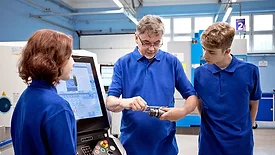
The future of manufacturing belongs to companies that can move faster, train smarter, and deliver consistent quality with fewer barriers to finished results. One key method of achieving this coveted four-way win is adopting portable 3D scanning and probing technologies.
Rebuilt and redesigned, FANUC announces the release of ROBOGUIDE Version 10, the latest and most advanced iteration of its offline robot programming and simulation software.
Implementing X-Ray CT technology provides a pathway to increased efficiency by overcoming production bottlenecks, addressing issues related to a shortage of skilled labor, and navigating supply chain challenges.
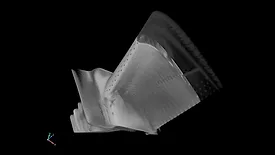
Advances in X-Ray computed tomography (CT) technology can enhance quality processes, improving inspection speed and accuracy, while the 3D data can help address industry challenges.
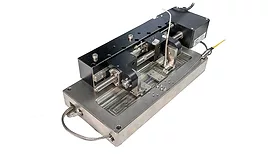
The microtester has revolutionized materials testing by allowing precise evaluations of small specimens, such as biological tissues and semiconductor wafers. This article discusses its key features, benefits, and future potential in materials testing.
This paper examines employee motivation, using the Prima method to identify causes and symptoms of low motivation. It offers practical solutions and emphasizes the importance of implementing actionable plans to improve the workplace.
AI is transforming manufacturing, with nearly 60% of top use cases leveraging it to reduce defects and boost productivity, though questions about the extent of these improvements remain.
This article introduces the fundamental concepts of Cost of Quality (COQ) and explores two widely used models: the Prevention-Appraisal-Failure (PAF) model and the Process Cost Model (PCM).