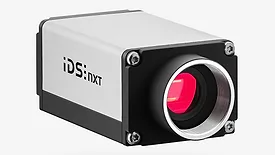
Artificial intelligence (AI) is currently the leading trend in machine vision. Every major machine vision software package incorporates AI as one of its tools, and even less common software options include AI features as well.
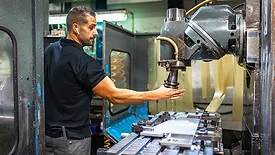
Factories are increasingly using laser measurement systems for improved quality control, replacing manual inspections with faster and more accurate tools. Industries like automotive, aerospace, and medical are seeing significant benefits, especially in precision and waste reduction.
The NDT industry has established in-depth guidelines and requirements for formal classroom training, but a shortfall in the standardization of on-the-job training (OJT) requirements remains. Donald Booth, CEO of the American Institute of Nondestructive Testing, explains.
Coy Limon from 3D Infotech highlights how innovations like metrology automation, machine learning, and augmented reality (AR) are transforming quality control in manufacturing, enhancing efficiency and accuracy while integrating with Industry 4.0.
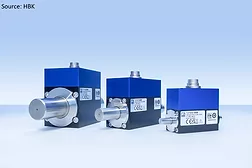
Hottinger Brüel & Kjær (HBK) has added IO-Link functionality to its T210 torque sensor, helping engineers perform R&D and end-of-line torque testing more efficiently while streamlining their processes.
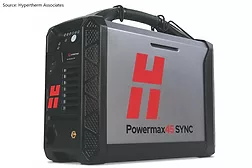
Hypertherm Associates is an in-kind sponsor for the welding competition at this year’s SkillsUSA National Leadership & Skills Conference June 23-27 at the Georgia World Conference Center in Atlanta, GA.
Skepticism surrounds AI among quality professionals, but innovative organizations are already using it to improve operations through conversational interfaces. This highlights AI's potential to streamline processes and enhance decision-making by adapting existing solutions.
Manufacturers face rising costs and supply chain disruptions, increasing the need for efficiency. Recent declines in Texas manufacturing highlight these challenges, but they also present opportunities for improvement. Many are adopting digital solutions to optimize operations and reduce waste.
The relationship between lean manufacturing and quality management has evolved to focus on balancing efficiency with product quality. Initially, lean practices sometimes compromised quality, but now there's a more integrated approach that reduces waste while meeting customer expectations for excellence.