Integrating AI into quality control processes requires a thoughtful approach that goes beyond mere technology adoption. Here are some proven strategies to ensure successful AI empowerment in quality control.
The recent Boeing door plug failures highlight the urgent need for better quality control. Utilizing AI, particularly Large Vision Models (LVMs), offers a promising solution for enhancing quality assurance by providing unparalleled precision, efficiency, and scalability.
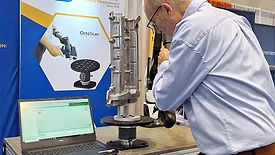
In-process verification uses high-tech tools like 3D scanners and laser trackers on the factory floor to monitor products as they're made, allowing instant analysis and immediate problem-solving.
Reverse engineering is the process of taking apart a product to understand its design and functionality. This knowledge is helpful for creating similar products or improving existing designs.
This article explores the transformative impact of incorporating rotary stages into coordinate measuring systems, enhancing their capabilities and the efficiency of the measurement process.
DOE is a method that helps manufacturers improve processes by understanding the relationship between factors and the output. It involves defining the problem, selecting the right design, conducting the experiment, analyzing the results, and implementing changes.