Manufacturing often involves the fabrication of products that are made up of multiple smaller parts or components. Assembling these parts into finished products can be complex and labor intensive.
The American Society of Mechanical Engineers (ASME) has published a new standard that identifies elements that will impact measurement uncertainty from thread calibration processes.
Nondestructive testing (NDT) dates back to the late-1800s, to the railroad industry. The “Oil and Whiting” method of crack detection was used to find damage in heavy steel parts.
If you subscribe to Quality, it seems safe to assume that quality is a priority for you. But even when it is a priority, achieving high levels of quality is an ongoing challenge that requires effort from every member of the organization every day.
There’s no question about this column. I accept the blame for what appears in this monthly effort for better or worse. This column is all about the standards I often refer to in my rants. I frequently encounter folks who question the information these standards contain and sometimes the question is valid but there are ways to challenge or change technical details within them.
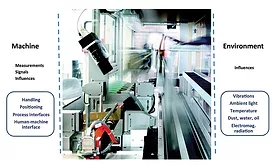
The use of industrial vision as part of Industry 4.0 and smart factories has been discussed extensively in recent years, but requires machines to speak the same language.
Machine vision systems consist of several component parts, including illumination, lenses, camera, image acquisition and data transfer, and image processing and measurement software.
Global standards developer ASTM International launched its Additive Manufacturing Center of Excellence (www.amcoe.org) with Auburn University, NASA, manufacturing technology innovator EWI, and the UK-based Manufacturing Technology Centre (MTC). Auburn and NASA also formally launched the National Center for Additive Manufacturing Excellence (NCAME, eng.auburn.edu/ncame).
Learn more about the entire 3D printing process from powder characterization to determining the best tests to qualify parts for the aerospace industry.
The aerospace industry is increasingly adopting metal additive manufacturing for both flight safety-critical aircraft parts and non-critical flight parts. The approach offers a shorter development cycle, which means products can be developed quicker and design changes easily incorporated.
Nothing could be simpler than fixed limit gages which explains why they remain so popular. But nothing so simple can remain so when humans are involved.