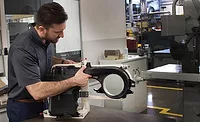
Producing Quality Metal Parts with Additive Manufacturing
Learn more about the entire 3D printing process from powder characterization to determining the best tests to qualify parts for the aerospace industry.
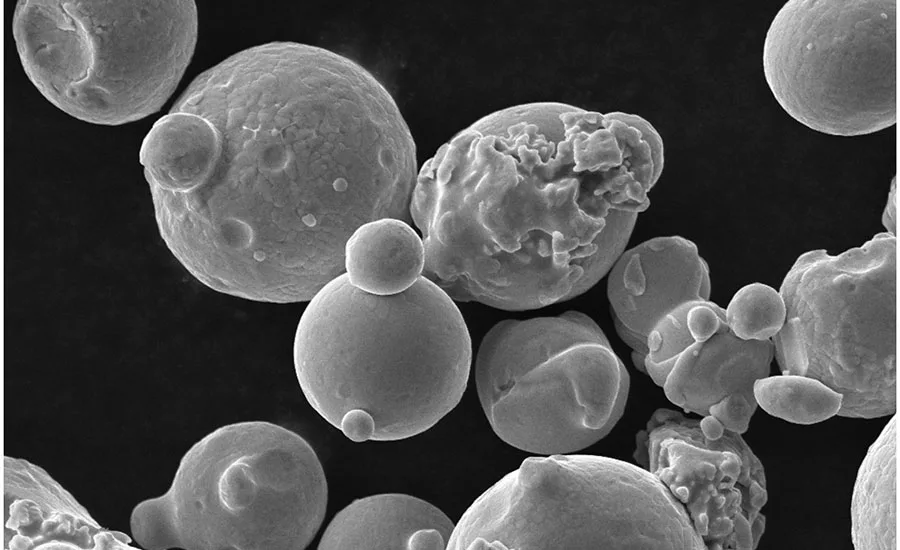
Like every manufacturing process, additive manufacturing includes variation. One source of variation is the powder chemistry.
The aerospace industry is increasingly adopting metal additive manufacturing for both flight safety-critical aircraft parts and non-critical flight parts. The approach offers a shorter development cycle, which means products can be developed quicker and design changes easily incorporated. Similar to other 3D printing methods, metal additive manufacturing, specifically Select Laser Melting (SLM) and Electron Beam Melting (EBM), builds up a part layer by layer by depositing thin layers of metal powder that are melted with a laser or other thermal source.
Additive manufacturing can be used for very fast prototyping of parts, short production runs and as a faster and more economical way to create part molds and fixturing compared to machining. One of its greatest advantages is in making highly intricate parts. In the past, complex parts would require several different machining operations. With metal additive manufacturing, it is possible to make a single part to replace multiple pieces that would otherwise be combined with welding or fastening systems. This not only makes manufacturing faster, less expensive, and more consistent but also creates a seamless piece that is stronger and has less opportunity for failure.
Producing a quality 3D printed metal part requires an understanding of the powder properties used to create the part and analyzing the strength and chemistry of the part itself. Partnering with a trusted independent testing laboratory can give you insight into the entire 3D printing process from powder characterization to determining the best tests to qualify parts for the aerospace industry.
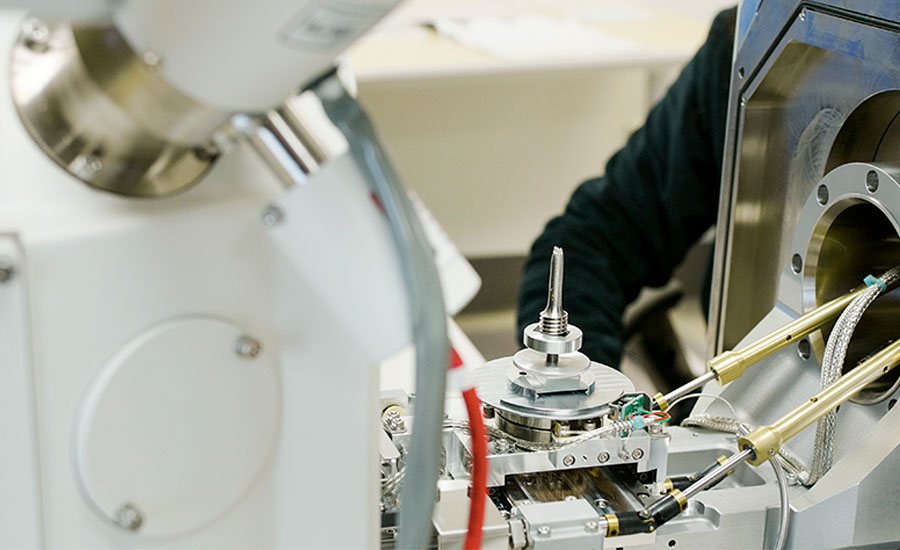
The powder’s physical properties are an important consideration. Scanning electron microscopy (SEM) can reveal particle shapes and the particle morphology.
Standards and Certifications
Because metal additive manufacturing is still a relatively new process for the aerospace industry, standards and certifications remain in development. Years of research have been performed on metal parts created by traditional techniques, such as casting and forging, to develop design-allowable databases for aerospace applications. However, new research and validation is necessary to understand how parts made with additive manufacturing react to flight conditions on a commercial basis.
Parts produced by additive manufacturing must be qualified with the Federal Aviation Administration (FAA) on an individual basis. Because this process qualifies a particular 3D printer and powder composition, it can be hard for manufacturers to move to large scale production. However, as more standards are established it will be easier for the aerospace industry to adopt 3D metal printing on a mass production scale.
Some standards are starting to be published, and more will be finalized in the next year or two. For example, NASA recently published a Marshall Space Flight Center (MSFC) technical standard that provides a framework for the implementation of laser-powder bed fusion additive manufacturing parts into spaceflight applications that require high reliability. The SAE International Additive Manufacturing Committee, AC7101, is developing aerospace material process specifications for additive manufacturing, some of which should be issued this year. The SAE specifications will eventually cover precursor materials, chemistry, additive powder processes, system requirements, post-build materials, pre- and post-processing, nondestructive testing, and quality assurance.
Last year, the ASTM Committee F42 on Additive Manufacturing Technologies released 15 new proposed standards that will help companies involved in additive manufacturing to comply with a checklist for accreditations developed by the National Aerospace and Defense Contractors Accreditation Program (Nadcap), a cooperative program of major companies within the aerospace and defense industries.
As standards become more robust and generalizable beyond single powers, processes, and machines, we can expect additive manufacturing to be applied more broadly and at larger scales.
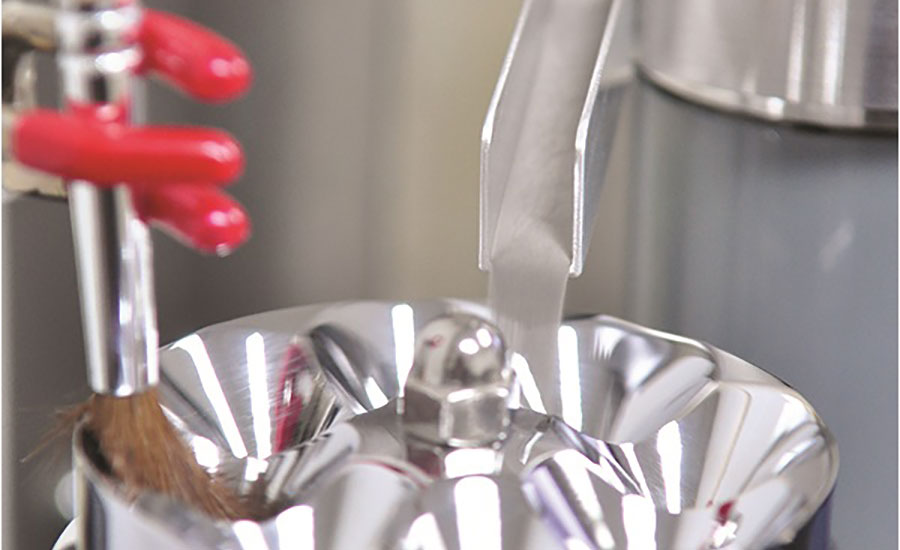
Although microcracks are sometimes apparent in results from tensile tests, they don’t always show up.
Why use a commercial testing laboratory?
With standards and certifications in flux, using an independent commercial testing laboratory experienced with metal additive manufacturing can be very helpful. Independent testing laboratories can, for example, provide thorough testing documentation necessary for FAA validation that a part can be manufactured in a way that consistently meets specifications.
Independent testing laboratories have a large variety of testing equipment available and the technical expertise to not just run the equipment and instruments but to also develop the testing methods and interpret results. What is considered the best method for testing this year may not find its way into the final standards, so using an independent testing laboratory prevents the need to purchase and learn how to use expensive testing equipment that might not be useful once the standards mature.
Using an independent testing laboratory that keeps abreast of the best testing methods for metal additive manufacturing and actively participates in organizations that are developing standards means that when the standards are issued they can help you identify the correct type of equipment to use for in-house testing and then support you with correlation studies to be sure that your in-house results are accurate and stable.
Quality Powder Yields Quality Parts
Like every manufacturing process, additive manufacturing includes variation. Testing can help identify and quantify how variation in the raw materials, the 3D printing machines, and the exact processes used will affect the finished products. Understanding the sources of process variation and which sources are the most critical allows controls to be put in place to minimize those variations.
One source of variation is the powder chemistry. Each powder supplier can refine its powder in numerous ways, which makes it important to understand the powder chemistry and properties so that the power requirements and build speed of the 3D printer can be adjusted accordingly. It is important to analyze the major elements in a powder as well as the gases and trace elements because the trace elements play a key role in solidification of the metal. As more internal research and development is conducted service providers are beginning to understand the specific combinations of powder chemistries, properties, type of 3D printers, and processing parameters that work best for the additive manufacturing of specific products.
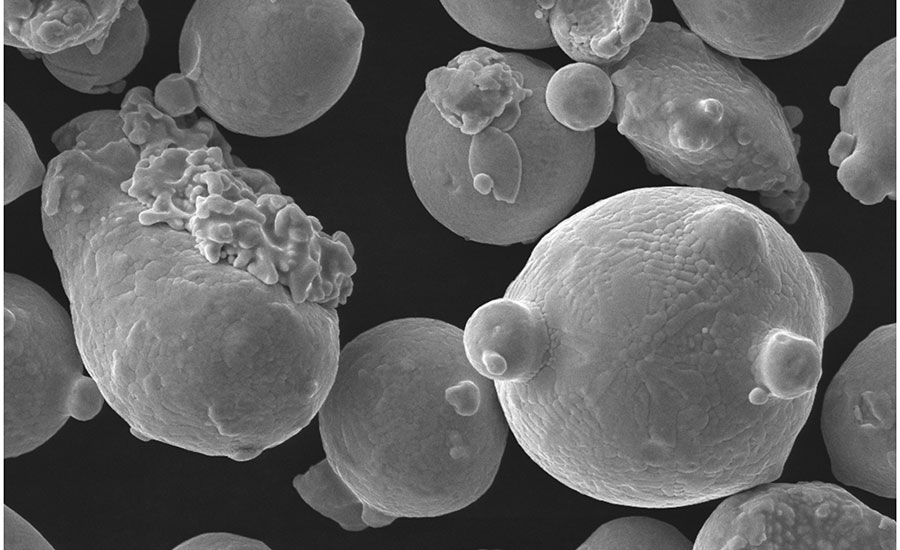
The powder’s physical properties are another important consideration. Scanning electron microscopy (SEM) can reveal particle shapes and the particle morphology. Using metal powder with good flow rates, particle size distribution, uniform sizes, morphology, high purity chemistry and low oxygen content tends to create higher quality metal parts.
Powder reuse is common in additive manufacturing because the metal powder is very expensive and only a fraction melts during 3D printing. When the powder is reused, the chemistry can change, some particles become oxidized, and small powder particles that split off during the laser ablation accumulate, creating powder satellites. For this reason, it is important to analyze powder properties to understand how many times a powder can be reused and whether processing parameters may need adjusting to account for changes in the powder chemistry due to the laser melting. Sometimes modifying the virgin powder’s chemistry can improve the properties of the reused powder. Parts made with reused powder should be examined to determine if strength or other mechanical properties differ from those made with virgin powder. This process is time consuming but can yield great benefits. Once the machine has been qualified for the parts using virgin powder the addition of reused powder will yield a higher reliability of consistency.
Testing the Built Part
Manufacturers using 3D metal printing must also qualify their machine before making a part. This includes proving to certifying bodies that the strength of the material made with that machine is consistent from part to part and is the same for allocations on the build plate. For example, if a box is being made, the corners and the box’s center must all exhibit the same strength. This type of analysis incorporates verifying the mechanical strength of the 3D printed parts by using test coupons or tensile bars from different locations on the build plate. Another consideration is the fact that the properties of the final part are anisotropic. The parts can have physical properties that have a different value when measured in different directions because 3D printing deposits material in layers. This makes it important to test strength in various build directions.
Another key consideration, particularly for aerospace and other industry applications, is the microcracks that sometimes form during the metal deposition. These small cracks can be a significant problem on a plane that experiences stresses that come and go such as in landings and take off. This stress can be multiplied as much as five times at the tip of the crack. Adjusting the chemistry of the powder within the material specifications can help prevent microcracks. Although many fasteners and similar parts are typically built with 2 to 1 load ratios, for aerospace applications, the ratio can go down to 1.1. This makes it very important to understand repeatability limits on all parts.
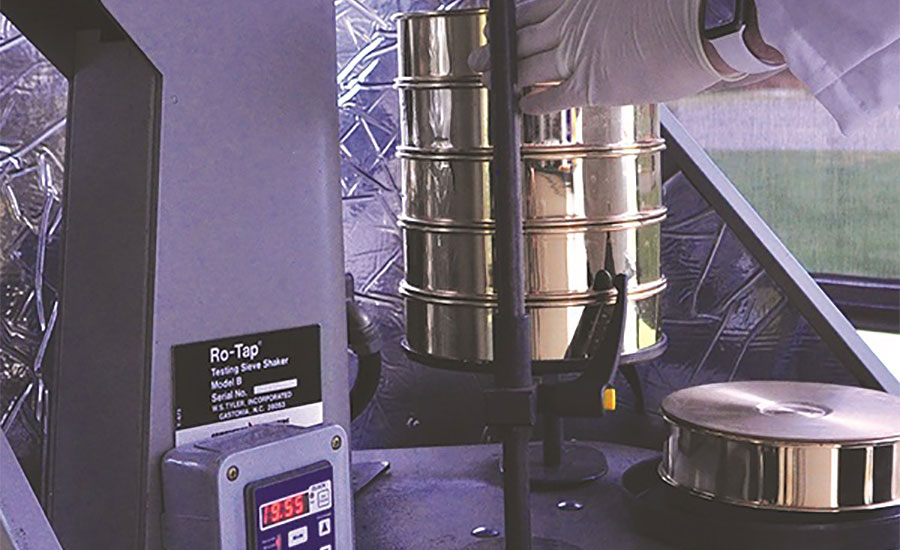
With standards and certifications in flux, using an independent commercial testing laboratory experienced with metal additive manufacturing can be very helpful.
Although microcracks are sometimes apparent in results from tensile tests, they don’t always show up. Microscopic analysis of the deposited material is necessary to visualize cracks using mosaic analysis to evaluate porosity and other sources of weaknesses such as pores that sometimes form as the metal particles melt together. The microstructure of 3D metal printed parts is different than parts of the same material made using traditional subtractive manufacturing methods, so it is important to consult a qualified independent testing lab that works regularly with additively manufactured metal parts and has expertise in looking for microstructure weaknesses in 3D printed parts.
It is an exciting and quickly changing time for metal additive manufacturing in the aerospace industry. Partnering with a trusted independent testing laboratory can help you make sense of changing standards and help you understand how to optimize your powder properties and processing parameters to produce quality 3D parts.
Looking for a reprint of this article?
From high-res PDFs to custom plaques, order your copy today!