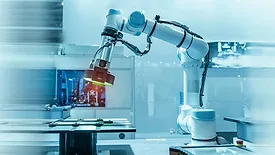
Quality 4.0 looks at how digitization improves industry processes. Despite over 10 years of focus, there's still no clear definition or knowledge base for Quality 4.0.
Fatigue testing has made significant progress in recent years, especially in test and environmental conditions. Remote monitoring has advanced with the use of AI-enabled camera systems, making it easier to integrate legacy instruments.
Quality assurance (QA) meets artificial intelligence (AI). How can they coexist safely? Integrating AI into QA brings opportunities and risks, especially in safety-critical environments. Balancing rigorous standards and human oversight is crucial.
Lucid Vision Labs, Inc., is set to introduce the first member of its intelligent vision camera family, the Triton® Smart featuring Sony’s IMX501 intelligent vision sensor with AI processing.
A recent report by the National Academies of Sciences, Engineering, and Medicine highlights data quality as a significant concern for the reliability of digital twins.
The Digital Twin Consortium (DTC) Composability Framework provides a transformative approach to digital twin system development, focusing on interoperability, security, trustworthiness, scalability, and design reuse to align with businesses’ objectives and evolving needs.
At some point in the creation of any product, whether it be plastic moldings, consumer electronics, or even welds on nuclear power plant steel, it undergoes magnified and optical visual inspection.
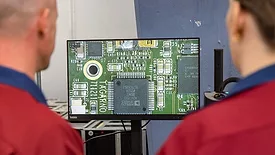
In manufacturing, microscopes and magnified viewing systems are crucial for inspecting products. Digital microscopes offer enhanced capabilities and AI-assisted inspections, revolutionizing the way manufacturers view and interact with macro and microscopic details.
The singularity—or more accurately, the technological singularity—“is a hypothetical future point in time at which technological growth becomes uncontrollable and irreversible, resulting in unforeseeable consequences for human civilization.”
The growing use of AI in manufacturing has revolutionized quality control. Traditional inspection methods struggle to keep pace with complex production processes, but AI augments accuracy and efficiency, upholding high-quality standards.