Measurement
Seeing Further with Digital Microscopy in U.S. Manufacturing
At some point in the creation of any product, whether it be plastic moldings, consumer electronics, or even welds on nuclear power plant steel, it undergoes magnified and optical visual inspection.
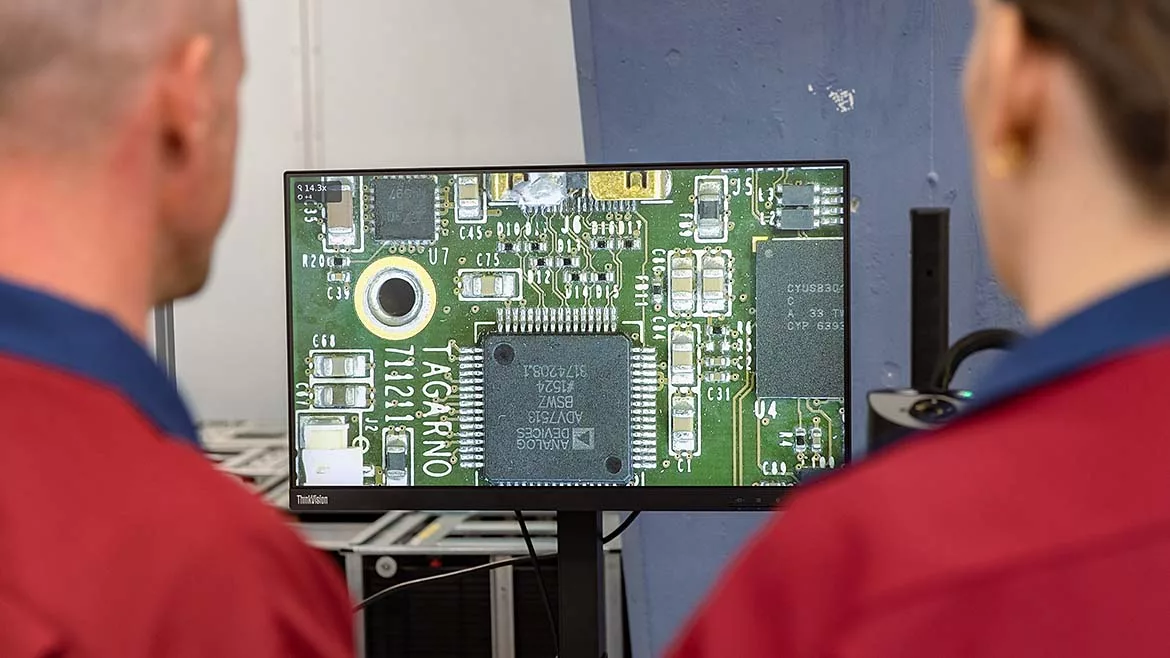
All Images Source: TAGARNO
In the world of manufacturing, microscopes and magnified viewing systems have long played a critical role in working on and the inspection of products. These conventional methods include stereo microscopes, compound microscopes, magnifying lenses, and more for operators inspecting fine details, identifying defects, and verifying measurements. Nearly every manufacturer will have microscopes and magnification systems as part of their processes somewhere throughout their facilities. Today though, microscopes can do much more than simply magnify. As technology advances, so do the tools available to manufacturers. Enter the digital microscope: a powerful, versatile option that can transform the way manufacturers view and interact with both macro and microscopic details in manufacturing processes. In this article, I invite you to consider your operation’s magnified inspection processes and suggest taking a new look at existing processes in light of the enhanced capabilities of a digital microscope that range from ergonomic advantages to AI assisted inspections.
RELATED ARTICLES
Magnified Viewing
It is helpful to take a step back and review how microscopes and magnification systems are used. For the most part, at some point in the creation of any product, whether it be plastic moldings, consumer electronics, or even welds on nuclear power plant steel, it undergoes magnified and optical visual inspection. Magnified viewing has been an integral part of quality control and assurance in manufacturing. Engineers and quality inspectors use traditional magnifying tools to perform tasks such as:
-
Defect Detection: Identifying surface defects, cracks, or inconsistencies in materials.
-
Measurement Verification: Ensuring that dimensions and tolerances are within specified limits.
-
Surface Analysis: Examining surface finishes and textures to meet aesthetic and functional requirements.
- Assembly Inspection: Performing and checking the alignment and placement of small parts in assemblies.
Regardless of design or job function, traditional microscopes and magnification systems are predominantly built around an operator being able to look through the microscope system, which comes with some limitations:
- Manual Operation and Skill Dependency: Traditional optical microscopes and magnified viewing techniques require manual adjustments and learned techniques to achieve the desired optical image before any type of job-specific task can begin. This dependency on the manual operation of the microscope not only slows down the inspection process but also introduces variability based on the operator’s skill and experience with magnified viewing. Unfamiliarity with a microscope or magnification system, not the actual inspection at hand, can lead even highly experienced operators to have varying levels of success in inspecting parts. For example, while most microscopes have eyepieces that can be adjusted for the individual user’s specific vision needs, most frequently the training, called parfocality training, does not get trained to the end users. This results in each user of the microscope being at a different focal plane and then needing to make more adjustments of the manual system.
- Limited Field of View: Due to the optical constraints of supporting eyepieces or optical viewers, traditional microscopes and magnification systems often have a fairly limited range of field of view, which means that larger areas need to be inspected in multiple stages. This segmented inspection can miss defects that span across different fields of view or require separate magnification systems to observe a single object across multiple magnifications.
- Ergonomics of supporting eyepieces: Extended use of optical microscopes can lead to significant ergonomic strain for operators. The need to constantly adjust the microscope and position correctly can cause discomfort and fatigue, leading to reduced productivity and increased risk of errors. Additionally, traditional magnification systems that rely on an eyepiece fundamentally cannot escape the ergonomic and practical constraints that in order to use the microscope, a person needs to be able to physically look through the eyepieces. This leads to compromises and finding the balance point of where microscope inspections, such as offline, where an inline inspection might be more beneficial.
Regardless of these limitations, microscopes and magnification systems are essential and needed for a variety of processes, with considerations being made around the use of the system’s limitations. But what if there was another way?
Advancements in Digital Microscopy
While entirely digital microscopes have been in the market for well over two decades, the last five years have seen a remarkable explosion in camera sensor technology, paired with improvements in lens optics, and software which has significantly, and quietly, enhanced the capabilities of digital microscopes to parity with traditional systems. There also have been improvements in the practicalities of digital microscopes to be used as a direct replacement to traditional microscope and magnification systems. Digital microscopes today are extremely sensitive, have high optical resolutions, and are capable of operating at 60 frames per second. Newer systems that are being developed are capable of 4K at 60 frames per second live views and near zero or no latency.
These new developments in digital microscope systems present an intriguing option for businesses that are looking at either improving existing or building new processes for a variety of reasons, improving on the limitations of traditional systems, and with added capabilities. To highlight a few:
- Wide Range of Magnification: Digital microscopes, due to their optical design, provide a larger optical magnification range in comparison to traditional microscope systems, for example: 1.5x-53x, allowing for both broad overviews and detailed inspections on the same system. This versatility makes a single system suitable for various inspection tasks in manufacturing, from gross inspection to minute components.
- Separation of Viewing and Optics: Unlike traditional microscopes, where the viewing and optical systems are closely integrated, digital microscopes separate these functions. This separation allows for greater flexibility in deployment and using the microscope, making it easier to inspect complex or awkwardly shaped objects at long working distances or in places that before would not be possible with a traditional microscope system, for example: in-line processing on conveyors, inside of germinators or fume hoods.
- Auto-Focus & Auto Aperture Capabilities: Digital microscopes come with advanced auto-focus features that automatically adjust to ensure the best possible image clarity, and automatically, through its firmware, balance optical contrast and resolution through automatic aperture control. This reduces the need for manual adjustments and minimizes operator fatigue. It also provides more consistency and accuracy in operation across multiple users as the microscope itself is performing the microcopy.
- Designed around a camera: Digital microscopes are fundamentally a digital microscope vs. an eyepiece-based microscope. Beyond resolving ergonomic constraints of eyepieces, this results in the camera being the core of the system and as such, lends itself instantly to assisting in photo documentation or the recording of inspections at the entire field of view, vs. a subset or requiring additional hardware to be added to perform photo capture.

The new Smart-Microscope assisted Frontier
Fundamentally a digital microscope has to be able to perform the same task as a traditional microscope. It must have the optical clarity, the parity of operation, and if it does, some of the most exciting features of digital microscopes are their ability, by being digitally native, to bring in automation, software, and assistance to the inspection or job at hand.
- Augmented Reality and Presets: Digital microscopes, by their nature of being digital, can easily incorporate digital augmented reality with work instructions, gaging, and more displayed directly for the operator. Instead of having to refer to separate instructions, it is possible to have the microscope itself assist additively to the inspection or task at hand. These features allow operators to overlay important information directly onto the microscope’s display, providing real-time guidance and insights. For instance, operators can use the microscope itself to display measurement grids, comparison images, or defect libraries while inspecting a part. Presets can be configured for specific inspection tasks, ensuring consistent and repeatable results. By leveraging these systems and features, manufacturers can enhance the accuracy and efficiency of their operations.
- Firmware Updates and Evolves as needs change: As with many of the smart devices we use in everyday life, digital microscope systems have the ability to receive periodic firmware updates, which can add or fix features that were not available when they were delivered. This can be particularly helpful if a customer needs change; for example instead of just magnifying the customer wants to add customized reticles that are rev-specific.
- Integration with AI and Software Systems: Perhaps one of the hottest topics of digital microscopes is AI incorporations. Some systems have their own bespoke AI platforms, and others which use generic USB 3.0 camera drivers are able to integrate, out of the box, with virtually any software, including any artificial intelligence (AI) platform and other manufacturing software. Regardless of which software is used, this ability to integrate into AI and other software opens a world of possibilities for sophisticated automated inspection and data analysis to be used from simply documenting incoming material to offloading and automating inspections through the use of AIs.

The potential for improvement, streamlining, and ease of use with digital microscopes is vast, offering a promising future and adding a novel take on a ubiquitous tool across many industries. I hope that this article has been helpful in inspiring a second look at your organization’s microscope needs.
Looking for a reprint of this article?
From high-res PDFs to custom plaques, order your copy today!


