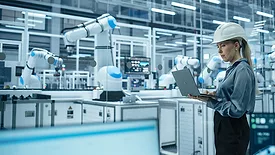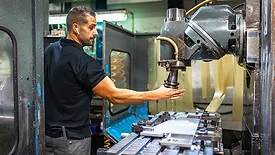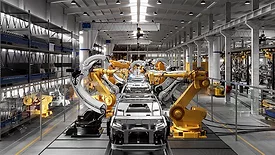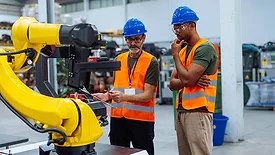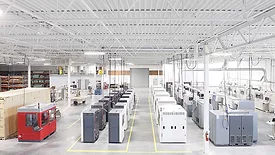
To tackle a workforce crisis, the manufacturing sector is embracing digital twins and AI-driven simulations to attract new talent and enhance skills. Companies like Ford and Boeing are leading this shift, using innovative training tools to improve efficiency and close the skills gap.
Technology on the factory floor is creating innovative opportunities for improved operations, and managers need to stay informed about future developments. One promising innovation is digital twins, a transformative technology that connects the physical and digital worlds.
The Industrial Internet of Things (IIoT) is essential for digital transformation in manufacturing, with the market expected to grow from $194 billion in 2024 to $286 billion by 2029. This growth is fueled by the need for process optimization and cost reduction, making it crucial to understand the key technologies shaping the sector.
The medical device industry is evolving with AI and automation affecting production and quality management. Quality engineers are moving towards systems thinking and proactive decision-making, as AI becomes integral to production, presenting challenges and opportunities for innovation while ensuring safety.
Automated calibration systems are changing how manufacturers maintain measurement accuracy. These systems reduce reliance on manual processes and improve precision.
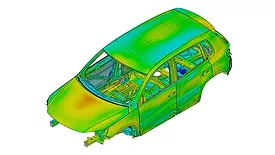
Digital twins, once a concept of speculative fiction, are now essential in manufacturing and quality control. These virtual replicas of physical assets enable organizations to simulate and optimize processes, allowing for precise predictions and error detection far beyond traditional trial-and-error methods.
Manufacturers face rising costs and supply chain disruptions, increasing the need for efficiency. Recent declines in Texas manufacturing highlight these challenges, but they also present opportunities for improvement. Many are adopting digital solutions to optimize operations and reduce waste.
In the fast-paced manufacturing industry, agility is vital for adapting to design changes. A centralized method for tracking modifications ensures team alignment, reduces miscommunication, and enhances productivity, fostering collaboration to keep up with innovation.
Optimism for 2025 is rising as logistics and supply chain sectors embrace digital transformation and automation to enhance resilience. Key trends shaping the industry are on the horizon.
While enjoying my Cheerios, I encountered a hard piece of plastic, dubbed a "quality escape." I reported this to General Mills, hoping for a thorough investigation, but received only a generic response with a coupon. I was left disappointed that my feedback didn’t prompt serious quality control actions.