Measurement
Automated Calibration Systems Improve Manufacturing Accuracy
New technology reduces human error and downtime
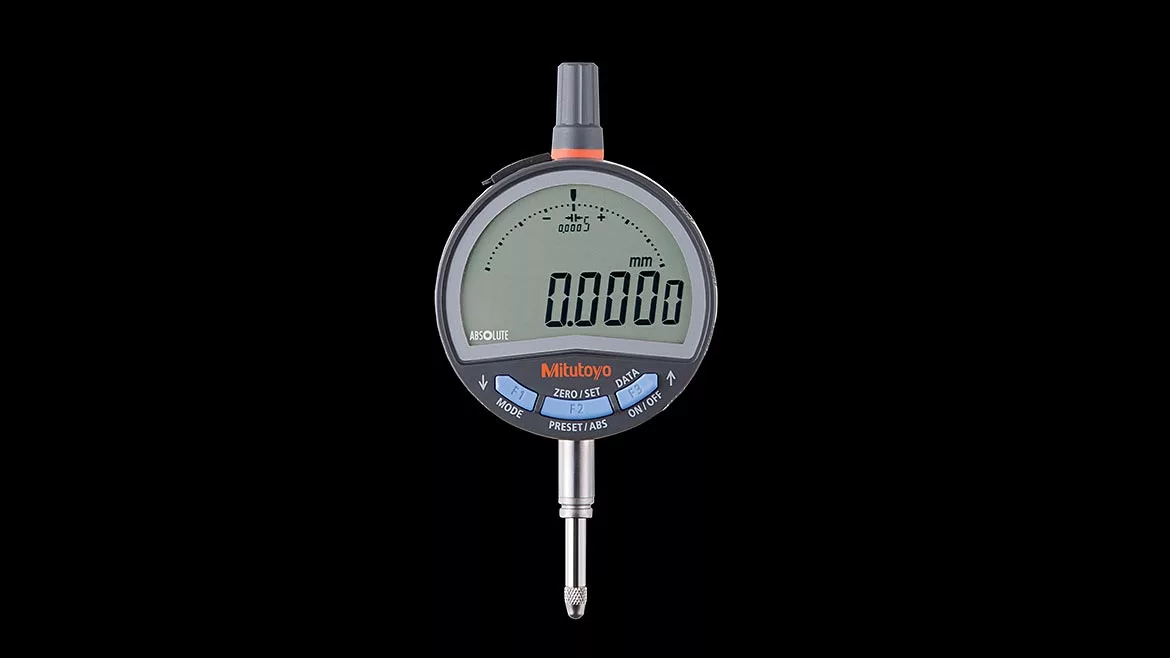
Technology in new digital indicators help prevent measurement errors by alerting operators and quality managers about the instrument’s calibration deadline is approaching. This new technology ensures these indicators maintain their accuracy and traceability while greatly reducing the risk of using expired or out-of-tolerance indicators.
Source: Mitutoyo
Automated calibration systems are changing how manufacturers maintain measurement accuracy. These systems reduce reliance on manual processes and improve precision.
The technology now covers sensors, dimensional tools and industrial equipment such as CNC machines and coordinate measuring machines (CMMs).
“Recent advancements have improved accuracy and efficiency,” says Chad Kallmeyer, product manager at The Modal Shop. “Key innovations include closed-loop control in actuators and configurations that minimize manual setup.”
Technological Advancements
The evolution of calibration systems centers on reducing manual intervention while maintaining measurement integrity. Several key innovations stand out across different measurement disciplines.
For dimensional measurement, automated systems handle both measurement and positioning functions. “Two functions are automated to enhance the measurement process: Automatic Measure and automated table positioning,” says Matt Noonan, quality manager at Pratt and Whitney Measurement Systems.
By automating certain functions, these systems cut down measurement time while also improving accuracy. Noonan explains that environmental variables affecting precision measurements accumulate over time, making faster processes inherently more reliable.
Multi-laser systems have changed machine calibration by capturing complete data faster than traditional single-laser interferometry methods. “New technologies use four lasers simultaneously to measure all six degrees of freedom,” says Dan Skulan, head of metrology solutions at Renishaw. “This shortens calibration time and provides more data about machine performance.”
Self-regulation features in modern handheld instruments now enforce compliance with calibration schedules. According to Ken Myers, solutions manager at Mitutoyo America, “Handheld digital instruments now allow programming a specific calibration expiration date. Once this deadline is reached, the indicator disables itself until recalibrated.”
Integrated control systems are the latest advancement in sound and vibration calibration. By implementing closed-loop control for accelerometer shock calibration, operators gain the ability to create software-defined test profiles, Kallmeyer explains. This approach allows for hands-off calibration procedures once the sensor is physically mounted.
Automated calibration systems also now include computer-controlled signal conditioning modules. These modules configure themselves automatically based on test profiles. This eliminates errors from manual configuration settings and ensures consistent test parameters.
Modern calibration system manufacturers have developed software that stores complete test profiles. Calibration technicians can save all settings, parameters and acceptance criteria in a database. When testing similar sensors later, they simply recall these profiles instead of reconfiguring the system manually. This standardization makes setup easier — every technician performs identical tests regardless of experience level.

Implementation Challenges
Despite the clear benefits, manufacturers face several challenges when implementing automated calibration systems.
Training operators properly is the biggest challenge when implementing automated calibration systems. Skulan emphasizes that operators must maintain measurement devices correctly and position them accurately.
Metrologists must plan their work carefully when using automated systems. “The software just does what the user instructs it to do,” explains Noonan. Unlike experienced technicians, the software cannot adjust on its own.
Mounting sensors correctly remains a manual task, especially for sound and vibration equipment. According to Kallmeyer, the variety of sensor shapes and sizes makes creating universal automated mounting solutions difficult.
While the initial investment can present a barrier for some manufacturers, most find the investment pays off through improved quality, reduced scrap and faster processes.
Ensuring proper system architecture also presents challenges. “When exploring new technology, you should properly vet the features to ensure the system offers the capability needed,” Myers says. “A ‘digital twin’ is often used to work out many issues before moving to real-world implementation.”
Manufacturers must also consider how automation affects quality assurance. Skilled operators remain essential for distinguishing between mounting errors and actual sensor faults. Proper training helps technicians interpret test results accurately and avoid false failures.
Advanced calibration systems now incorporate intelligent software prompts and validation steps to assist operators. When calibration results fall outside expected parameters, systems alert users to check setup before passing or failing a component.
System Integration
How calibration systems connect with equipment and software determines their value to manufacturers. Poorly integrated systems create delays, while well-integrated systems improve quality without slowing production.
Most modern manufacturing equipment automatically adjusts its operation based on calibration measurements. “Modern CNC and CMM machines have compensation tables built into their controls,” Skulan explains. These tables use calibration data to correct positioning errors when cutting or measuring parts.
Statistical process control software includes gage management to show which tools need certification, Myers says, which prevents the use of expired equipment.
This integration provides immediate access to calibration results. According to Noonan, teams throughout the organization can view measurement data as it’s collected, making it easier for them to quickly solve problems when they arise. As a result, manufacturers now run shorter, targeted calibration tests during production instead of full sequences, focusing on known problem areas.
More recently, calibration systems have been developed to handle various sensor types and measurement modes. Systems can be customized for specific production workflows, including end-of-line testing.
For production environments with consistent sensor types and mounting conditions, integration becomes particularly helpful. With fewer variations in fixture setups, many traditional challenges related to physical mounting and configuration are reduced.
Manufacturers can now choose which calibration tests to run instead of doing all tests every time. For example, if a certain type of sensor typically fails only one specific test, technicians can run just that test during production checks, which saves time.
In the future, newer machine controls may offer volumetric compensation capabilities. This advanced feature can correct both positioning and geometry errors, further improving machine accuracy after calibration.
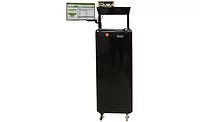
-high.jpg "Model 9155 Automated Accelerometer Calibration Workstation")
Data Management Best Practices
Proper calibration data management directly impacts production quality and equipment lifespan. Without tracking calibration history, manufacturers can’t tell if measurement errors come from faulty instruments or actual part problems, leading to unnecessary scrap or overlooked defects.
When comparing new measurements to past results, technicians can spot unusual readings. “Calibration data is more valuable when compared with older data,” Noonan says.
Tracking changes in measurements helps predict when machines need maintenance. Myers says this data shows when equipment is wearing down before it breaks.
Simple tests between full calibrations help catch problems early. Skulan recommends using a device called a ballbar to quickly check machine accuracy.
Consistent procedures and documentation can help. “Two best practices are: well-defined calibration procedures and comprehensive data documentation,” Kallmeyer says. “Procedures ensure each calibration is executed the same way by any operator.”
Proper data management becomes especially important for facilities operating under internationally recognized standards such as ISO/IEC 17025. This international standard requires comprehensive records showing measurement traceability and consistent calibration processes. Modern database systems help manage these complex documentation needs while making historical data readily accessible to quality teams.
Well-organized calibration records also simplify troubleshooting when measurement problems occur. Technicians can review calibration history to determine whether issues stem from the measuring device, the calibration process, or the actual component being measured.
Future Trends
Industry experts identify several emerging trends that will shape the future of calibration technology.
Automation will continue to advance, for example.
“Future calibration will trend toward automation of all steps,” Noonan says. “Hands-free manipulation of artifacts will help maintain thermal stability,”
And, cloud storage will improve calibration data access and eliminate filing and indexing tasks, he adds.
Connected systems will help manufacturers with predictive maintenance. “Instruments linked to the internet can share diagnostic information indicating calibration status,” Noonan says.
Software will drive integration improvements. “Software will be the biggest development. Better data analysis helps companies decide when to invest in new systems,” Myers says.
Until recently, robots have been repeatable but not very accurate, Skulan says. Now, with the introduction of positioning-calibration systems for robots, robot calibration represents a significant growth area, particularly in applications requiring repetitive measurements of similar parts. Robotic systems can position measurement instruments or test artifacts with high repeatability, reducing operator fatigue and improving measurement consistency.
Digital sensors also present new opportunities. “The rise of digital sensors is an important trend,” Kallmeyer says. “These shift from analog outputs to digital streams, offering new possibilities for integration with data systems.”
Artificial intelligence increases the need for calibration. “As we adopt more AI tools, machine calibration becomes more important,” Skulan notes. “Software cannot detect positioning errors without measurement data.”
The adoption of Transducer Electronic Data Sheet (TEDS) technology is also expanding. These chips, embedded in compatible sensors, store sensitive data such as manufacturer details, serial numbers and calibration information. This allows calibration systems to recognize and configure sensors automatically, reducing setup time.
Automated calibration is following the same path as other manufacturing processes. As factories add more digital systems, calibration equipment must provide accurate measurements to support these technologies.
Looking for a reprint of this article?
From high-res PDFs to custom plaques, order your copy today!