Software
Seven Ways that AI Will Make Calibration Faster and More Efficient
When data is in an easily readable digital format, users can harness the power of AI to further improve their calibration processes.
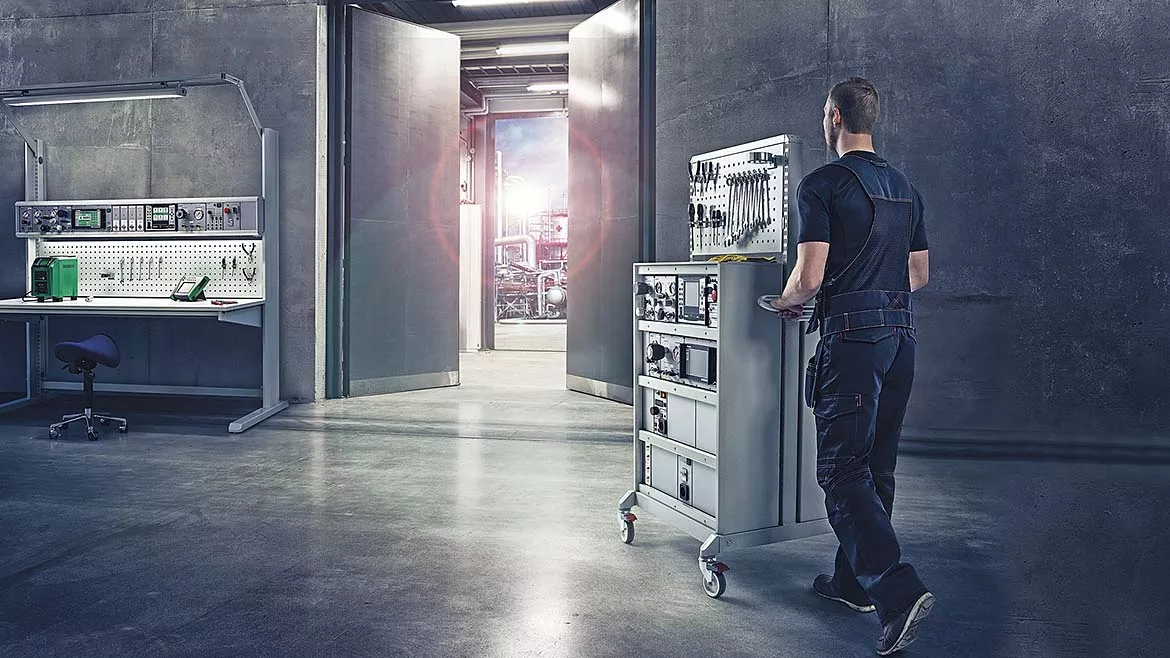
Image Source: Beamex and Shutterstock
Calibration is absolutely vital for ensuring quality and safety in a wide range of process industries including pharmaceuticals, food and beverage, and chemicals. When it comes to the future of calibration, the combination of digital certificates and AI-assisted technology looks set to streamline and speed up processes. In this article, we’ll take a closer look at how artificial intelligence (AI) can help revolutionize calibration.
The key enabler: a digital calibration certificate
The starting point for making use of AI is the switch to digital methods for tracking calibrations. While it’s true that until recently calibration has been dominated by paper, that’s changing rapidly with the development of a standard digital calibration certificate (DCC). A DCC enables electronic storage and sharing of calibration results in an authenticated and encrypted manner.
A DCC enables machine-to-machine communication so that calibration results can be transferred directly from the calibration equipment to the relevant systems without the need for manual intervention.

The benefits of going digital
The first major benefit of ditching paper is efficiency. Instead of a slow paper-based process that is prone to human error due to manual data entry, digital certificates automatically record all data and streamline data exchange between calibration providers and users.
Secondly, machine vision together with AI helps to collect measurement readings without human interaction. This enhances data quality and speeds up the calibration process.
Thirdly, going digital improves interoperability. With a common digital certificate, laboratories, manufacturers, and end-users can seamlessly share and process calibration information in a common and accepted format.
Finally, such a system is much more future proof. As technology evolves, digital certificates remain adaptable and compatible and can continue to be useful. Best of all, when data is in an easily readable digital format, users can harness the power of AI to further improve their calibration processes.
AI enters the picture
Traditionally, process control has relied on human operators to monitor and adjust processes. But as these processes have become more digital, AI is becoming an increasingly important tool that can improve quality. AI uses data from process measurements and other sources to identify patterns in the data and use them to make decisions about optimizing performance.

Overall, AI-assisted calibration relies on machine learning methods to use data to significantly enhance the calibration process in various industries. AI helps by automating, optimizing, and improving accuracy in the adjustment of instruments and devices to ensure their outputs remain within a desired range or standard. There are many benefits to introducing AI into calibration processes:
The benefits of AI
-
Assisting humans in making better decisions
When it comes down to it, AI is a tool that shouldn’t completely take over the whole process. Instead, it becomes a useful partner for humans. By combining human expertise with AI precision, decisions become better. AI compensates for human errors, leading to improved outcomes when it comes to calibration and process control. -
AI helps to automate the calibration process
AI algorithms can automate the calibration of devices, reducing the time required compared to manual methods. This is particularly beneficial in industries where numerous devices need regular calibration. AI ensures consistent application of calibration procedures across multiple devices, minimizing human error and variability. -
AI can analyze large volumes of data to assist decision making
In manufacturing and industrial settings, there are often thousands of sensors that generate huge amounts of data. This amount of data is impossible for any single human to analyze. Instead, AI can be used to quickly analyze data and find patterns, helping with decision-making. Because AI can process this data more quickly and accurately, this supports human decision-making based on real-time data rather than having to rely on historical trends or intuition. -
AI can spot anomalies
Another benefit of using AI in process control is the ability to identify patterns and anomalies that operators might miss. For example, AI algorithms can analyze data from multiple sensors to detect correlations and patterns that might not be immediately obvious to the human eye. This can help identify potential issues before they become critical, allowing operators to take corrective action before production is impacted. -
AI can enable predictive maintenance
In process control, keeping sensors up and running at all times is critical for product quality and safety. AI can analyze real-time data to predict when equipment is likely to fail. This means that operators can proactively schedule maintenance instead of waiting for equipment to break down. Proactive maintenance helps to avoid unplanned downtime, reduce maintenance costs, and extend the lifespan of the equipment – while also ensuring process quality. -
AI enables real-time optimization
AI can also be used to optimize processes in real-time. By analyzing data from sensors and other sources, AI algorithms can identify opportunities to improve efficiency and reduce waste. For example, AI can be used to adjust the temperature or pressure of a process to optimize performance or reduce energy consumption. This can lead to significant cost savings and improved performance. -
AI can help with documentation and compliance
AI can automatically generate detailed calibration reports, ensuring that all steps are documented for compliance purposes. This is particularly important in regulated industries like pharmaceuticals. AI systems can maintain a detailed record of calibration activities, making it easier to trace and audit the calibration process, ensuring adherence to industry standards.
What needs to happen to make the most of AI
AI brings many benefits to process control. However, in order to get the most out of AI, data quality needs to be high. This is because AI algorithms rely on high-quality data to make accurate predictions and decisions. If data is inaccurate or inconsistent, it can lead to incorrect predictions and decisions.
To ensure the high quality of measurement data, proper calibration of process measurements is critical in AI-assisted process control. It’s essential to calibrate all measurements regularly to maintain the accuracy of the data, using high-quality instruments that generate trustworthy results. This also requires the move from paper to digital processes as discussed earlier.
Digital calibration not only ensures that the results are more accurate – it also means that data is in a format that AI systems can ingest and analyze. An automated calibration system that transfers all results automatically and digitally from calibrator to computer is a key enabler for AI-assisted calibration. In this way, you can ensure data integrity and take advantage of AI in your processes.
Making calibration smoother with help
The combination of AI-assisted calibration and digital certificates is a transformative force that will propel process industries toward efficiency, security, and reliability. By integrating AI into the calibration process, industries can achieve higher accuracy, efficiency, and cost-effectiveness, ensuring that instruments and devices perform reliably and consistently over time.
The best way to ensure that AI delivers results is to ensure high-quality calibration data that is based on paperless and automated systems. All measurement instruments should be calibrated regularly, traceably, and with sufficient certainty.
Looking for a reprint of this article?
From high-res PDFs to custom plaques, order your copy today!