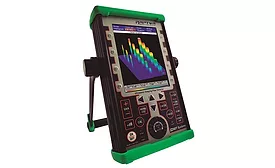
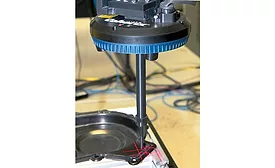
It’s an exciting time to work in ultrasonics. Phased array and other innovations in ultrasound have expanded its applications and uses, and with the advent of carbon fiber reinforced plastics (CFRPs) in aerospace, the need to nondestructively test critical parts for thickness and flaws continues to grow.
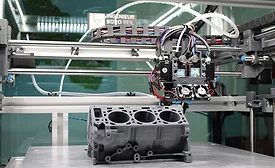
The event will focus on the industrial applications of AM for making functional components and end-use production parts. Attendees will gain practical knowledge on AM adoption and implementation and can network with AM industry leaders.
Bead dispensing is becoming a more and more common process for automotive manufacturing. In automotive body frame and chassis, aluminum is gaining popularity, as manufacturers seek to improve fuel efficiency without sacrificing vehicle integrity or performance.
As additive manufacturing gains traction as a means for making production parts, standards need to keep pace, ensuring quality and constancy across industries. Already, ASTM and other standards bodies are leading the effort.
When the parts are rejected or the gages or instruments are giving dodgy answers the red flag goes up and panic usually ensues. Everyone involved defends their turf, talent or toys which is normal but rarely answers the question of what’s gone wrong.
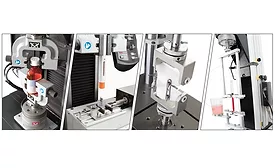
Tensile testing is arguably the most common test method used in both force measurement and material testing. Tensile testing is used primarily to determine the mechanical behavior of a component, part or material under static, axial loading.
The event will present the company’s latest advancements in static, dynamic, and impact testing for the biomedical field, including live demonstrations on how to improve efficiency in the lab, ways to expand capabilities, and how to deliver more accurate and reliable test results. Seating is limited.
Luminator Technology Group is a family of brands that manufacture passenger information signs, lighting, and display solutions for bus, rail, and aerospace industries. Based in Plano, Texas, Luminator serves a broad customer base in North America and throughout the world.
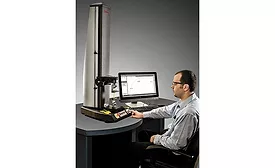
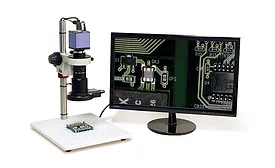
Choosing the right inspection system for your application can be a daunting task. For industrial applications three types of inspection systems are generally used. This guide describes these systems, their common applications along with pros and cons.
 RSS
RSS