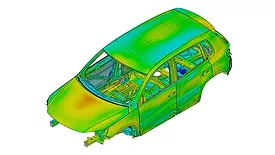
In the fast-paced manufacturing industry, agility is vital for adapting to design changes. A centralized method for tracking modifications ensures team alignment, reduces miscommunication, and enhances productivity, fostering collaboration to keep up with innovation.
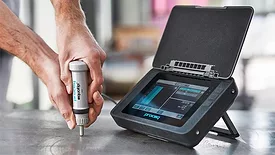
Hardness testing, which began in the 1700s with Mohs' scratch test for minerals, evolved significantly by the early 1900s to focus on measuring the penetration of indenters under force. This shift led to the widespread adoption of three key methods—Brinell, Rockwell, and Vickers—standardized by ASTM International between 1924 and 1952.
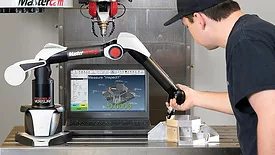
The evolution of 3D measurement systems has transformed manufacturing quality control, introducing portable CMM arms that combine precision, ease of use, and affordability.
Quality has become a strategic advantage in today's manufacturing landscape, especially in packaging. Minor quality variations can affect the entire supply chain. High-quality packaging protects products, reduces waste, and enhances efficiency, playing a crucial role in optimizing logistics and sustainability.
The integration of artificial intelligence (AI) into conformity assessments has gained attention as technology advances. This article outlines the advantages and drawbacks of AI in conformity assessments, reviews case studies, and underscores the necessity of human interaction in the process.
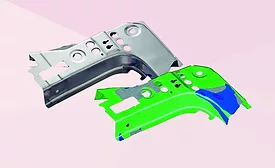
Simulation software lets engineers evaluate and fine-tune stamping lines before dies are cut or parts are produced.
March 12, 2025
PFÄFFIKON, Switzerland—AutoForm Engineering GmbH, a supplier of software for stamping and body-in-white (BiW) assembly processes, has released a new version of its AutoForm Forming R12 software. This version provides new capabilities and enhancements for the sheet metal forming process, in particular for the feasibility and validation phases of stamping processes.
Explore how ISO 9001 serves as the global standard for quality management systems, shaping practices across various industries. Discover the tailored 9100 standard that addresses the unique needs of the aerospace, aviation, and defense sectors.
Nondestructive testing (NDT) and condition monitoring (CM) are crucial for ensuring product quality in manufacturing. Terahertz (THz) technology adds a non-contact method that uses safe far-infrared wavelengths to analyze materials, detect faults, and visualize structures, making it ideal for various insulating materials.
 RSS
RSS