A homage to the work of David B. Kirk. His 1952 paper on pneumatic gaging is a foundational reference for dimensional inspection and measurement quality.
For more than seventy years, David B. Kirk’s illustrated lecture, Introduction to Principles of Pneumatic Gaging, existed in an unusual place in the history of manufacturing—quietly influential, widely practiced, yet almost entirely absent from the modern technical record.
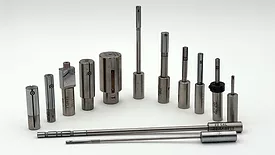
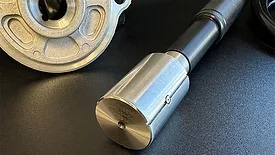
Air gages work well due to three main reasons: they are body-piloting type, use dual-opposing sensor method, and have a noncontact sensing component. These features are present in most air gage designs, including ID/OD air probe, air ring, and air length gages.
When do you need to be concerned about the effects of temperature in your inspection process, how significant is it and how do you deal with it? These can be tricky questions to answer.
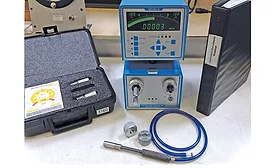
In the quality world, air gaging ranks with micrometers, calipers, comparators, scales, CMMs and many other instruments in that they are all considered measurement and test equipment (M&TE).