Test & Inspection
When Air Became An Instrument
A homage to the work of David B. Kirk. His 1952 paper on pneumatic gaging is a foundational reference for dimensional inspection and measurement quality.
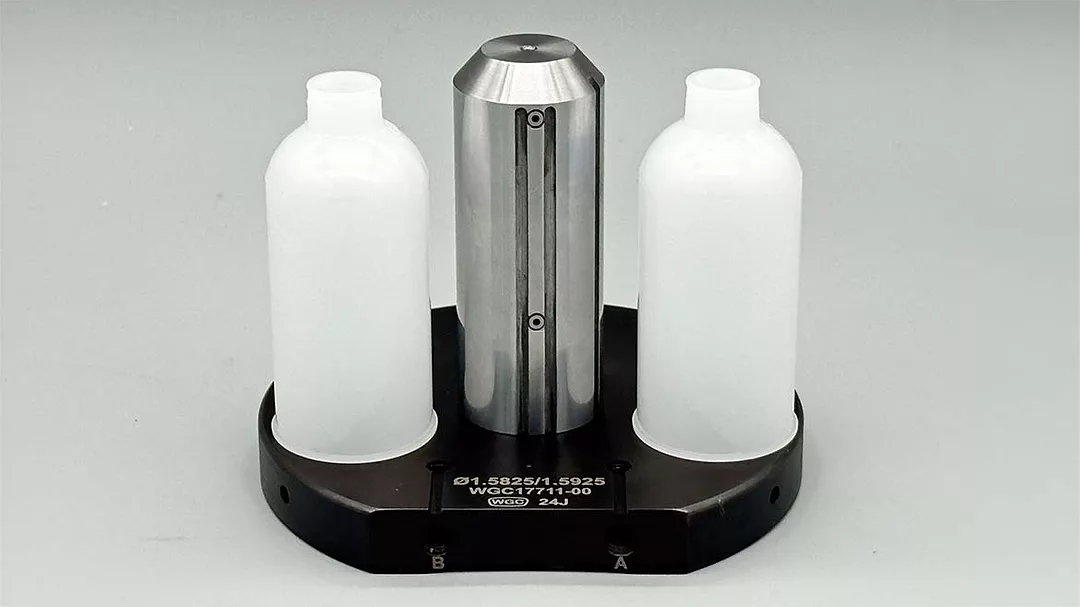
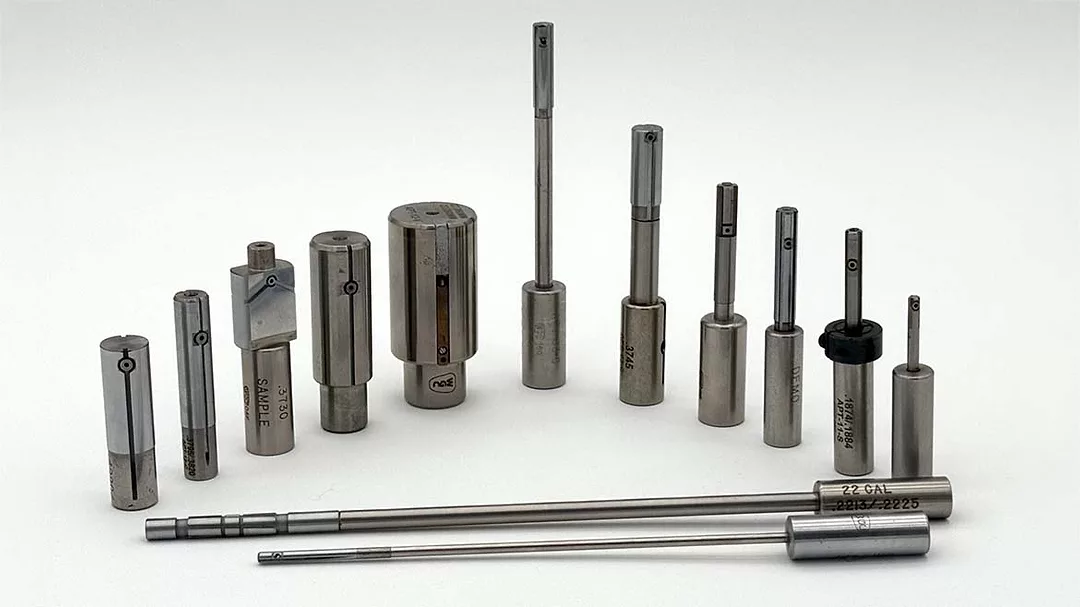
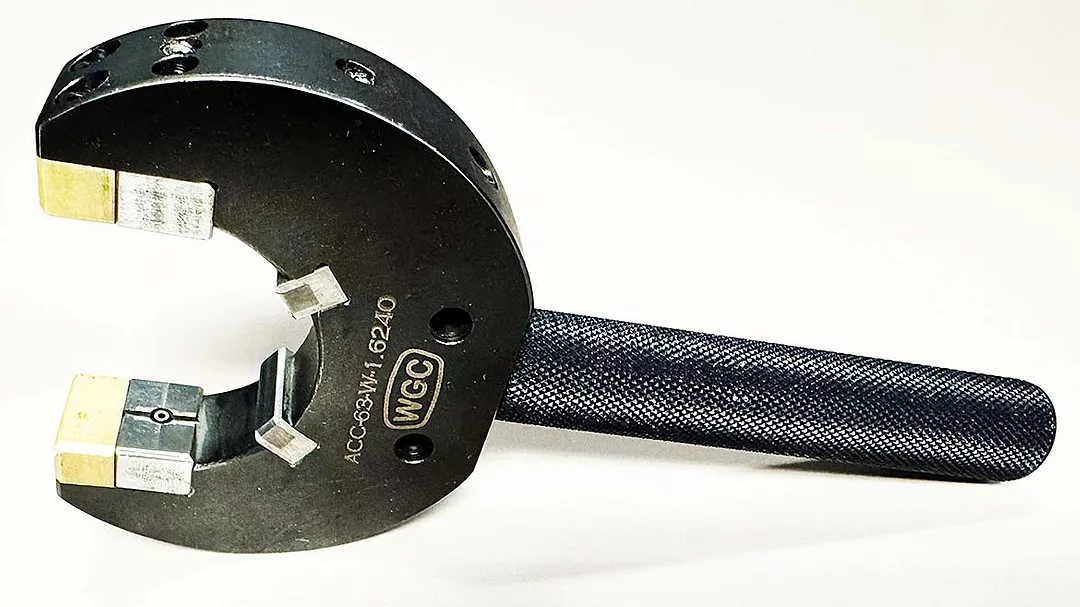
For more than seventy years, David B. Kirk’s illustrated lecture, Introduction to Principles of Pneumatic Gaging, existed in an unusual place in the history of manufacturing—quietly influential, widely practiced, yet almost entirely absent from the modern technical record.
Kirk’s paper was presented in December of 1952 under the auspices of the Production Engineering Division at the annual meeting of the American Society of Mechanical Engineers (ASME). Until recently, no online search would uncover it. The paper does not appear in the ASME Digital Collection, nor is it available through the ASME digital store. It is not indexed in on-line academic databases and is notably absent from modern research papers on pneumatic gaging (more commonly referred to as air gaging today). The original copyright holder, Moore Products Company of Philadelphia, no longer exists, leaving no corporate archive and no clear path for reissue or digitization.
Today, the original paper can be accessed reliably only through The Linda Hall Library, one of the world’s leading repositories for the history of science and engineering. Outside of that institutional setting, the document surfaces occasionally in an unexpected place—offered for sale on eBay as a vintage technical pamphlet, known more to collectors than to engineers.
That obscurity stands in sharp contrast to the content itself.
This paper is a disciplined and remarkably complete explanation of pneumatic gaging as it was already being practiced in industry in 1952. In fact, it is the first document I give to my engineers when they begin learning air gaging—not as history, but as foundation.
This article revisits David B. Kirk’s 1952 paper on pneumatic gaging, summarizing its technical depth and re‑establishing it as a foundational reference for dimensional inspection and measurement quality. It is not a rediscovery of a forgotten idea, but a recognition of how thoroughly understood and well-established pneumatic gaging already was when David B. Kirk chose to document it.
Fundamentals, Carefully Built
Kirk begins with first principles. Before fixtures, indicators, or applications, he explains the behavior of air flowing through an orifice and how that behavior changes as a surface approaches a nozzle. A single air jet, directed toward a work surface, becomes a predictable pneumatic restriction. As clearance changes, flow changes—and that relationship, Kirk shows, is both measurable and repeatable within a defined range.
What distinguishes Kirk’s treatment is not novelty, but thoroughness. He does not assume linearity where it does not exist, nor does he ignore friction, nozzle geometry, or secondary effects. Instead, he explains where deviations occur, why they occur, and—most importantly—how practical gaging systems account for them.
Throughout the paper, the emphasis is on real behavior, not idealized theory. The reader is taught how pneumatic gages actually behave on the shop floor.
From One Nozzle to Many
Having established the characteristics of a single nozzle, Kirk expands methodically to multi‑nozzle systems. He explains how two opposing nozzles can measure diameter without requiring precise centering, how flow from multiple nozzles combines predictably, and how side‑compensation errors arise—and why those errors are typically small when the system is properly designed.
By this point in the paper, it is clear that pneumatic gaging was not a new idea in 1952. It was already an engineered system with known behaviors, boundaries, and tradeoffs.
Indicating Systems and Engineering Judgment
Kirk devotes significant attention to indicating systems, distinguishing clearly between flow‑type and pressure‑type circuits. He explains how each responds to dimensional change, how speed of response is affected by system volume and restriction, and how these characteristics can be tailored through thoughtful design.
Rather than promoting a single “best” approach, Kirk presents engineering choices. Flow systems respond quickly but require attention to nozzle pressure. Pressure systems offer flexibility but introduce time constants that must be managed. Kirk even draws analogies to electrical circuits—not as academic diversion, but as a practical way to reason about system behavior.
Applications Already Mature
Perhaps the most revealing portion of the paper is the breadth of applications Kirk describes—applications that were already established practice by the early 1950s.
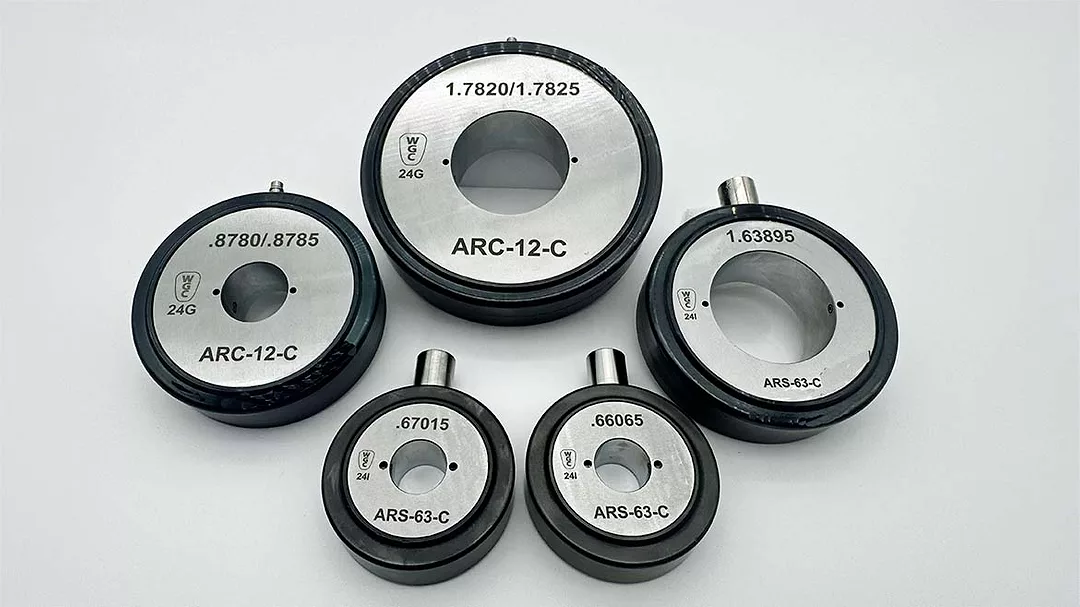
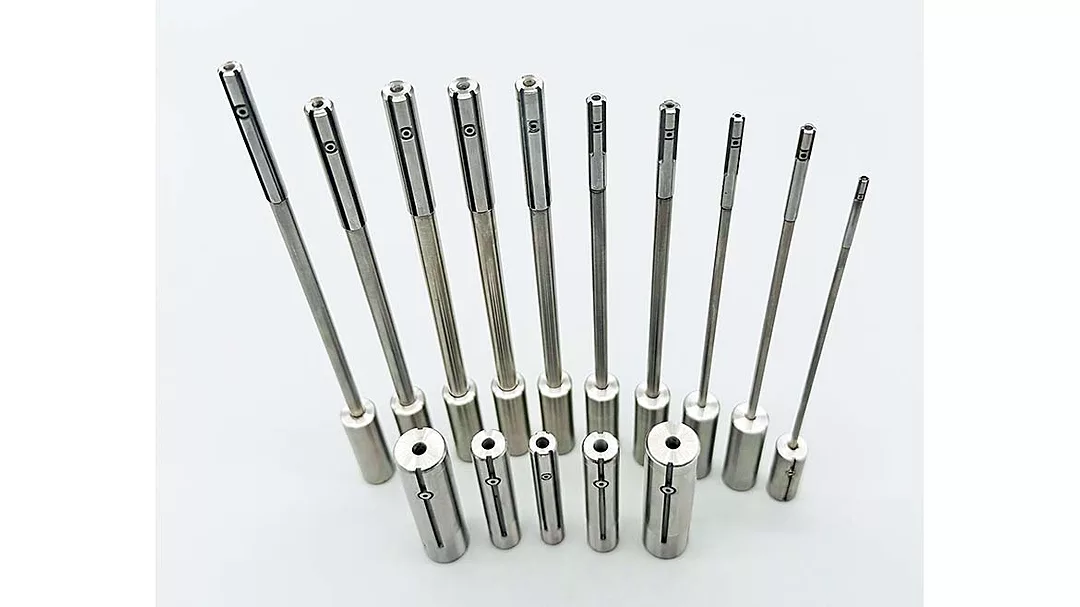
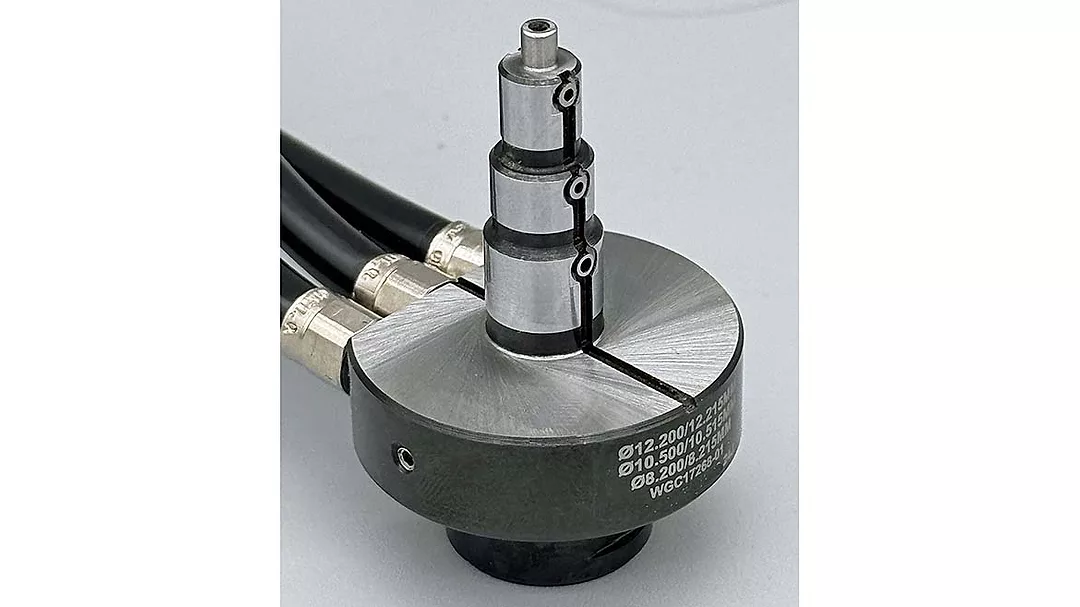
He details pneumatic plug and ring gages for measuring inside and outside diameters, including compensation for lobing and out‑of‑round conditions. He explains how nozzle placement can be used to detect three‑point, five‑point, or higher‑order lobing—or deliberately ignore it when average size is the functional requirement.
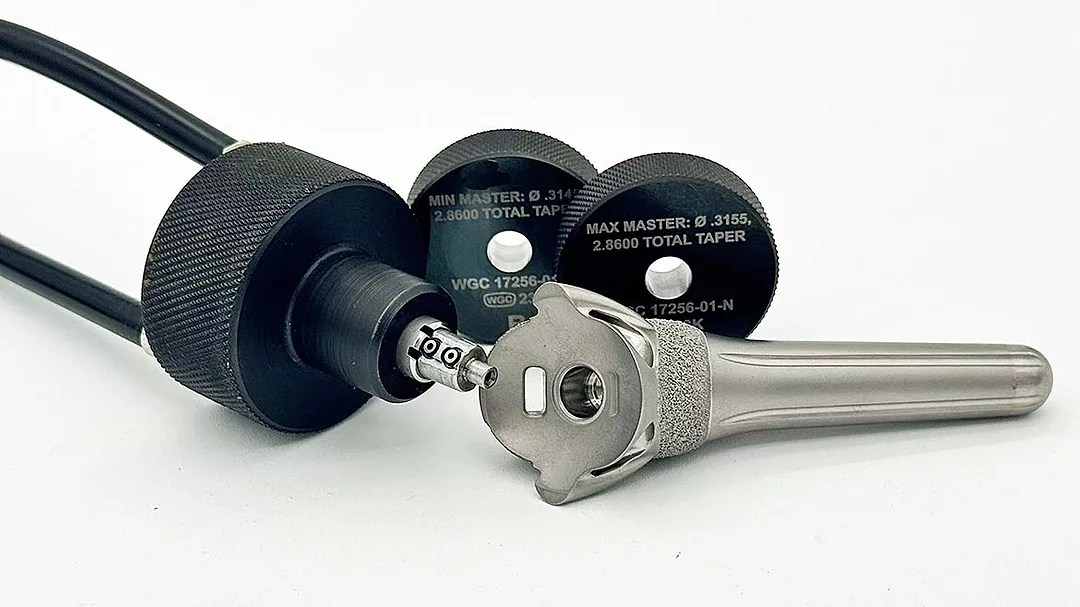
Beyond diameter, Kirk documents pneumatic gages for height, depth, straightness, flatness, squareness, wall thickness, snap gaging, and bore‑to‑face relationships. He describes combination gages that add or subtract pneumatic signals to measure taper, center distance, and effective bearing size. He even addresses matching gages used for selective assembly.
Kirk presents these applications as well‑defined solutions, already refined and in production use—not as ideas awaiting validation.
Practical Realism
Kirk closes the paper by addressing practical realities: calibration against masters, the averaging nature of pneumatic measurement, the influence of surface finish, and the limits of pneumatic gaging when roughness becomes excessive.
Rather than presenting pneumatic gaging as flawless, he defines clearly where it excels and where care is required. This realism strengthens the paper.
A Lasting Relevance
Reading Kirk’s work today, what stands out most is how little of it feels dated. The physics remains unchanged. The applications remain recognizable. The tradeoffs—speed versus stability, sensitivity versus range, simplicity versus capability—are the same ones engineers still navigate.
Kirk did not introduce a single invention; he documented an entire field with clarity and discipline. By doing so, he helped ensure that pneumatic gaging would endure—not as a wartime expedient, but as a permanent instrument of precision manufacturing.
What makes Kirk’s work especially relevant to quality professionals is not merely the physics of air flow, but the problem it set out to solve. Kirk was addressing the central quality challenge of his era: how to measure production parts quickly, repeatedly, and with confidence—independent of operator technique, surface condition, or gage wear. Long before terms such as measurement system analysis or gage repeatability and reproducibility entered the quality lexicon, Kirk was engineering measurement systems that were stable, self‑compensating, and inherently resistant to variability.
More than seventy years later, those principles are still at work on shop floors around the world. That quiet persistence may be the strongest testament to the value of his contribution.
Looking for a reprint of this article?
From high-res PDFs to custom plaques, order your copy today!