Learn how new technologies are redefining how manufacturers approach quality, productivity, and consistency, and companies that move early will create a meaningful competitive gap.
When people think of medical devices, they often picture pacemakers, insulin pumps, or MRI scanners. Increasingly, however, medical innovation no longer comes in metal or plastic—it comes in code. Software as a Medical Device (SaMD) refers to software intended to perform a medical function without being part of a physical device.
In an era where cybersecurity is often seen as just a budget checkbox, it's crucial to recognize its potential to drive growth and enhance trust. Explore how leveraging a combined approach of Lean, Six Sigma, and Theory of Constraints can transform cybersecurity from a mere shield against threats into a powerful catalyst for business success.
In the medical device sector, the focus will sharpen on cybersecurity, digital validation, and stronger post-market surveillance, as devices become more connected.
Sai Ranjith Ramakrishnan Kumar (Sai) is a medical device quality engineering expert, Six Sigma Green Belt Certified, and programs chair of ASQ Granite State Section. Quality talked with him about his contributions to advancing quality practices in industry and beyond, focusing on enhancing patient safety, ensuring regulatory compliance, and driving innovation in the profession.
Quality assurance in manufacturing has focused on precision, but cybersecurity now poses a significant threat. Nation-state adversaries target operational technology to corrupt quality data and alter inspection processes, risking product safety and demanding urgent attention.
The debate sparked by the "One Big, Beautiful" agenda bill highlighted the uncertainty of AI regulation and the absence of a national standard. A proposal was discussed to block state-level AI rules for the next ten years.
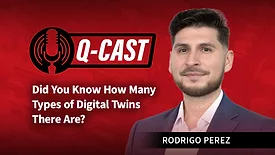
Rodrigo Perez from MxD discusses the exciting career opportunities in manufacturing. As a manufacturing systems integration engineer at MxD, he shares insights on recruiting the next generation, offers advice for newcomers, and explains the benefits of using digital twins in organizations.