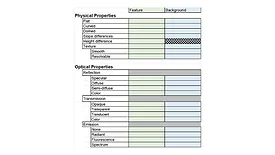
No two eggs are identical, yet all are edible. This principle applies equally to industrial manufacturing: the diversity of produced parts and potential defects is virtually limitless. The added challenge for quality assurance and identification tasks?
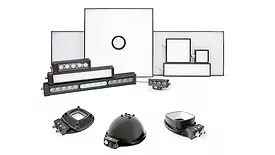
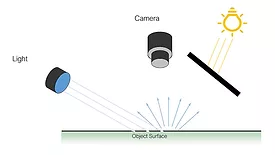
You could argue that glare is the very reason that machine vision lighting exists. Whether detecting a faint scratch on a glossy surface or decoding an etched code on metal, unwanted reflections can obscure details and compromise inspection accuracy.
No lighting design methodology is guaranteed to create adequate illumination. It is always necessary to test, verify, and refine the approach before finalizing the solution.
Quality might in theory be top priority, but most manufacturing operations run on ROI (return on investment). You have to show a one-to two-year payback to get something funded at an existing plant.
As machine vision systems continue to evolve, they are increasingly tasked with supporting higher resolutions, faster frame rates, and multi-camera configurations.
In manufacturing, quality has always been defined by consistency — the ability to produce every part to the same standard, every single time. Inspection remains essential, but the industry’s focus has shifted. Rather than catching defects after they occur, the goal today is to eliminate variation at the source.
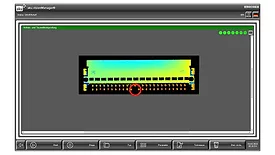
The biggest challenge when testing the pins is to ensure that they function perfectly even after assembly under a wide range of external influences, such as vibrations or moisture.
The connector application from aku.automation and AT Sensors, which inspects over 1.7 million pins every day with unprecedented precision, is setting a new benchmark in the electronics industry.
 RSS
RSS