Quality Magazine logo
search
cart
facebook twitter linkedin youtube
  • Sign In
  • Create Account
  • Sign Out
  • My Account
Quality Magazine logo
  • NEWS
  • PRODUCTS
    • FEATURED PRODUCTS
    • SUBMIT YOUR PRODUCT
  • CHANNELS
    • AUTOMATION
    • MANAGEMENT
    • MEASUREMENT
    • NDT
    • QUALITY 101
    • SOFTWARE
    • TEST & INSPECTION
    • VISION & SENSORS
  • MARKETS
    • AEROSPACE
    • AUTOMOTIVE
    • ENERGY
    • GREEN MANUFACTURING
    • MEDICAL
  • MEDIA
    • A WORD ON QUALITY PUZZLE
    • EBOOK
    • PODCASTS
    • VIDEOS
    • WEBINARS
  • EVENTS
    • EVENT CALENDAR
    • IMTS
  • DIRECTORIES
    • BUYERS GUIDE >
      • Supplier Insights
    • NDT SOURCEBOOK
    • VISION & SENSORS
    • TAKE A TOUR
  • INFOCENTERS
    • Digital Quality Management Systems
    • NEXT GENERATION SPC & QUALITY ANALYTICS
  • AWARDS
    • ROOKIE OF THE YEAR
    • PLANT OF THE YEAR
    • PROFESSIONAL OF THE YEAR
  • MORE
    • Expert Columns
    • NEWSLETTERS
    • QUALITY STORE
    • INDUSTRY LINKS
    • SPONSOR INSIGHTS
  • EMAG
    • eMAGAZINE
    • ARCHIVES
    • CONTACT
    • ADVERTISE
  • SIGN UP!

Quality Measurement: Extending the Frontiers of Noncontact Surface Inspection
By Alex Klooster Jr., C.W. Swonger
January 26, 2011
Development of noncontact optical inspection solutions often can provide a level of product quality assurance that is not affordably achievable by either human visual inspection or by general-purpose inspection products.


The pace of progress in precision manufacturing in all industry sectors is creating an ever-increasing demand for new and innovative methods for noncontact inspection of manufactured part and assembly surfaces.

Sometimes existing products can be found to perform the required function in terms of resolution, speed, robustness, field-of-measurement, depth-of-measurement, sensitivity and the many other factors that define an application’s requirements.

But more often, the desired higher level of manufactured item quality and performance requires the development of new solutions that stretch the state of measurement and inspection technology in one or more critical directions. Often three-dimensional (3-D) inspection is a critical part of the solution.

In most industrial and commercial sectors, the benefits of automated noncontact surface inspection are clear and substantial. They include most or all of the following factors:

  • Significantly reduced scrap or rejected product.

  • Reduced manufacturing costs and reduced manufacturing downtime.

  • Higher customer-perceived product quality.

  • Reduced warranty costs and product liability.

  • Higher product performance and customer satisfaction.


    The technologies of lasers, optics, dynamically controlled illumination, photonic sensing, image and signal processing (or vision) algorithms and software, and even mechanical part and surface positioning all come together as multidimensional ingredients of each advanced noncontact surface inspection solution.

    All of these technologies are advancing steadily albeit at different paces. What was not possible last year and last month is now often readily achievable with expert system engineering and integration. Technical solutions offered to satisfy proven large markets are often not as capable as can be provided to meet a specific focused application’s requirements.


  • Solution Requirements Definition

    The starting point of an advanced application solution is the careful, knowledgeable and quantitative definition of the complete set of application requirements. This involves much more than simply stating what must be detected or measured and how rapidly the solution must operate. As Albert Einstein famously said: “Things should be kept as simple as possible, but no simpler.”

    Surface inspection inherently entails detecting and often measuring surface phenomena-some considered to be defects and others considered to be just acceptable artifacts or desired features. These have some range of sizes, visibilities, optical spectral, scattering, polarization and other characteristics. The surfaces themselves also have important characteristics-perhaps consistent and perhaps highly variable in space or time.

    An application’s end-user and the solution development engineering team must work together to identify all parameters and trade-offs that will define the bounds of acceptable and optimum solutions for the application.

    A few of the usual questions include:

  • What are all of the types of phenomena (such as defects) to be detected or measured?

  • What range of 3-D or two-dimensional (2-D) sizes of those phenomena must be detected or measured?

  • What range of surface shapes, or what one nominal surface shape, is to be inspected?

  • What is the required probability of detection of those phenomena?

  • What will be the physical condition of the surface when inspected (such as dirt, dampness, oil, etc.)?

  • What is the allowable false alarm rate-the rate of detections when no defect actually exists?

  • What is the desired or required amount of surface to be inspected per unit time?

  • What are the spectral characteristics of the surface and the defects?

  • What will be the various system operator’s skill levels and form of output information that they desire?

  • What variety of phenomena on the surface can occur that should NOT be considered to be defects?


    Agreement on clear and quantitative answers to questions such as these is a key starting point for ensuring that all expectations are aligned and a responsive development can be proposed and executed.


  • Exploiting the Pace of Technology Progress

    A substantial range of technologies is available, each best suited to a subset of inspection applications defined by those answers. With today’s newest technologies, an advanced surface inspection solution can replace tedious, distracting and fatiguing manual tasks, detect defects not visible to a human operator, process surface areas faster than human visual perception can accomplish and perform detection, as well as the measurements that often are critical in judging defect severity.

    Recent underlying technology breakthroughs of particular value include:

  • High-speed computer-controlled dynamic illumination of surfaces with combinations of wavelengths and spatial patterns that bring out subtle but critical characteristics.

  • Real-time model-based algorithms that relate sensor data to the design reference data, which defines a correct surface for either a part or a complex assembly.

  • Knowledge-driven sensor perspective and positional control that allows curved surfaces to be rapidly captured and analyzed.

  • Interferometric sensing configurations that can accommodate large surfaces of more than one square meter.


    Along with advances such as these, the availability of ever-increasing low-cost computer power and the extended performance and reliability of light sources ranging from lasers to LEDs allow reliable systems to be devised for continuous operation on plant floors or elsewhere.


  • Successful Development Strategies

    The most prudent approach to accomplishing an advanced solution development is a step-by-step experimental and analytical series of planned project phases. These typically consist of:

    An experimental and analytical feasibility investigation phase. This is designed to “home in” on the best overall approach to meeting the original requirements that were as defined as described above. The result will be a report of feasibility findings and a description of the proposed system concept. This phase may require weeks to a few months.

    The engineering prototype phase. In this phase, a working implementation is created to demonstrate the fundamental capability that is required. At this stage, system packaging and peripheral features or functions may be deferred in the interest of achieving an economical “proof of principle.” Examples of deferred features might include speed or operator convenience functions. This phase may take from several months to as long as a year.

    A fielded prototype (if quantities of systems will ultimately be desired) or a final system delivery phase. In this phase, a complete packaged system solution will typically be built, tested, validated and installed either in an evaluation setting or in the final end-use venue. This phase may require several months to as long as a year for completion depending on the operating and environmental requirements for the ultimate system.

    If the desired solution will be desired in substantial quantity, then the fielded prototype phase may be followed by a manufacturing engineering phase aimed at cost minimization, producibility engineering, reliability engineering or other objectives. The result will normally be a production prototype. Several months will usually suffice for completing this phase.


    The manufacturer today who seeks to supply products with high perceived and actual quality at competitive costs must seriously examine how his product’s external and internal surfaces and appearance will be reliably and 100% inspected at high resolution, while not adversely impacting his production rates and other operating requirements. The specific types of variances and defects to be detected and avoided will differ across product classes.

    Development of noncontact optical inspection solutions, focused on a specific product’s characteristics and requirements, often can provide a level of product quality assurance that is not affordably achievable by either human visual inspection or by general-purpose inspection products

    Quality Online

    For more information on noncontact surface inspection, visit www.qualitymag.com to read the following:

  • “Noncontact Inspection: From Shadowgraph to Multisensor”

  • “Noncontact Inspection Keeps Pace with Production”

  • “Taking the Edge Out of Noncontact Measurement”


  • Tech Tips

  • Surface inspection inherently entails detecting and often measuring surface phenomena.

  • The most prudent approach to accomplishing an advanced solution development is a step-by-step experimental and analytical series of planned project phases.

  • With today’s newest technologies, an advanced surface inspection solution can replace tedious, distracting and fatiguing manual tasks, detect defects not visible to a human operator, process surface areas faster than human visual perception can accomplish and perform detection.


    CASE STUDY 1

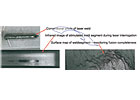
    Laser welding is increasing in its importance due to significant energy savings, speed and avoidance of excess metal margins around traditional spot welds. But defective laser welds caused by incomplete material fusion must be avoided. By use of a controlled laser light source and infrared imaging as welds are made, defective incomplete welds can be immediately detected and the location of the defect can be isolated with high resolution without use of tedious and destructive testing procedures. Source: Coherix

    ‘


    CASE STUDY 2


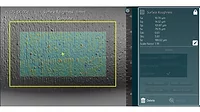
    Minor cosmetic or dysfunctional dimensional defects on bare metal surfaces, even those that are too subtle for the human eye and brain to discern, can be detected and measured by rapid interferometric sensing of surface deformations. These defects, if not detected, can become unacceptably more visible when the metal surface is finally finished or is placed in adverse lighting conditions. Or they can even prematurely fail when the part is put into operation. Illustrated is a portion of a surrogate surface. An entire curved or flat surface shape can be measured to a few microns of accuracy in seconds. Source: Coherix


    CASE STUDY 3


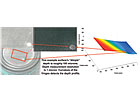
    Microscopic surface corrosion defects at the micron level can affect the strength or function of large critical structural elements. This surface degradation can be detected and measured using multi-wavelength holographic interferometry as shown for a familiar corroded steel artifact. The 3-D extent/depth of detected corrosion is measured to submicron accuracy. Source: Coherix


    CASE STUDY 4


    Products subject to various specific types of surface contamination can be inspected with computer-controlled multispectral illumination and sensing to discriminate acceptable surface artifacts from contaminants on all surfaces at a rate of tens of thousands of product units per hour. Shown are different contamination types and areas found on 3-D object surfaces on the fly. Source: Source: Coherix


    CASE STUDY 5


    Products processed at blinding speeds during fabrication, coating or assembly are usually either small in size or very detailed in their required surface characteristics. New-generation sensor and processing technology allows them to be inspected at production rates that a human visual inspector simply cannot match for any useful length of time. Source: Coherix


  • Share This Story

    Looking for a reprint of this article?
    From high-res PDFs to custom plaques, order your copy today!

    C.W. “Ron” Swonger is director of contract R&D, Dr. Carl C. Aleksoff is consulting optical scientist, Alex Klooster Jr. is consulting electro-optical engineer, and Dr. Bin Li is chief engineer of lasers and optics at Coherix (Ann Arbor, MI). For more information, call (734) 922-4066, e-mail www.coherix.com.

    Recommended Content

    JOIN TODAY
    to unlock your recommendations.

    Already have an account? Sign In

    • 2024 Quality Rookie of the Year Justin Wise 1440x750px banner with "Quality Rookie of the Year" logo inset

      Meet the 2024 Quality Rookie of the Year: Justin Wise

      Justin Wise is an exceptional individual who has been...
      Aerospace
      By: Michelle Bangert
    • Man with umbrella and coat stands outside while it rains at night looking at a building.

      Nondestructive Testing: Is there an ethics problem?

      I was a whistleblower who exposed fraudulent activities...
      NDT
      By: Dale Norwood
    • Unraveling Deflategate: Football stadium with closeup of football on field

      Unraveling the Tom Brady Deflategate

      The Deflategate scandal erupted following the 2014 AFC...
      Measurement
      By: Greg Cenker and Henry Zumbrun
    Manage My Account
    • eMagazine Subscriptions
    • Newsletters
    • Online Registration
    • Subscription Customer Service
    • Manage My Preferences

    More Videos

    Sponsored Content

    Sponsored Content is a special paid section where industry companies provide high quality, objective, non-commercial content around topics of interest to the Quality audience. All Sponsored Content is supplied by the advertising company and any opinions expressed in this article are those of the author and not necessarily reflect the views of Quality or its parent company, BNP Media. Interested in participating in our Sponsored Content section? Contact your local rep!

    close
    • This image shows a person seated next to a Bobcat T66 compact track loader.
      Sponsored byPolyWorks by InnovMetric

      Supercharging Digital Gauging at Bobcat North America

    • Dorsey Calibration Lab photo by Tom LaBarbera Picture this Studios
      Sponsored byDorsey Metrology International

      Ensuring Product Quality in a Competitive Manufacturing Landscape

    • This image displays a Eddyfi Technologies Cypher portable inspection instrument alongside a scanner for non-destructive testing (NDT).
      Sponsored byEddyfi Technologies

      A Safer, Smarter Approach to Weld Inspection: Why Advanced Ultrasonic Testing Is Redefining Industry Standards

    Popular Stories

    MicroRidge MobileCollect wireless measurement system

    Before AI Can Help, the Data Has to Be Ready

    a titanium diaphragm speaker driver

    The One Thing Elon Gets Right Is Designed to Scare You

    This image shows a person seated next to a Bobcat T66 compact track loader.

    Supercharging Digital Gauging at Bobcat North America

    2026 Quality Professional of the Year!

    Events

    June 4, 2026

    Scaling Manufacturing Quality with Automation for Greater ROI

    If you need to do more with the same resources or build a new tech foundation, this session shows where to start and how to create a more efficient, scalable, cost-conscious quality process.

    June 9, 2026

    Future-Proof your Quality Processes with Advanced 3D Optical CMM Technology

    Discover how to effortlessly capture complex data, leverage true multi-sensor automation, and ensure continuous operation without creating inspection delays.

    View All Submit An Event

    Products

    Lean Manufacturing and Service Fundamentals, Applications, and Case Studies

    Lean Manufacturing and Service Fundamentals, Applications, and Case Studies

    See More Products
    Quality Podcast Channel Custom Content

    Related Articles

    • Testing the Frontiers of Space

      See More
    • surface inspection

      Putting Surface Inspection in the Hands of the Machine Tool Operator

      See More
    • Figure 1: Surface roughness analysis of 6K Additive sample captured using GelSight Mobile

      The Importance of Digital Surface Inspection in Additive Manufacturing

      See More

    Related Products

    See More Products
    • certified.jpg

      The Certified Manager of Quality / Organizational Excellence Handbook, 4th Edition

    • ZEuCDwAAQBAJ.jpg

      Lean Six Sigma In The Age Of Artificial Intelligence: Harnessing The Power Of The Fourth Industrial Revolution

    • principles of quality costs.jpg

      Principles of Quality Costs, Fourth Edition

    See More Products

    Related Directories

    • Dimensional Measurement Inc.

      Dimensional Measurement, Inc. (DMI) provides CMM inspection, Laser scanning/measurement, non-contact and surface finish inspection, fixture/jig certification, hand gages sales and certification, and CMM measurement/programming. Our CMM's are operating with PC-DMIS, OpenDMIS and PolyWorks software. Our on-site services include portable CMM and hand gage calibration. DMI is accredited to ISO/IEC 17025:2017 in dimensional testing and calibration. Email us your request at: [email protected] or call 248-960-8801
    • Surface Scan

      Professional 3D scanning, CAD, and 3D printing services across the UK. We offer in-house and mobile scanning using advanced equipment for metrology, terrestrial, and color capture. Our high-capacity print facility delivers fast turnaround on thousands of plastic parts. Trusted by engineers, manufacturers, and designers for precision, speed, and quality.
    ×

    Stay in the know with Quality’s comprehensive coverage of
    the manufacturing and metrology industries.

    Newsletters | Website | eMagazine

    JOIN TODAY!
    • RESOURCES
      • Advertise
      • Contact Us
      • Directories
      • Manufacturing Division
      • Store
      • Want More
    • SIGN UP TODAY
      • Create Account
      • eMagazine
      • Newsletters
      • Customer Service
      • Manage Preferences
    • SERVICES
      • Marketing Services
      • Market Research
      • Reprints
      • List Rental
      • Survey/Respondent Access
    • STAY CONNECTED
      • LinkedIn
      • Facebook
      • YouTube
      • X (Twitter)
    • PRIVACY
      • PRIVACY POLICY
      • TERMS & CONDITIONS
      • DO NOT SELL MY PERSONAL INFORMATION
      • PRIVACY REQUEST
      • ACCESSIBILITY

    Copyright ©2026. All Rights Reserved BNP Media, Inc. and BNP Media II, LLC.

    Design, CMS, Hosting & Web Development :: ePublishing