Quality Magazine logo
search
cart
facebook twitter linkedin youtube
  • Sign In
  • Create Account
  • Sign Out
  • My Account
Quality Magazine logo
  • NEWS
  • PRODUCTS
    • FEATURED PRODUCTS
    • SUBMIT YOUR PRODUCT
  • CHANNELS
    • AUTOMATION
    • MANAGEMENT
    • MEASUREMENT
    • NDT
    • QUALITY 101
    • SOFTWARE
    • TEST & INSPECTION
    • VISION & SENSORS
  • MARKETS
    • AEROSPACE
    • AUTOMOTIVE
    • ENERGY
    • GREEN MANUFACTURING
    • MEDICAL
  • MEDIA
    • A WORD ON QUALITY PUZZLE
    • EBOOK
    • PODCASTS
    • VIDEOS
    • WEBINARS
  • EVENTS
    • EVENT CALENDAR
    • IMTS
  • DIRECTORIES
    • BUYERS GUIDE >
      • Supplier Insights
    • NDT SOURCEBOOK
    • VISION & SENSORS
    • TAKE A TOUR
  • INFOCENTERS
    • Digital Quality Management Systems
    • NEXT GENERATION SPC & QUALITY ANALYTICS
  • AWARDS
    • ROOKIE OF THE YEAR
    • PLANT OF THE YEAR
    • PROFESSIONAL OF THE YEAR
  • MORE
    • Expert Columns
    • NEWSLETTERS
    • QUALITY STORE
    • INDUSTRY LINKS
    • SPONSOR INSIGHTS
  • EMAG
    • eMAGAZINE
    • ARCHIVES
    • CONTACT
    • ADVERTISE
  • SIGN UP!

Quality Software & Analysis: Untethering Data Collection
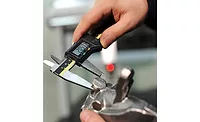
October 1, 2006
When quality data collection first hit the shop floor in the late 1970s it did so in the form of ASCII terminals connected to a main-frame or minicomputers. These terminals were distributed throughout the shop at fixed stations and usually collected data that was entered by hand because there was no good way to handle direct gage input. The good thing about these systems was that the entered data was automatically collected in a central repository so that data from the entire shop floor could be analyzed; of course, it was not a very portable solution


Portable collectors can be used for employees involved in a variety of field operations, from field service to route accounting, even multistop delivery applications. Source: I&R Partners LL

On the Go

Companies such as Electro-General Corp. realized that portability was becoming an important requirement of data collection systems, and in the late 1970s developed microprocessor-based collectors that could be carried around the shop floor. These new devices untethered data collection and were an instant hit. These products were so successful that they overshadowed the company that made them. In 1983, Electro-General changed its company name to the name of the ubiquitous product, the DataMyte.

Portability, however, came at a price. The collectors were no longer connected to a central data repository. Because of this, quality personnel were burdened with keeping the central repository updated with the latest collected data. This often meant walking the portable collector to a central computer and unloading the data so that it could be integrated with similar data from all parts of the factory. This manual unloading of data was unproductive at best, and in many cases resulted in loss of data that was never uploaded, or in the delayed integration of data long after its usefulness had expired.

Because of the relative infancy of this technology, these collectors also were plagued with low-resolution monochrome displays that showed only a minimum amount of information. Another problem with these early portables was the use of proprietary hardware and operating software. This made enhancement of the capabilities costly and time-consuming. As the market matured, and many more players became involved, the portables evolved by incorporating larger displays and enhanced feature sets, but like their ancestors, these next-generation units used proprietary hardware and software and did not easily share data with a central computer.

By 1990 a glaring flaw in the portable market was this inability to share data with other computers or "network." Manufacturers wanted the portability but they also needed to upload data to a central repository for analysis in a more timely fashion. This caused the portable vendors to create distributed "collection stations" throughout the factory. These stations consisted of a CRT display for units without a larger display and a hard wire that the collector could plug into. This allowed subgroups to once again be uploaded to a central repository automatically on collection when connected to the station. Unfortunately, this trend also grounded the portables; they were now tethered to a wire.

By 1995, operators were getting used to computers on their desktop, and the factory floor was becoming wired with Local Area Network infrastructure. This caused a further shift to fixed-station collectors. Because the portables were tied down anyway, why not revert to collection terminals throughout the factory? After all, these Windows-based collection stations were low cost, easily networked, had full-color displays, and used standard operating systems making development and customization easier and less costly.

Had the need for portability that was addressed in the 1980s gone away? Each manufacturer can answer that question for himself and his operations. If they did not implement or abandon portable data collection because of the networkability issues, or because they could get more success with a Windows PC on the shop floor, it may be time to take another look.


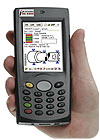
Wireless capability provides a real-time view into all the operations taking place on the shop floor at any time. Source: I&R Partners LLC

Another Look

New technology has untethered the portable collector. Wireless networking is a standard capability on the latest generation of handheld computing devices. Data can be uploaded in real time to a central repository without a wire using standard WiFi technologies.
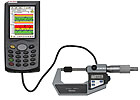
These collectors have full-color displays and run standard operating systems such as Windows CE, allowing a manufacturer not only to run standard off-the-shelf software, but also to develop custom applications. Source: I&R Partners LLC
These new collectors have full-color displays and run standard operating systems such as Windows CE, allowing a manufacturer not only to run standard off-the-shelf software, but also to develop custom applications faster and at a lower cost. Perhaps most importantly, because these computers are manufactured in huge quantities for many applications, they cost a fraction of what the old proprietary collectors cost.

By using these technologies, longevity can be added to capital investment. For example, consider devices that can be easily upgraded by installing new software, or that can be shared for additional applications on the shop floor. One of these new handheld computers can run not only shop floor data collection applications, but also can run familiar standard software such as a browser to access the corporate intranet to retrieve work instructions, drawings or operating procedures.

Imagine the power of a handheld device if the same device used in quality control operations also allows bar code scanning for use in factory floor data collection, inventory tracking and other day-to-day operations. The wireless capability provides a real-time view into all the operations taking place on the shop floor at any time.

This device also can act as a dumb terminal, running the WaveLink terminal emulation client. So now the portable device can truly replace the fixed station device and communicate directly to the host computer. With Windows CE .NET, multiple applications can run simultaneously, communicate with the mini or mainframe, run a new browser application and instantly switch between them.

These devices also can be used for employees involved in a variety of field operations, from field service to route accounting, even multistop delivery applications. Using Windows-based mobile computers with specific field operations software, field service inspectors can perform data entry, improve field service management and support customers in real-time.

With economics placing an increasing demand on cost justification, the stage has been set for devices serving a sundry of data collection applications simultaneously. There are a myriad of handheld PCs that can collect barcode data for production and materials management applications, but the challenge of collecting data with the same device in areas such as quality control has been less successfully satisfied by PC manufacturers. The obstacle of interfacing the digital, serial and analog measurement gages, required to ensure compliance to manufacturer's specifications, is a challenge. With the demands placed on the IT staff for compliance and uniformity, the goal of collecting data from the same handheld PC, regardless of the department, would be an accomplishment indeed.

One-stop shopping adds convenience by lessening operator training time, increasing flexibility of operator repositioning, allowing for borrowed of units in emergencies, providing for a single contact when service or support is needed and aiding in cost justification. Q


Tech Tips

• New technology has untethered the portable collector.

• Wireless networking is a standard capability on the latest generation of handheld computing devices.

• Data can be uploaded in real time to a central repository using standard WiFi technologies.

Share This Story

Looking for a reprint of this article?
From high-res PDFs to custom plaques, order your copy today!

Recommended Content

JOIN TODAY
to unlock your recommendations.

Already have an account? Sign In

  • 2024 Quality Rookie of the Year Justin Wise 1440x750px banner with "Quality Rookie of the Year" logo inset

    Meet the 2024 Quality Rookie of the Year: Justin Wise

    Justin Wise is an exceptional individual who has been...
    Aerospace
    By: Michelle Bangert
  • Man with umbrella and coat stands outside while it rains at night looking at a building.

    Nondestructive Testing: Is there an ethics problem?

    I was a whistleblower who exposed fraudulent activities...
    NDT
    By: Dale Norwood
  • Unraveling Deflategate: Football stadium with closeup of football on field

    Unraveling the Tom Brady Deflategate

    The Deflategate scandal erupted following the 2014 AFC...
    Measurement
    By: Greg Cenker and Henry Zumbrun
Manage My Account
  • eMagazine Subscriptions
  • Newsletters
  • Online Registration
  • Subscription Customer Service
  • Manage My Preferences

More Videos

Sponsored Content

Sponsored Content is a special paid section where industry companies provide high quality, objective, non-commercial content around topics of interest to the Quality audience. All Sponsored Content is supplied by the advertising company and any opinions expressed in this article are those of the author and not necessarily reflect the views of Quality or its parent company, BNP Media. Interested in participating in our Sponsored Content section? Contact your local rep!

close
  • Key Takeaways for Quality Leaders
    Sponsored byComplianceQuest

    Key Takeaways for Quality Leaders from the 2026 Gartner Magic Quadrant™ for QMS

  • This image shows a person seated next to a Bobcat T66 compact track loader.
    Sponsored byPolyWorks by InnovMetric

    Supercharging Digital Gauging at Bobcat North America

  • Dorsey Calibration Lab photo by Tom LaBarbera Picture this Studios
    Sponsored byDorsey Metrology International

    Ensuring Product Quality in a Competitive Manufacturing Landscape

Popular Stories

a titanium diaphragm speaker driver

The One Thing Elon Gets Right Is Designed to Scare You

This image shows a person seated next to a Bobcat T66 compact track loader.

Supercharging Digital Gauging at Bobcat North America

Dorsey Calibration Lab photo by Tom LaBarbera Picture this Studios

Ensuring Product Quality in a Competitive Manufacturing Landscape

2026 Quality Professional of the Year!

Events

June 9, 2026

Future-Proof your Quality Processes with Advanced 3D Optical CMM Technology

Discover how to effortlessly capture complex data, leverage true multi-sensor automation, and ensure continuous operation without creating inspection delays.

June 22, 2026

Automate 2026

Automate is North America's largest robotics and automation event — and the best place to take your ideas from insight to impact.
 
Our show floor features the world’s leading automation solutions, from AI and robotics to motion control, vision systems, and more. Plus, our educational conference is second to none, led by the brightest minds in automation today.
 
Ready to transform the way you work? Take the next step at Automate.
View All Submit An Event

Products

Lean Manufacturing and Service Fundamentals, Applications, and Case Studies

Lean Manufacturing and Service Fundamentals, Applications, and Case Studies

See More Products
Quality Podcast Channel Custom Content

Related Articles

  • Quality Software & Analysis: Software Sets Data Collection Standard

    See More
  • Software & Analysis: Advances in Mobile Data Collection Extend Quality's Reach

    See More
  • Measurement system analysis provides the answers to a number of questions.

    Before your analysis, take these steps: Assuring reliability in data collection

    See More

Related Products

See More Products
  • certified.jpg

    The Certified Software Quality Engineer Handbook, Second Edition

See More Products

Related Directories

  • Predator Software Inc.

    Since 1994, Predator Software focuses on automating manufacturers worldwide with innovative and award-winning software applications. Predator Software is an industry leader in Industry 4.0, IIoT, smart manufacturing, digital factory, lean manufacturing, industrial networking solutions and automation via shop floor control or SFC. Predator's SFC technologies include CNC networking, machine monitoring, OEE, production data management, data collection, machine simulation & verification, tool & gage crib management, traveler management, CNC post processing, flexible manufacturing systems and robotic cell control software.
×

Stay in the know with Quality’s comprehensive coverage of
the manufacturing and metrology industries.

Newsletters | Website | eMagazine

JOIN TODAY!
  • RESOURCES
    • Advertise
    • Contact Us
    • Directories
    • Manufacturing Division
    • Store
    • Want More
  • SIGN UP TODAY
    • Create Account
    • eMagazine
    • Newsletters
    • Customer Service
    • Manage Preferences
  • SERVICES
    • Marketing Services
    • Market Research
    • Reprints
    • List Rental
    • Survey/Respondent Access
  • STAY CONNECTED
    • LinkedIn
    • Facebook
    • YouTube
    • X (Twitter)
  • PRIVACY
    • PRIVACY POLICY
    • TERMS & CONDITIONS
    • DO NOT SELL MY PERSONAL INFORMATION
    • PRIVACY REQUEST
    • ACCESSIBILITY

Copyright ©2026. All Rights Reserved BNP Media, Inc. and BNP Media II, LLC.

Design, CMS, Hosting & Web Development :: ePublishing