Quality in Color
Discover applications for color machine vision, how line scan imaging works and the advantages of tri-linear color line scan cameras for quality inspection.
As inspection applications become more demanding and the costs of color cameras decrease, color imaging is becoming a major force in machine vision inspection. Color line scan cameras have been widely used in applications such as banknote and check scanning, 100% print inspection, electronics and printed circuit board (PCB) manufacturing, food inspection, tile, wood, textile and web inspections. This is because, in many cases, color is the only way to identify objects that are otherwise too similar when monochrome, grey scale imaging is used. Tri-linear color line scan imaging may be the best solution for such applications.
Color may be used any time the operator needs to evaluate the presence or density of a color, its evenness of distribution or its similarity to a known reference. For example, with food inspection, color allows quality inspectors to ascertain ripeness and grade product quality for produce. And in the case of grains and legumes, color helps to grade product quality and distinguish foreign matter in a steady stream of product.
But, when faced with an application that instills some doubt, ask the following questions:
Is the object’s color quality and consistency a key factor in the overall quality of the product?
Can the object’s color help the operator to ascertain the relative quality of the product?
Will color facilitate detection of the object?
If the answer to any of these questions is yes, then color machine vision inspection may be the answer.
A line scan camera is a camera device containing a line scan image sensor chip and an optical focusing mechanism. These cameras are almost solely used in industrial settings to capture an image of a constant stream of moving material. Line scan cameras use a single linear array or multiple linear arrays of pixel sensors, instead of a 2-D matrix of them. Data coming from the line scan camera have a frequency where the camera scans a line or multiple lines, waits and repeats.
Perhaps the most common example of line scan imaging is the fax machine. Line scan imaging uses a single line of sensor pixels (effectively 1-D) to build up a 2-D image. The second dimension results from the motion of the object being imaged. Two-dimensional images are acquired line by line by successive single-line scans while the object moves perpendicularly past the line of pixels in the image sensor.
For a given field of view, one 2k line scan camera cost-effectively provides the same resolution as two megapixel area scan cameras, without image smear or the redundant processing of frame overlaps.
Line scan technology is capable of capturing data extremely fast and at very high image resolutions. Usually under these conditions, resulting collected image data can quickly exceed 100 MB in a fraction of a second. Line scan camera-based integrated systems, therefore, are usually designed to streamline the camera’s output in order to meet the system’s objective, using computer technology that is affordable.
Line scan image capture has many benefits, including:
Price per pixel. Line scan offers cost-effective implementations of very high spatial resolution image capture.
Dynamic range that can be much higher than alternative image capture methods.
High pixel fill-factor-typically 100%-to maximize sensitivity.
Smear-free images of fast moving objects without expensive strobing or cumbersome shuttering.
High color fidelity. Full color images can be reconstructed from the captured RGB data without color interpolation.
Processing efficiency. Line scanning eliminates the frame overlaps required to build a seamless image. Frame overlaps represent redundant data that uses precious processing bandwidth, particularly in high-speed, high-resolution applications.
Minimal line spacing between color channels
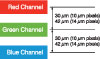
Minimal line spacing between color channels is required for optimal results. Line spacing as low as 3 pixels center to center not only significantly improves color fidelity and reduces image artifacts due to synchronization, it also makes it easier to align the sensor to the inspection web. This permits certain applications that are otherwise infeasible using larger line spacing.
Highest line rate
Line rate is an important factor when considering inspection system components. A camera that provides higher line rates allows decreased inspection time and higher system throughput, thereby increasing efficiency. Look for tri-linear cameras that deliver the highest line rates.
Improved blue/UV responsivity
Responsivity in the blue/UV region is particularly important for certain applications such as wafer, food and cotton/textile inspections, where shorter wavelengths are used to identify smaller features. The best tri-linear cameras offer improved responsivity and imaging performance in the short wavelength spectrum.
High reliability color filters
Light fastness is a measure of color fading against exposure to light and is measured on a scale of 1 to 8 (1 is poor while 8 is excellent). Look for tri-linear color filters that have been measured to have a light fastness of 7 to 8. This is particularly important for line scan applications, as they often require high-intensity light sources that can fade lesser filters over time.
 Tri-linear technology provides significant advantages in speed performance, costs and color quality. It significantly simplifies camera design by using a single sensor chip rather than 3 CCDs. This not only reduces costs in components and results in a smaller footprint and lower power consumption, it also improves product quality and reliability. With tri-linear cameras, there is no need for specially designed optical lenses for optimal performance and this further cuts system costs.
End users who have been using 3 CCD cameras are moving to tri-linear cameras as they provide the best price-to-performance ratio for many industrial applications. The current trend in color imaging is higher resolution, higher speed and multispectral capability as more and more demanding applications emerge. V&S
Line scan image capture has many benefits, including more cost-effective implementations of high spatial resolution image capture.
Dynamic range can be much higher than alternative image capture methods, and a high pixel fill-factor maximizes sensitivity.
Line scanning eliminates the frame overlaps required to build a seamless image. Frame overlaps represent redundant data that uses up precious processing bandwidth, particularly in high-speed, high-resolution applications.
As inspection applications become more demanding and the costs of color cameras decrease, color imaging is becoming a major force in machine vision inspection. Color line scan cameras have been widely used in applications such as banknote and check scanning, 100% print inspection, electronics and printed circuit board (PCB) manufacturing, food inspection, tile, wood, textile and web inspections. This is because, in many cases, color is the only way to identify objects that are otherwise too similar when monochrome, grey scale imaging is used. Tri-linear color line scan imaging may be the best solution for such applications.
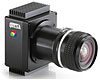
Tri-linear sensor technology maximizes color performance and delivers high line rates and resolutions. Source: Dalsa
When to Use Color Machine Vision
The machine vision application always dictates the solution. In other words, the details of the application should be the answer to the question: “Should color be used for this?”Color may be used any time the operator needs to evaluate the presence or density of a color, its evenness of distribution or its similarity to a known reference. For example, with food inspection, color allows quality inspectors to ascertain ripeness and grade product quality for produce. And in the case of grains and legumes, color helps to grade product quality and distinguish foreign matter in a steady stream of product.
But, when faced with an application that instills some doubt, ask the following questions:
If the answer to any of these questions is yes, then color machine vision inspection may be the answer.
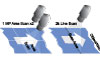
Line scan cameras use a single array of pixel sensors, instead of a matrix of them. Source: Dalsa
Line Scan Camera Systems
Before delving into the tri-linear color aspects of line scan cameras, it may be helpful to have a brief primer on line scan cameras and how they work.A line scan camera is a camera device containing a line scan image sensor chip and an optical focusing mechanism. These cameras are almost solely used in industrial settings to capture an image of a constant stream of moving material. Line scan cameras use a single linear array or multiple linear arrays of pixel sensors, instead of a 2-D matrix of them. Data coming from the line scan camera have a frequency where the camera scans a line or multiple lines, waits and repeats.
Perhaps the most common example of line scan imaging is the fax machine. Line scan imaging uses a single line of sensor pixels (effectively 1-D) to build up a 2-D image. The second dimension results from the motion of the object being imaged. Two-dimensional images are acquired line by line by successive single-line scans while the object moves perpendicularly past the line of pixels in the image sensor.
For a given field of view, one 2k line scan camera cost-effectively provides the same resolution as two megapixel area scan cameras, without image smear or the redundant processing of frame overlaps.
Line scan technology is capable of capturing data extremely fast and at very high image resolutions. Usually under these conditions, resulting collected image data can quickly exceed 100 MB in a fraction of a second. Line scan camera-based integrated systems, therefore, are usually designed to streamline the camera’s output in order to meet the system’s objective, using computer technology that is affordable.
Line scan image capture has many benefits, including:
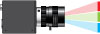
Tri-linear technology uses three linear arrays fabricated on one die-one each for red, green and blue. Source: Dalsa
How Tri-linear Color Line Scan Works
There are several technologies used in color imaging including 3 CCD and tri-linear. Tri-linear technology uses three linear arrays fabricated on one die-one each for red, green and blue. In operation, each of the arrays captures a primary color image simultaneously but at slightly different points on the moving object. To combine the color channels into a properly registered full-color image, the camera or the imaging system’s frame grabber must compensate for this spatial separation, usually by buffering the first and second lines to match with the third.Minimal line spacing between color channels
Minimal line spacing between color channels is required for optimal results. Line spacing as low as 3 pixels center to center not only significantly improves color fidelity and reduces image artifacts due to synchronization, it also makes it easier to align the sensor to the inspection web. This permits certain applications that are otherwise infeasible using larger line spacing.
Highest line rate
Line rate is an important factor when considering inspection system components. A camera that provides higher line rates allows decreased inspection time and higher system throughput, thereby increasing efficiency. Look for tri-linear cameras that deliver the highest line rates.
Improved blue/UV responsivity
Responsivity in the blue/UV region is particularly important for certain applications such as wafer, food and cotton/textile inspections, where shorter wavelengths are used to identify smaller features. The best tri-linear cameras offer improved responsivity and imaging performance in the short wavelength spectrum.
High reliability color filters
Light fastness is a measure of color fading against exposure to light and is measured on a scale of 1 to 8 (1 is poor while 8 is excellent). Look for tri-linear color filters that have been measured to have a light fastness of 7 to 8. This is particularly important for line scan applications, as they often require high-intensity light sources that can fade lesser filters over time.
Tri-linear technology minimizes line spacing between color channels, accomplishing 3 pixel center-to-center line spacing compared with 8 to 9 pixel line spacing in most designs. Source: Dalsa
End users who have been using 3 CCD cameras are moving to tri-linear cameras as they provide the best price-to-performance ratio for many industrial applications. The current trend in color imaging is higher resolution, higher speed and multispectral capability as more and more demanding applications emerge. V&S
Tech Tips
Looking for a reprint of this article?
From high-res PDFs to custom plaques, order your copy today!


