Choosing the Right Vision Technology
Understanding the choices in vision systems narrows the search for the most appropriate system for the application at hand.
Those who have been faced with choosing a machine vision system know that there are an incredible number of choices. But by refining the selection criteria, operators can make their search less daunting.
There are two general classes of machine vision systems: general purpose and application specific.
General purpose vision systems are those that are configurable to perform a wide variety of applications. Given that flexibility, they require an engineering investment that ranges from modest for an uncomplicated application to very significant to meet complex requirements. In return for the engineering work, after the engineering is performed to the end user’s specifications, the general purpose vision system will likely meet their requirements more closely than an application-specific vision system.
General purpose systems are attractive to researchers who need to work outside of established techniques, to OEMs who want to gain significant product differentiation and to system integrators who are able to field and maintain the multidisciplinary team needed to solve complex requirements for their customers and provide continuing support.

Systems. Someone working closely on the project must have technical systems responsibility. This is the person who will ensure that all components are compatible and suitable for the application and its environment.
Process. Someone on the project team must understand the manufacturing process. Typically, this will be someone from the end user’s organization.
Lighting. Experienced machine vision practitioners all agree that lighting is the principal determinant of image quality and is therefore the key to a successful application. Fortunately, most lighting suppliers are set up to evaluate an application’s needs and recommend a suitable illumination source. They will need to know the field-of-view size, the distance the light source must be from the scene, and the camera, lens and f-number being used.
Optics. Sometimes a simple lens is all an application needs for imaging, and most lens suppliers can recommend a suitable lens. Other times, though, the application requires a more complex optical arrangement and an optical engineer needs to be engaged. To help, the optical engineer needs to know the standoff distance for the lens, the resolution requirements, the depth-of-field requirement, and the sizes of the field-of-view and the image sensor. Some lens suppliers may provide this service, but some applications will require the services of an independent optical engineer.
Software. A general purpose vision system needs to be programmed to analyze the image and provide the appropriate outputs. This can range from manipulating graphic symbols in a drag-and-drop environment to writing and debugging extensive amounts of source code. The programmer must be part of the project team; vision system suppliers do not provide this service.
Mechanical. The equipment purchased needs to be mounted and perhaps enclosed when it is placed on the production line. This work ranges from a few simple brackets to complex enclosures with folded optical paths. Cable routing between the different components of the vision system also must be managed.
Electronic. Not all systems require signals to be routed between components beyond those that go over industry standard cables. However, there may be interfaces between the camera and the light source to control the strobing of the light as well as interfacing between the vision system and other related electric controls.
Training. It is necessary to train operators, process engineers and maintenance technicians about those facets of the vision system that are relevant to their responsibilities. While this training may be informal, substantial evidence shows that more formal training, involving both prepared classroom and hands-on sessions, is more effective.
Sustaining. Beyond routine maintenance, talent should be available to solve problems and restore the vision system to peak performance as well as make upgrades if they become necessary.
These components usually come from different suppliers, and the developer must ensure compatibility. The developer also must recognize that they will get support from suppliers at the component level, but will have to provide the system level support themselves.
The component vision system has the greatest flexibility of all systems but requires the most engineering effort. The number of cameras that can be associated with one vision system is unbounded-except for processing capacity. The type of camera, area or line-scan, monochrome or color, and image resolution ranging from VGA (640 by 480 pixels) to many megapixels is up to the end user to choose. In fact, although rare, the component vision system allows mixing different types of cameras in one application.
Processing capacity can be expanded to the level needed by adding additional processors, usually plug-in boards tailored for maximum effectiveness in processing image data. However, as the number of cameras and processors grows, the complexity of the vision system rises rapidly.
The second category of general purpose vision system is the packaged vision system. The vision system supplier provides the camera or cameras, processor with interfaces and software including development environment. The supplier also may supply lenses and light sources for a range of applications. Vision systems of this type still require the vision system developer to handle the spectrum of development tasks, but give the developer ensured compatibility among components as well as basic system level support. While this category was once the dominant category of general purpose vision systems, its importance decreased as the components became more readily available at low cost and as the third category of general purpose vision systems, smart cameras, emerged.
Smart cameras combine the image processing, hardware and software, together with the camera to give a small and relatively inexpensive vision system. The smart camera category is the fastest growing of all vision system categories. Operators can choose from among area and line-scan imaging, from monochrome or color imaging, and from modest VGA image resolution to five megapixel image resolution or higher.
The smart camera still requires the developer to provide the engineering of lighting, optics and, to some level, software development. A single smart camera will be less expensive than either a component or a packaged vision system. As the number of smart cameras grows for a given application, their total cost will begin to exceed the cost for a comparable component or a packaged vision system. However, there may still be savings in engineering effort that will offset this cost difference.
Vision system end users usually prefer to purchase application- specific vision systems so they do not need to assemble the engineering team to work with a general purpose vision system. Machine tool builders and system integrators who do not specialize in machine vision also prefer application-specific vision systems because it shortens their time to delivery and lessens their engineering burden.
Application-specific vision systems can be divided into two categories: turnkey and embedded. Embedded vision systems are those designed as a subsystem that is part of a larger machine. They save the machine developer significant engineering effort. A good example of an embedded vision system is when a company takes its smart camera and develops specific imaging, lighting and algorithms to perform a defined function. For example, there are smart cameras configured to read 2-D bar codes.
Turnkey vision systems can be further subdivided into two classes: product and integrated. A product vision system is one where a company develops the vision application and offers its design as a standard product. Although it is unusual for a company to inventory complete vision systems, the time from order placement to shipment is reasonably short because the engineering work is already completed.
Because the vision system manufacturer is amortizing their engineering costs over a larger number of systems, if the purchaser needs only one to a few systems, the product vision system is more economical than a general purpose vision system after engineering is factored into the cost.
A product vision system may not be an ideal fit for an end user’s requirements, but the vision system supplier is usually able to accommodate some limited modifications to better tailor the vision system and reduce compromises the end user must consider.
When no product vision system is available that meets requirements, the purchaser can turn to a system integrator to deliver an integrated vision system that will meet the requirements as closely as practical. The integrator provides the multidisciplinary engineering talent needed to develop a vision application along with the ability to provide continuing support. A number of companies have developed this capability to serve almost all industries. When an end user chooses a system integrator, they should investigate the engineering skills the integrator has available, the quality of the documentation the integrator provides and the degree of familiarity the integrator possesses about the end user’s industry.
Understanding the choices in the types of vision systems enables end users to focus their search to the type of vision system that best suits their situation. Of course, they also need to understand their abilities and needs as they talk with potential suppliers. V&S
Experienced machine vision practitioners all agree that lighting is the principal determinant of image quality and the key to a successful application.
Fortunately, most lighting suppliers are set up to evaluate an application’s needs and recommend a suitable illumination source.
The lighting suppliers will need to know the field-of-view size, the distance the light source must be from the scene, and the camera, lens and f-number being used.
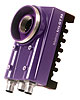
Smart cameras are the fastest growing vision system category. Source: Matrox Imaging
Those who have been faced with choosing a machine vision system know that there are an incredible number of choices. But by refining the selection criteria, operators can make their search less daunting.
There are two general classes of machine vision systems: general purpose and application specific.
General purpose vision systems are those that are configurable to perform a wide variety of applications. Given that flexibility, they require an engineering investment that ranges from modest for an uncomplicated application to very significant to meet complex requirements. In return for the engineering work, after the engineering is performed to the end user’s specifications, the general purpose vision system will likely meet their requirements more closely than an application-specific vision system.
General purpose systems are attractive to researchers who need to work outside of established techniques, to OEMs who want to gain significant product differentiation and to system integrators who are able to field and maintain the multidisciplinary team needed to solve complex requirements for their customers and provide continuing support.
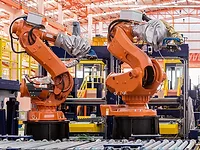
An application-specific integrated vision system, this vision guided SCARA robot is used to place strain gages onto load cells. Source: ABCO Automation Inc.
Requirements
Before looking more closely at the different categories of general purpose vision systems, here is a review of the engineering disciplines needed:Systems. Someone working closely on the project must have technical systems responsibility. This is the person who will ensure that all components are compatible and suitable for the application and its environment.
Process. Someone on the project team must understand the manufacturing process. Typically, this will be someone from the end user’s organization.
Lighting. Experienced machine vision practitioners all agree that lighting is the principal determinant of image quality and is therefore the key to a successful application. Fortunately, most lighting suppliers are set up to evaluate an application’s needs and recommend a suitable illumination source. They will need to know the field-of-view size, the distance the light source must be from the scene, and the camera, lens and f-number being used.
Optics. Sometimes a simple lens is all an application needs for imaging, and most lens suppliers can recommend a suitable lens. Other times, though, the application requires a more complex optical arrangement and an optical engineer needs to be engaged. To help, the optical engineer needs to know the standoff distance for the lens, the resolution requirements, the depth-of-field requirement, and the sizes of the field-of-view and the image sensor. Some lens suppliers may provide this service, but some applications will require the services of an independent optical engineer.
Software. A general purpose vision system needs to be programmed to analyze the image and provide the appropriate outputs. This can range from manipulating graphic symbols in a drag-and-drop environment to writing and debugging extensive amounts of source code. The programmer must be part of the project team; vision system suppliers do not provide this service.
Mechanical. The equipment purchased needs to be mounted and perhaps enclosed when it is placed on the production line. This work ranges from a few simple brackets to complex enclosures with folded optical paths. Cable routing between the different components of the vision system also must be managed.
Electronic. Not all systems require signals to be routed between components beyond those that go over industry standard cables. However, there may be interfaces between the camera and the light source to control the strobing of the light as well as interfacing between the vision system and other related electric controls.
Training. It is necessary to train operators, process engineers and maintenance technicians about those facets of the vision system that are relevant to their responsibilities. While this training may be informal, substantial evidence shows that more formal training, involving both prepared classroom and hands-on sessions, is more effective.
Sustaining. Beyond routine maintenance, talent should be available to solve problems and restore the vision system to peak performance as well as make upgrades if they become necessary.
General Purpose Vision Systems
Within general purpose vision systems, there are three different categories. The first of these is the component system in which the system developer picks the light sources; cameras; frame grabber, if required; lenses; computer; auxiliary processing boards, if needed; and image processing software.These components usually come from different suppliers, and the developer must ensure compatibility. The developer also must recognize that they will get support from suppliers at the component level, but will have to provide the system level support themselves.
The component vision system has the greatest flexibility of all systems but requires the most engineering effort. The number of cameras that can be associated with one vision system is unbounded-except for processing capacity. The type of camera, area or line-scan, monochrome or color, and image resolution ranging from VGA (640 by 480 pixels) to many megapixels is up to the end user to choose. In fact, although rare, the component vision system allows mixing different types of cameras in one application.
Processing capacity can be expanded to the level needed by adding additional processors, usually plug-in boards tailored for maximum effectiveness in processing image data. However, as the number of cameras and processors grows, the complexity of the vision system rises rapidly.
The second category of general purpose vision system is the packaged vision system. The vision system supplier provides the camera or cameras, processor with interfaces and software including development environment. The supplier also may supply lenses and light sources for a range of applications. Vision systems of this type still require the vision system developer to handle the spectrum of development tasks, but give the developer ensured compatibility among components as well as basic system level support. While this category was once the dominant category of general purpose vision systems, its importance decreased as the components became more readily available at low cost and as the third category of general purpose vision systems, smart cameras, emerged.
Smart cameras combine the image processing, hardware and software, together with the camera to give a small and relatively inexpensive vision system. The smart camera category is the fastest growing of all vision system categories. Operators can choose from among area and line-scan imaging, from monochrome or color imaging, and from modest VGA image resolution to five megapixel image resolution or higher.
The smart camera still requires the developer to provide the engineering of lighting, optics and, to some level, software development. A single smart camera will be less expensive than either a component or a packaged vision system. As the number of smart cameras grows for a given application, their total cost will begin to exceed the cost for a comparable component or a packaged vision system. However, there may still be savings in engineering effort that will offset this cost difference.
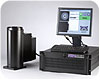
This application-specific product vision system inspects components on printed circuit boards. Source: Machine Vision Products Inc.
Application Specific
The second class of vision systems, application specific, is those configured to address a specific task. Think of them starting as general purpose vision systems where some company has performed the engineering work to tailor them for a specific use. The advantages of application-specific vision systems are that they do not need significant engineering or programming by the purchaser, and the supplier maintains the ability to provide ongoing support for maintenance and upgrades.Vision system end users usually prefer to purchase application- specific vision systems so they do not need to assemble the engineering team to work with a general purpose vision system. Machine tool builders and system integrators who do not specialize in machine vision also prefer application-specific vision systems because it shortens their time to delivery and lessens their engineering burden.
Application-specific vision systems can be divided into two categories: turnkey and embedded. Embedded vision systems are those designed as a subsystem that is part of a larger machine. They save the machine developer significant engineering effort. A good example of an embedded vision system is when a company takes its smart camera and develops specific imaging, lighting and algorithms to perform a defined function. For example, there are smart cameras configured to read 2-D bar codes.
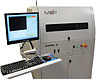
This application-specific embedded vision system inspects the surfaces of optical disks. Source: Xiris Automation Inc.
Turnkey Vision
Turnkey vision systems are those delivered ready to operate except, of course, they need to be set up for the specific products being imaged. When installed in-line, the turnkey vision system also needs to be integrated into the production line flow, for example, routing the conveyor flow so the product passes by the vision system and interfacing the output of the vision system to the plant’s data network.Turnkey vision systems can be further subdivided into two classes: product and integrated. A product vision system is one where a company develops the vision application and offers its design as a standard product. Although it is unusual for a company to inventory complete vision systems, the time from order placement to shipment is reasonably short because the engineering work is already completed.
Because the vision system manufacturer is amortizing their engineering costs over a larger number of systems, if the purchaser needs only one to a few systems, the product vision system is more economical than a general purpose vision system after engineering is factored into the cost.
A product vision system may not be an ideal fit for an end user’s requirements, but the vision system supplier is usually able to accommodate some limited modifications to better tailor the vision system and reduce compromises the end user must consider.
When no product vision system is available that meets requirements, the purchaser can turn to a system integrator to deliver an integrated vision system that will meet the requirements as closely as practical. The integrator provides the multidisciplinary engineering talent needed to develop a vision application along with the ability to provide continuing support. A number of companies have developed this capability to serve almost all industries. When an end user chooses a system integrator, they should investigate the engineering skills the integrator has available, the quality of the documentation the integrator provides and the degree of familiarity the integrator possesses about the end user’s industry.
Understanding the choices in the types of vision systems enables end users to focus their search to the type of vision system that best suits their situation. Of course, they also need to understand their abilities and needs as they talk with potential suppliers. V&S
Tech Tips
Looking for a reprint of this article?
From high-res PDFs to custom plaques, order your copy today!