Quality Magazine logo
search
cart
facebook twitter linkedin youtube
  • Sign In
  • Create Account
  • Sign Out
  • My Account
Quality Magazine logo
  • NEWS
  • PRODUCTS
    • FEATURED PRODUCTS
    • SUBMIT YOUR PRODUCT
  • CHANNELS
    • AUTOMATION
    • MANAGEMENT
    • MEASUREMENT
    • NDT
    • QUALITY 101
    • SOFTWARE
    • TEST & INSPECTION
    • VISION & SENSORS
  • MARKETS
    • AEROSPACE
    • AUTOMOTIVE
    • ENERGY
    • GREEN MANUFACTURING
    • MEDICAL
  • MEDIA
    • A WORD ON QUALITY PUZZLE
    • EBOOKS
    • PODCASTS
    • VIDEOS
    • WEBINARS
  • EVENTS
    • EVENT CALENDAR
    • IMTS
  • DIRECTORIES
    • BUYERS GUIDE >
      • Supplier Insights
    • NDT SOURCEBOOK
    • VISION & SENSORS
    • TAKE A TOUR
  • INFOCENTERS
    • Digital Quality Management Systems
    • NEXT GENERATION SPC & QUALITY ANALYTICS
  • AWARDS
    • ROOKIE OF THE YEAR
    • PLANT OF THE YEAR
    • PROFESSIONAL OF THE YEAR
  • MORE
    • Expert Columns
    • NEWSLETTERS
    • QUALITY STORE
    • INDUSTRY LINKS
    • SPONSOR INSIGHTS
  • EMAG
    • eMAGAZINE
    • ARCHIVES
    • CONTACT
    • ADVERTISE
  • SIGN UP!
Management

ISO Update

Auditing Your QMS With Limited Documentation

The Misunderstanding About Documentation in ISO 9001:2015

By Cathy Fisher
Cathy Fisher
July 1, 2016

The management systems auditing community has recently engaged in a lot of talk about how to audit a quality management system (QMS) when there are minimal requirements for documentation in the ISO 9001:2015 standard. When we consider that an audit is a “systematic, independent and documented process for obtaining objective evidence and evaluating it objectively to determine the extent to which the audit criteria are fulfilled” (ISO 9000:2015), the need for some type of audit criteria seems essential.

There are really two concerns being expressed here:

ISO 9001:2015 no longer requires formal QMS documentation, and what qualifies as “audit criteria” when there is limited QMS documentation?

Let’s take a look at each of these concerns in turn to dispel the myths around this idea of auditing with limited documentation.

First, there seems to be a misunderstanding about documentation requirements in ISO 9001:2015. While it is true that the specific requirements for a quality manual and documented procedures have been removed from the previous versions of this international QMS standard (please don’t throw your organization’s quality manual and procedures away if they are working for your QMS), requirements still exist for what is now called “documented information,” defined as “information required to be controlled and maintained by an organization and the medium on which it is contained” (ISO 9000:2015).

In fact, there are ten mentions of maintaining documented information and 24 references to retaining documented information found throughout the ISO 9001:2015 standard. The use of the term “documented information” provides your organization with flexibility as to how this information will be made available in your QMS.
For auditors worried about auditing a QMS where no or limited documentation is available, take heart: indeed, some type of “documented information” must be available for your organization to define your QMS to address ISO 9001:2015 requirements. However, the format of this “documented information” may vary between and possibly even within organizations, so as auditors, we need to be flexible in our approach to auditing.

A great place to start during your audit planning is to ask process owners what “documented information” about the QMS is available and in what formats this can be found. This “documented information” can then serve as the audit criteria for developing your audit plan and audit checklist.

You likely recognize that not all ISO 9001:2015 requirements specify “documented information,” so what should be used as the audit criteria when auditing those processes of your QMS where “documented information” is not specified? The key is to realize that the requirements in ISO 9001:2015 are always fulfilled by processes found within your organization. Therefore, one question to start your audit planning would be to ask, “What process is in place to . . .?” For example, “What process is in place to identify and maintain organizational knowledge?” or “What process is in place to determine people needed for effective QMS operation?”

We tend to think of processes as formalized and/or written down in documentation. However, a process exists when its output is identifiable, its input and steps to achieve the output are recognized, and ownership of that output and process has been assigned.

Even without formally defined and documented processes, the activities that occur within your organization can address one or more ISO 9001:2015 requirements. As auditors, we must be on the lookout to recognize these processes within our organization and their relationship to the ISO 9001:2015 requirements. Each requirement in ISO 9001:2015 promotes particular outputs demonstrating a well-established QMS. The standard allows flexibility in how your organization defines these outputs relevant to your unique business.

If we approach the auditing of the ISO 9001:2015 requirements less from the standpoint of what documentation is available and more from the perspective of what processes exist, we can adapt a standard set of process-focused questions to any auditing situation. 

When an auditor applies the “starter” set of process audit questions for a QMS process with limited or no documentation, the audit criteria, defined as a “set of policies, procedures or requirements used as a reference against which objective evidence is compared” (ISO 9000:2015), would be “statements of fact” from the owner of the process being audited.

In this case, the process owner’s response establishes the basis for the audit (audit criteria) and prompts us as auditors to ask additional audit questions to identify the objective evidence relevant to the QMS process being audited. This approach will require auditors to be agile at developing appropriate audit questions on the spot versus following a prescribed audit checklist for gathering audit evidence.

One additional concern raised by auditors about this situation of limited QMS documentation is the audit evidence will only be “word of mouth” from the auditee and, therefore, not verifiable. Since audit evidence includes “records, statements of fact or other information which are relevant to the audit criteria and verifiable” (ISO 9000:2015), by definition, audit evidence must be verifiable; otherwise, how can it be considered objective? This is where audit technique becomes critically important from the standpoint of mainly asking open-ended questions during the audit interview, really listening to the auditee’s response; the clues to the audit evidence can always be found in the auditee’s answers, and following audit trails (asking the next appropriate question), which will eventually lead to the audit evidence, whether that evidence is tangible, an observation or a statement of fact which can be corroborated.

No doubt the changes to the ISO 9001:2015 standard are challenging us as auditors to up our game when it comes to evaluating our QMS without specified documentation requirements. However, with the consistent application of the process approach to audit planning, employing our best active listening skills during the audit interview then following relevant audit trails, audit results will provide your organization with accurate, objective insight into your QMS performance and effectiveness.
 

KEYWORDS: auditing ISO 9001:2015 quality management software quality management system (QMS)

Share This Story

Looking for a reprint of this article?
From high-res PDFs to custom plaques, order your copy today!

Cathy Fisher is president of Quistem LLC, providing online and on-site management systems implementation, update and assessment services primarily for manufacturers. She has over 30 years of auditing experience, having led internal audit programs at many manufacturing organizations over her career. She has held numerous auditor certifications including ASQ CQA, RAB Certified Quality Systems Auditor, ISO/TS 16949 IATF recognized auditor, etc.; conducted audits (both internal and external) totaling over 1000 audit days, and trained hundreds of management systems professionals as auditors. www.quistem.com

Recommended Content

JOIN TODAY
to unlock your recommendations.

Already have an account? Sign In

  • 2024 Quality Rookie of the Year Justin Wise 1440x750px banner with "Quality Rookie of the Year" logo inset

    Meet the 2024 Quality Rookie of the Year: Justin Wise

    Justin Wise is an exceptional individual who has been...
    Aerospace
    By: Michelle Bangert
  • Man with umbrella and coat stands outside while it rains at night looking at a building.

    Nondestructive Testing: Is there an ethics problem?

    I was a whistleblower who exposed fraudulent activities...
    NDT
    By: Dale Norwood
  • Unraveling Deflategate: Football stadium with closeup of football on field

    Unraveling the Tom Brady Deflategate

    The Deflategate scandal erupted following the 2014 AFC...
    Measurement
    By: Greg Cenker and Henry Zumbrun
Manage My Account
  • eMagazine Subscriptions
  • Newsletters
  • Online Registration
  • Subscription Customer Service
  • Manage My Preferences

More Videos

Sponsored Content

Sponsored Content is a special paid section where industry companies provide high quality, objective, non-commercial content around topics of interest to the Quality audience. All Sponsored Content is supplied by the advertising company and any opinions expressed in this article are those of the author and not necessarily reflect the views of Quality or its parent company, BNP Media. Interested in participating in our Sponsored Content section? Contact your local rep!

close
  • Key Takeaways for Quality Leaders
    Sponsored byComplianceQuest

    Key Takeaways for Quality Leaders from the 2026 Gartner Magic Quadrant™ for QMS

  • This image shows a person seated next to a Bobcat T66 compact track loader.
    Sponsored byPolyWorks by InnovMetric

    Supercharging Digital Gauging at Bobcat North America

  • Dorsey Calibration Lab photo by Tom LaBarbera Picture this Studios
    Sponsored byDorsey Metrology International

    Ensuring Product Quality in a Competitive Manufacturing Landscape

Popular Stories

iStock-1352825159-jpg.jpg

U.S. Should Substantially Boost Support for Manufacturing USA Program, Issue National Industrial Manufacturing Strategy, Says New Report

a factory floor during what appears to be a training session or a daily briefing

The Root Cause of Defects We Rarely Name or Address

Dorsey Calibration Lab photo by Tom LaBarbera Picture this Studios

Ensuring Product Quality in a Competitive Manufacturing Landscape

2026 Quality Professional of the Year!

Events

June 22, 2026

Automate 2026

Automate is North America's largest robotics and automation event — and the best place to take your ideas from insight to impact.
 
Our show floor features the world’s leading automation solutions, from AI and robotics to motion control, vision systems, and more. Plus, our educational conference is second to none, led by the brightest minds in automation today.
 
Ready to transform the way you work? Take the next step at Automate.
July 14, 2026

Quality Leaders Forum: Better Communication, Better Quality Data

The Quality Leaders Forum is a quarterly, editor-moderated fireside chat series hosted by Quality Magazine, featuring candid conversations with senior manufacturing and operations executives shaping enterprise-level quality.

View All Submit An Event

Products

Lean Manufacturing and Service Fundamentals, Applications, and Case Studies

Lean Manufacturing and Service Fundamentals, Applications, and Case Studies

See More Products
Rookie of the Year Custom Content

Related Articles

  • BSI Logo

    The future of auditing: Empower your organization to thrive as an industry leader

    See More
  • Factory worker or technician observing production machine process.

    How QMS Helps with Nonconformance Product Management

    See More
  • A team of automotive factory engineers in white safety hats and work vests are discussing something on a laptop and tablet. The assembly plant is slightly blurred in the background.

    Integrating SPC with QMS Encourages Shop Floor Modernization

    See More

Related Products

See More Products
  • advanced quality.jpg

    Advanced Quality Auditing

  • 118631.jpg

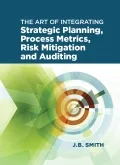
    The Art of Integrating Strategic Planning, Process Metrics, Risk Mitigation, and Auditing

  • ci_h1300@t-1.jpg

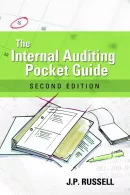
    The Internal Auditing Pocket Guide, Second Edition

See More Products

Related Directories

  • eAuditor Audits & Inspections

    eAuditor is an inspection, issue capture and corrective action platform. Conduct inspections, flag issues, and resolve problems together. 1. Start with a checklist template Digitize your existing checklists 2. Conduct an inspection anywhere on your mobile. 3. Export and share professional reports instantly. 4. Gain insights with analytics Automatic syncing between mobile devices and desktop platform provide real-time analytics dashboards.
  • QT9 Software

    QT9 QMS is a cloud-based, pre-validated quality management system that simplifies compliance with ISO, IATF and FDA standards. Automate document control, corrective actions, training, gage calibration and quality alerts while integrating seamlessly with your ERP. Eliminate spreadsheets, reduce risk and save time—so your team can focus on quality.
×

Stay in the know with Quality’s comprehensive coverage of
the manufacturing and metrology industries.

Newsletters | Website | eMagazine

JOIN TODAY!
  • RESOURCES
    • Advertise
    • Contact Us
    • Directories
    • Manufacturing Division
    • Store
    • Want More
  • SIGN UP TODAY
    • Create Account
    • eMagazine
    • Newsletters
    • Customer Service
    • Manage Preferences
  • SERVICES
    • Marketing Services
    • Market Research
    • Reprints
    • List Rental
    • Survey/Respondent Access
  • STAY CONNECTED
    • LinkedIn
    • Facebook
    • YouTube
    • X (Twitter)
  • PRIVACY
    • PRIVACY POLICY
    • TERMS & CONDITIONS
    • DO NOT SELL MY PERSONAL INFORMATION
    • PRIVACY REQUEST
    • ACCESSIBILITY

Copyright ©2026. All Rights Reserved BNP Media, Inc. and BNP Media II, LLC.

Design, CMS, Hosting & Web Development :: ePublishing