Quality Magazine logo
search
cart
facebook twitter linkedin youtube
  • Sign In
  • Create Account
  • Sign Out
  • My Account
Quality Magazine logo
  • NEWS
  • PRODUCTS
    • FEATURED PRODUCTS
    • SUBMIT YOUR PRODUCT
  • CHANNELS
    • AUTOMATION
    • MANAGEMENT
    • MEASUREMENT
    • NDT
    • QUALITY 101
    • SOFTWARE
    • TEST & INSPECTION
    • VISION & SENSORS
  • MARKETS
    • AEROSPACE
    • AUTOMOTIVE
    • ENERGY
    • GREEN MANUFACTURING
    • MEDICAL
  • MEDIA
    • A WORD ON QUALITY PUZZLE
    • EBOOK
    • PODCASTS
    • VIDEOS
    • WEBINARS
  • EVENTS
    • EVENT CALENDAR
    • IMTS
  • DIRECTORIES
    • BUYERS GUIDE >
      • Supplier Insights
    • NDT SOURCEBOOK
    • VISION & SENSORS
    • TAKE A TOUR
  • INFOCENTERS
    • Digital Quality Management Systems
    • NEXT GENERATION SPC & QUALITY ANALYTICS
  • AWARDS
    • ROOKIE OF THE YEAR
    • PLANT OF THE YEAR
    • PROFESSIONAL OF THE YEAR
  • MORE
    • Expert Columns
    • NEWSLETTERS
    • QUALITY STORE
    • INDUSTRY LINKS
    • SPONSOR INSIGHTS
  • EMAG
    • eMAGAZINE
    • ARCHIVES
    • CONTACT
    • ADVERTISE
  • SIGN UP!
Test & InspectionNDT

X-Ray Fluorescence (XRF) Frequently Asked Questions

You can point an XRF analyzer at almost anything and get a result.
By Ted Shields Sr.
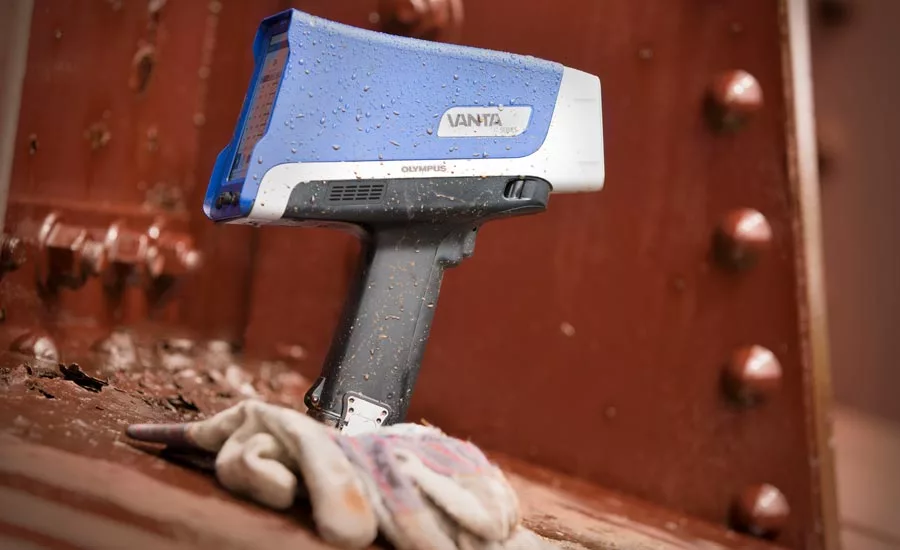
handheld XRF analyzer

Built for use in rugged environments, the handheld XRF analyzer is IP rated for protection from dust and water, and drop tested.

April 8, 2020

When we talk to customers who are interested in learning more about XRF, there are some questions that we answer all the time. Check out some of the most frequently asked questions and their answers below.

What is XRF?

XRF stands for X-ray fluorescence. It’s a powerful, nondestructive technique for measuring elemental composition.

How does XRF Work?

An analyzer emits X-rays. The X-rays hit the sample and cause the elements in the sample to fluoresce and travel back to an X-ray detector in the analyzer. The analyzer then counts them and does a lot of complicated math to give you a result.

What can you measure with XRF?

You can point an XRF analyzer at almost anything and get a result. Common applications are as a metal scrap sorter, for alloy grade identification, quality control in metal manufacturing, geological exploration or mining, testing industrial materials like cement or coal, and testing for lead in paint or other contaminants in consumer products.
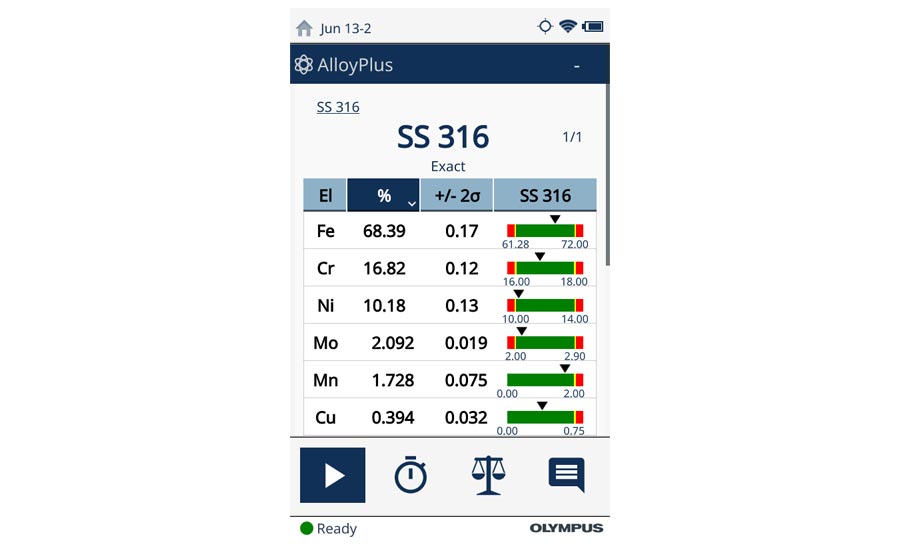
XRF results screen

The handheld XRF results screen for stainless steel 316.

What can’t you measure with XRF?

The elements that are the lightest on the periodic table (below magnesium—for example, hydrogen, carbon, nitrogen, oxygen, and sodium) have X-rays that are too weak to travel back to the detector and get counted. And XRF just tells you how much of what elements are present—it says nothing about the chemical structure.

Why do people use portable, handheld XRF?

Being able to take a lab technique into the field enables the analysis of samples that are too large, unwieldy, or costly to transport to the lab. On-site analysis enables real-time information and decision-making since labs often have a backlog of samples to test. Often, this speed and availability advantage outweighs the power limitations that come with a portable device.
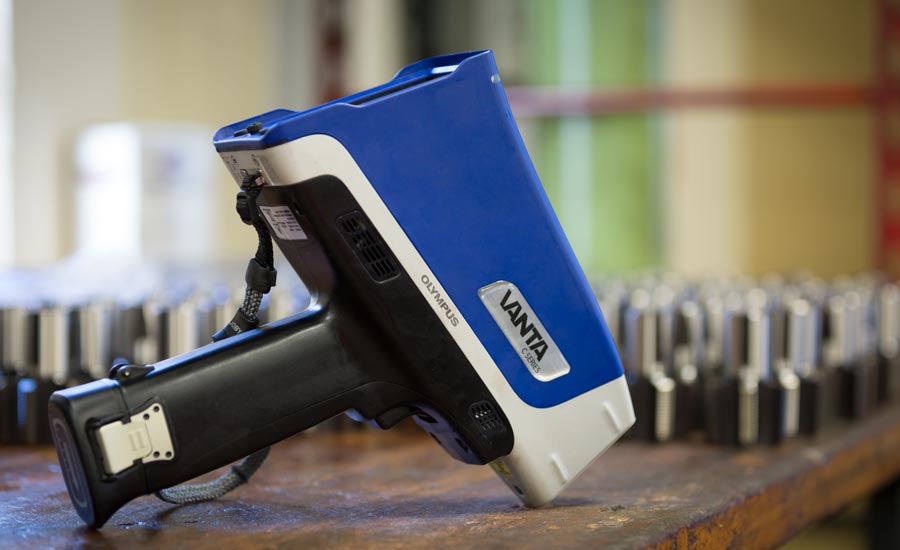
handheld XRF

Is XRF dangerous to use because of radiation?

No, handheld XRF is not dangerous when operated as directed. XRF instruments create X-rays that are ionizing radiation, so you should always minimize your exposure. The basic rule is—like anything pistol-shaped—do not point the gun at anyone and pull the trigger. Handheld XRF power is much lower than imaging X-ray equipment, so XRF users’ exposure is the same as or less than you get from naturally occurring sources.

Is XRF complicated?

Not for the user. Once you settle on the right model and the proper calibration for your samples, it’s just “point and shoot” with complete, clear results on the screen.
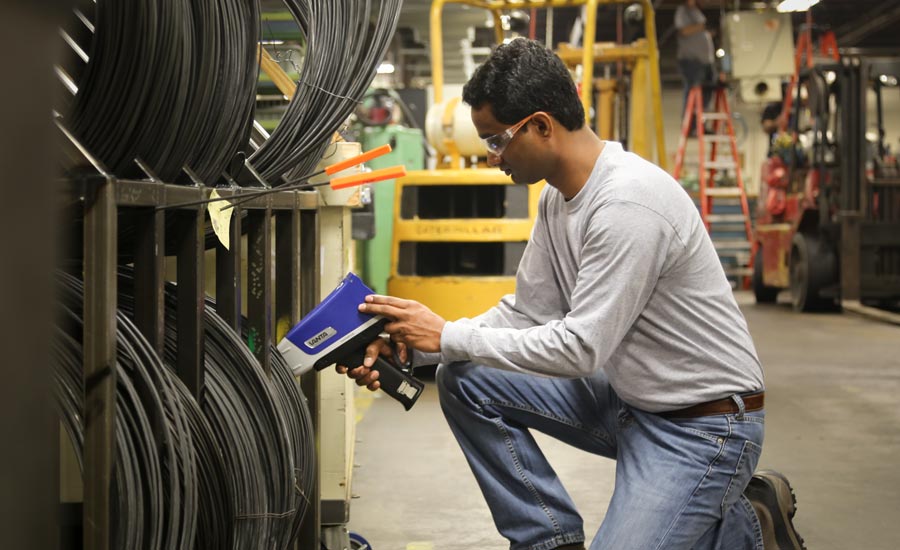
XRF analyzer

How long does an XRF test take?

Typical test times range from a second or two for many alloys to up to a minute or two for geological samples. A basic rule of thumb is that lower concentrations take longer. If you’re just interested in bulk composition, then testing takes seconds. If you’re interested in trace concentration (down to single digit parts per million), then longer tests are required.

KEYWORDS: handheld technology nondestructive testing x-ray fluorescence XRF analysis

Share This Story

Looking for a reprint of this article?
From high-res PDFs to custom plaques, order your copy today!

Ted Shields, Olympus portable products manager, analytical instruments. For more information, call (781) 419-4646, email [email protected] or visit olympus-IMS.com

Recommended Content

JOIN TODAY
to unlock your recommendations.

Already have an account? Sign In

  • 2024 Quality Rookie of the Year Justin Wise 1440x750px banner with "Quality Rookie of the Year" logo inset

    Meet the 2024 Quality Rookie of the Year: Justin Wise

    Justin Wise is an exceptional individual who has been...
    Aerospace
    By: Michelle Bangert
  • Man with umbrella and coat stands outside while it rains at night looking at a building.

    Nondestructive Testing: Is there an ethics problem?

    I was a whistleblower who exposed fraudulent activities...
    NDT
    By: Dale Norwood
  • Unraveling Deflategate: Football stadium with closeup of football on field

    Unraveling the Tom Brady Deflategate

    The Deflategate scandal erupted following the 2014 AFC...
    Measurement
    By: Greg Cenker and Henry Zumbrun
Manage My Account
  • eMagazine Subscriptions
  • Newsletters
  • Online Registration
  • Subscription Customer Service
  • Manage My Preferences

More Videos

Sponsored Content

Sponsored Content is a special paid section where industry companies provide high quality, objective, non-commercial content around topics of interest to the Quality audience. All Sponsored Content is supplied by the advertising company and any opinions expressed in this article are those of the author and not necessarily reflect the views of Quality or its parent company, BNP Media. Interested in participating in our Sponsored Content section? Contact your local rep!

close
  • This image shows a person seated next to a Bobcat T66 compact track loader.
    Sponsored byPolyWorks by InnovMetric

    Supercharging Digital Gauging at Bobcat North America

  • Dorsey Calibration Lab photo by Tom LaBarbera Picture this Studios
    Sponsored byDorsey Metrology International

    Ensuring Product Quality in a Competitive Manufacturing Landscape

  • This image displays a Eddyfi Technologies Cypher portable inspection instrument alongside a scanner for non-destructive testing (NDT).
    Sponsored byEddyfi Technologies

    A Safer, Smarter Approach to Weld Inspection: Why Advanced Ultrasonic Testing Is Redefining Industry Standards

Popular Stories

MicroRidge MobileCollect wireless measurement system

Before AI Can Help, the Data Has to Be Ready

a titanium diaphragm speaker driver

The One Thing Elon Gets Right Is Designed to Scare You

This image shows a person seated next to a Bobcat T66 compact track loader.

Supercharging Digital Gauging at Bobcat North America

2026 Quality Professional of the Year!

Events

June 4, 2026

Scaling Manufacturing Quality with Automation for Greater ROI

If you need to do more with the same resources or build a new tech foundation, this session shows where to start and how to create a more efficient, scalable, cost-conscious quality process.

June 9, 2026

Future-Proof your Quality Processes with Advanced 3D Optical CMM Technology

Discover how to effortlessly capture complex data, leverage true multi-sensor automation, and ensure continuous operation without creating inspection delays.

View All Submit An Event

Products

Lean Manufacturing and Service Fundamentals, Applications, and Case Studies

Lean Manufacturing and Service Fundamentals, Applications, and Case Studies

See More Products
Quality Podcast Channel Custom Content

Related Articles

  • Choosing an X-Ray Fluorescence (XRF) Instrument

    See More
  • MicroConnex Deploys High-Resolution Fischerscope X-Ray Fluorescence Metrology Station

    See More
  • QM 0222 NDT XRF XL5 Plus Galvanized Steel Plates Feature

    How to Measure Metal Coating Thickness Using Handheld X-ray Fluorescence Analyzers

    See More

Related Products

See More Products
  • H1517.jpg

    A Practical Field Guide For ISO 9001:2015

  • Mistake Proofing: Achieving Zero Defects DVD

  • iso.jpg

    The ISO 45001:2018 Implementation Handbook

See More Products

Related Directories

  • SciAps Inc.

    SciAps Inc. is a Boston-based instrumentation company specializing in handheld portable analytical instruments to measure any element, any place on the planet. Their industry-leading X-ray fluorescence (XRF) and laser-based (LIBS) analyzers are at work across every major industry.
×

Stay in the know with Quality’s comprehensive coverage of
the manufacturing and metrology industries.

Newsletters | Website | eMagazine

JOIN TODAY!
  • RESOURCES
    • Advertise
    • Contact Us
    • Directories
    • Manufacturing Division
    • Store
    • Want More
  • SIGN UP TODAY
    • Create Account
    • eMagazine
    • Newsletters
    • Customer Service
    • Manage Preferences
  • SERVICES
    • Marketing Services
    • Market Research
    • Reprints
    • List Rental
    • Survey/Respondent Access
  • STAY CONNECTED
    • LinkedIn
    • Facebook
    • YouTube
    • X (Twitter)
  • PRIVACY
    • PRIVACY POLICY
    • TERMS & CONDITIONS
    • DO NOT SELL MY PERSONAL INFORMATION
    • PRIVACY REQUEST
    • ACCESSIBILITY

Copyright ©2026. All Rights Reserved BNP Media, Inc. and BNP Media II, LLC.

Design, CMS, Hosting & Web Development :: ePublishing