Test & Inspection
Getting The Most Out Of Torque Testing
First and foremost, it's important to understand what a torque transducer is before implementing a test.
Images Source: Interface
Torque is defined as the rotational equivalent of linear force. It’s a measure of how much a force acting on an object causes that object to rotate. This is one of the key measurements for engineers doing design, test, and manufacturing across a wide variety of industries where machines, vehicles, components and parts include a spinning or rotating motion. It’s critical to understand how to measure torque if you’re doing product development with these types of systems such as engines, crankshafts, gearboxes, transmissions, and rotors.
The incredibly wide variety of torque transducers, different types of devices and tests and the accompanying accessories necessary for different projects can make it difficult to determine what is needed for each individual application. For instance, torque tests are often used in the automotive industry to assess engine torque and speed, but the products used can differ between a typical gas vehicle and newly introduced electric vehicles. Torque is also frequently used to test the tightness of a variety of lug nuts and screws, which is an entirely different measurement solution.
This article provides a brief overview of the key considerations when planning for a torque test. It includes the different types of torque testing, the different torque sensor styles, accessories, mounts, and other tips and tricks. It also provides a brief overview of the potential applications of torque tests with pictures.
The Basics Of Torque Testing
First and foremost, it’s important to understand what a torque transducer is before implementing a test. A torque transducer is a piece of equipment that converts a torsional mechanical input into an electrical output signal. There are two common types of transducers used in torque testing – reaction and rotary. The biggest difference between the two is that one measures static torque - reaction, while the other measures a rotating element - rotary. Reaction torque is used in process control and testing, such as the force produced by electrically powered tightening tools when measuring lug nut tightening. Rotary torque is a dynamic force used in applications where the torque transducer must rotate when attached to a spinning shaft. This type of torque test is used when measuring products like car engines.
Another key consideration is the style of torque transducer used. Once again, there are two common types of torque transducers – shaft and flange. These are the components used to take the force measurement and are selected based on the nature of the application. Shaft style transducers offer convenient mounting and have a longer installed length than flange style. Shaft style transducers come in two different versions, smooth and keyed. A smooth shaft provides ease of assembly and disassembly, with zero backlash. Keyed versions are simple and less expensive; however, they can suffer from wear due to backlash. A flange style transducer is typically shorter and has pilots on its flange face as a centering feature. This style has better resistance to overhung moments and can be more convenient to mount.
Accessories that gather data and allow for proper mounting are also critical to an accurate torque test. There are a variety of digital instruments that take force input and provide data output in the preferred protocols and bus formats, such as signal conditioners, data indicators, data acquisition devices and more. In torque measurement, couplings are the key hardware accessory tasked with ensuring proper isolation for torque loads to prevent error or damage from an extraneous load. Couplings are required in every application and the selection of coupling is based on the speed of the application. For lower speed tests, standard couplings can be used, but for higher speed applications a high-quality coupling is needed.
The last basic understanding that is required for a torque test is mounting. There are two common types of mounts used for torque transducers – floating and fixed mounts. The type of mount used once again comes down to the speed of the application. Fixed mounts apply only to sensors with bearings, and it involves attaching the sensor housing to fixed support for added stability. Fixed mounting is recommended for high-speed applications. For stability reasons, floating mounts should only be used for lower-speed applications. In floating mounts, the sensor is supported only by the drive and load side connections, and a flexible strap keeps the sensor housing from rotating.
Real-World Torque Applications
As discussed, the use and configuration of torque sensing systems vary greatly from application to application. And, while they’re used most commonly in the automotive industry, there are applications that require torque tests across a variety of industries including aerospace and defense, energy, oil and gas, and more. Included below are a few application examples that will help provide a clearer picture of the wide variety of torque testing uses.
Engine Dynamometer Testing
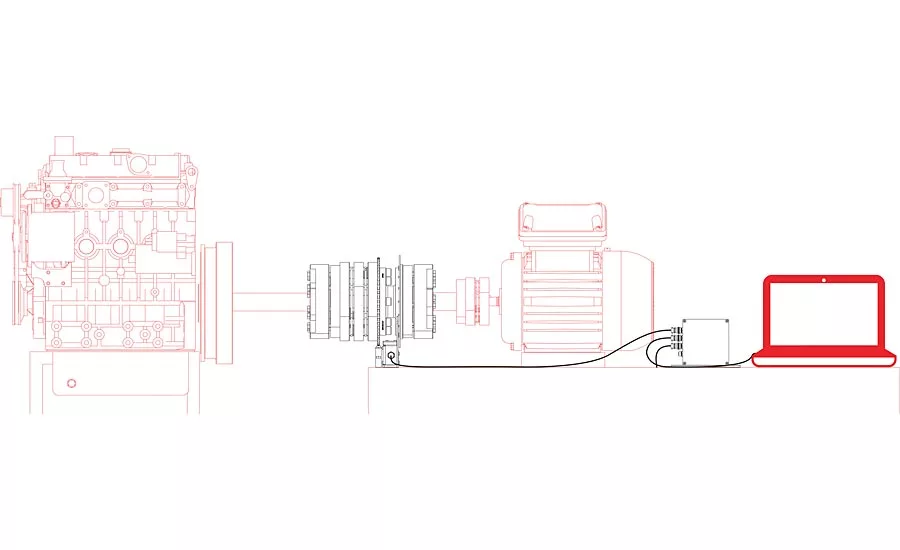
In this application example, a rotary torque transducer is used to measure the speed and torque of an engine. This rotary transducer can sense the torque of the engine with high precision and provide an electrical output that is converted from an analog to a digital signal. A rotary transducer is necessary due to the spinning element involved in the engine. It’s paired with a very high-quality coupling and is mounted in a fixed position. Both are necessary to account for the high speeds used in the test. This application would allow the user to measure both torque and speed of the engine simultaneously, which will provide valuable data in confirming the design of the engine or determining if it needs to be adjusted for the vehicle it will drive.
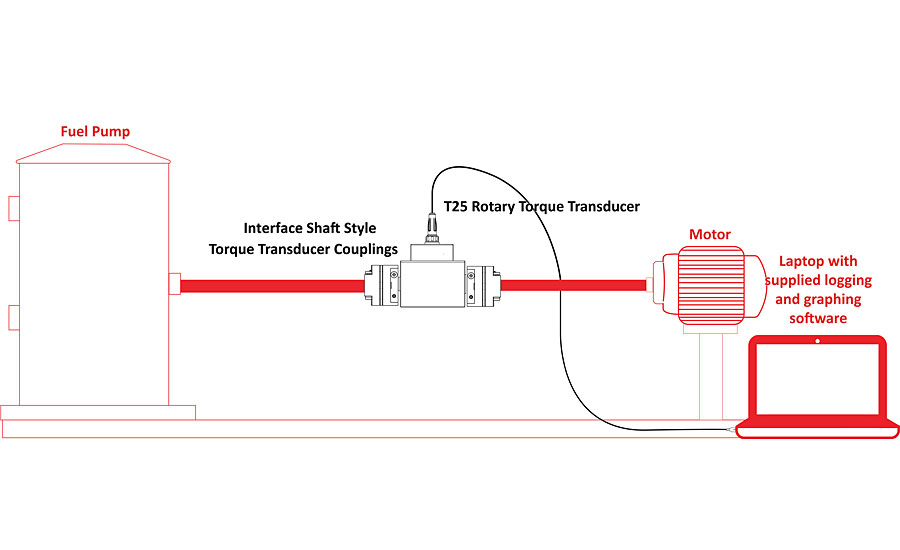
Image Source: Interface (Click on image to enlarge.)
Fuel Pump Optimization Testing
In the racing world, the fuel pump is responsible for delivering gas to the engine during operation, and is critical to peak performance. In this application example, a rotary torque transducer is used to measure pump drive power vs. fuel pressure and flow. Due to the length between the pump and motor, a shaft style transducer and couplings were used to connect the units. The transducer was used to directly measure the power required to spin the pump. Using this data collected from the transducer in conjunction with the pressure and volume measurements of the fuel flow, the race team was able to characterize fuel pump performance vs. driveline power, and then minimize the required drive power while maintaining the needed pressure and flow for efficient fuel delivery.
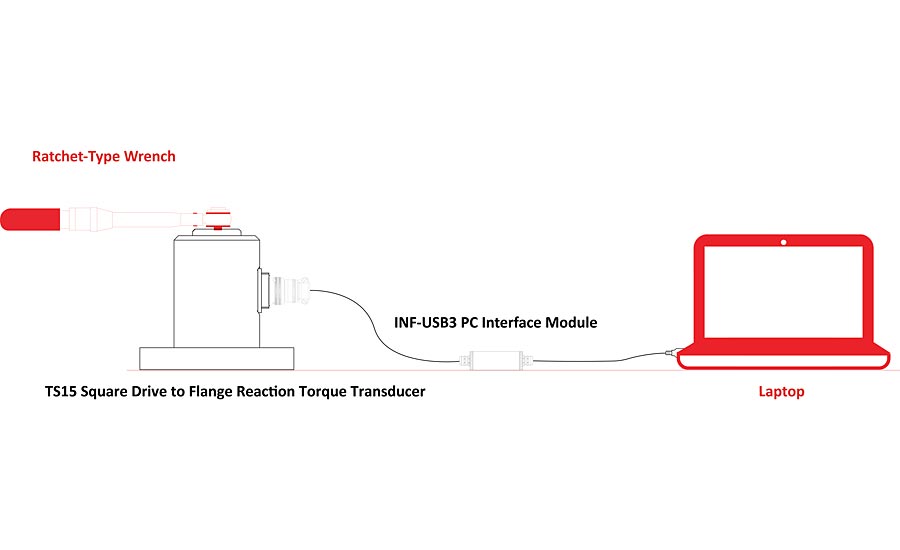
Image Source: Interface (Click on image to enlarge.)
Torque Verification
Even human-generated torque can be measured. If an engineer needs to ensure they are tightening a bolt or screw with a wrench or screwdriver using the correct torque so they’re not damaging the parts or stripping the threads, a simple reaction torque test can be used. Using the solution pictured above, the user can use the wrench to torque a bolt connected to a flange-style reaction torque transducer. Due to the static nature of the test, a reaction transducer is the best option. The torque created by the wrench will be sent to the PC and display results for the user. Ultimately, this solution allows for calibration checks of the wrench.
Torque testing is an important process used across industries to measure and record data on rotating components, allowing the user to verify the performance of a wide variety of products. Understanding the basics of torque will help the user determine the right type of torque solution for any test.
Looking for a reprint of this article?
From high-res PDFs to custom plaques, order your copy today!