Management
Where Does Quality End Within the Value Stream?
Whether we’re defining quality or value, both need to be from the customer’s perspective.
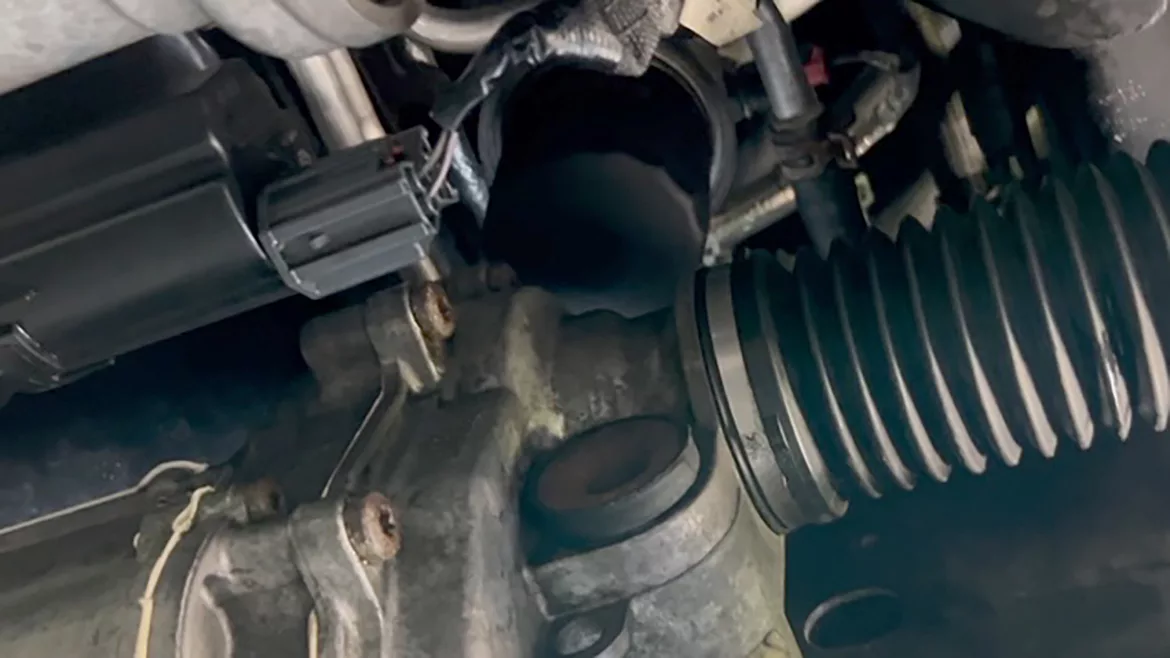
Image Source: Paul W. Critchley
Inspiration comes in all forms. Sometimes, it comes to me when I’m lying on my back in my driveway, looking up at one of the worst value stream fails I’ve ever been personally involved with.
I’ve always been a “pickup truck guy.” I’ve had a pickup as my daily driver since 1995. I’ve owned Toyotas, Ford, Chevys… I’m somewhat brand agnostic, so I tend to go for whatever the best deal is at the time. I figure that every car company has recalls and service bulletins at some point regardless of which brand I choose, so it’s not as much of a decision point for me as it once was. Each make and model of vehicle has their positives and negatives; that’s pretty much to be expected. With so many parts and pieces, suppliers and tolerances, there are bound to be issues along the way. Some large, some small.
Which brings me to my current truck and the relationship I have with it. Overall, I’m pretty happy. It’s comfortable to drive, handles its truck duties well, and has given me no major headaches in 50,000 miles, so I really can’t complain. However, every three to five thousand miles when I’m doing an oil change, I’m (unpleasantly) reminded of how Lean teaches us the importance of delivering value to the customer, and how important it is that companies understand that their quality deliverables don’t end once the sales transaction is complete.
In Lean, we define value from the customer’s standpoint. We Lean practitioners often help clients determine the value that they deliver as how much their customer will pay them for it, thus defining the “value” that they place on the product or service they are buying. However, not all customers are equal, and not all customers value the same things. Which brings me to my biggest gripe – my oil filter’s location within my vehicle.
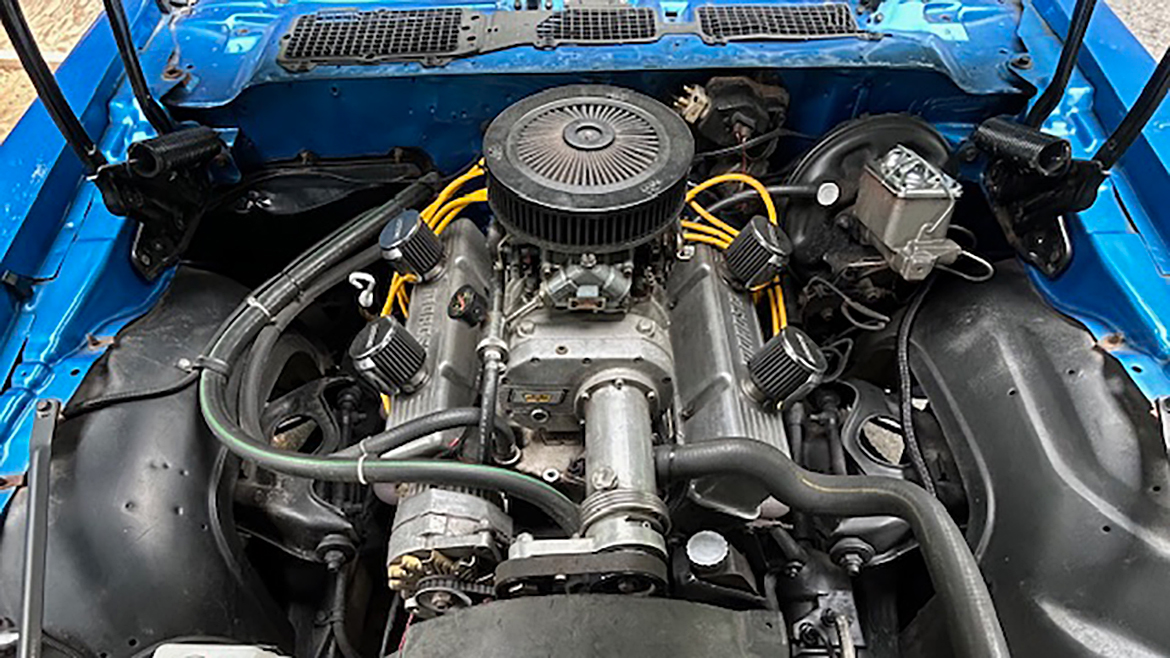
As you can see in the picture, the oil filter is pretty hard to get to. There’s really only one way to reach it, and even then, it’s a tight fit. In today’s world, that’s not uncommon. A lot of engine bays are pretty crowded. For reference, here’s a picture of my 1980 Trans Am’s engine bay… nothing but motor!
When it comes to oil changes, regardless of the make or model of the vehicle, there’s always some oil that pours out of the engine block and oil filter upon removal. Depending upon the vehicle and its engine, there’s probably upwards of ¼ quart of oil that is present that has to find its way to the drain pan. As you can see, in my truck’s case, that waste oil doesn’t have a direct path to the pan. The steering rack is directly underneath the filter, as are a bunch of wires and electrical connections for the steering assist module. Inevitably, no matter how careful I try to be, these end up covered in oil, which can’t be a good thing.
Which brings me to my ultimate point: When we discuss “Quality,” in so much as we discuss “Value,” it must be defined from the customer’s standpoint. In my case, ease of doing an oil change is part of the value and perceived quality I place on a vehicle, since I do them myself. Even if I didn’t do my own oil changes – for whoever does do them, this is not an ideal setup. I have never used a “quick lube” business, so cannot attest to how careful (or more likely, not) they might be about making sure as little oil as possible gets on things that it shouldn’t be on. For me – it’s not worth the risk. I’d rather just do it myself and be sure.
After struggling through the first oil change (which also required a screwdriver to be put through the grossly-overtightened filter in order to remove it), I turned to the internet for advice. I uncovered numerous shade tree mechanic solutions, as I wasn’t the only one to have this gripe. After reading, I decided to run a series of experiments on the top solutions to see what really worked and what didn’t:
- Use a red Solo cup to contain the oil and oil filter as I removed the filter. Result: Didn’t work at all. Made a bigger mess than using nothing at all. 0/10. (Plus, I have a better use for these cups!)
- Put a plastic bag over the filter as I remove it (much like the cup solution, only bigger and floppier). Result: Not a complete failure, but still didn’t work well. The working space doesn’t allow for complete coverage with the bag which lead to spillage. Even a partial success means having a plastic bag full of oil that you then have to maneuver without spilling it or poking a hole in it as you wiggle it out of the way. 2/10.
- Use a foldable funnel to catch/redirect the waste oil. This solution worked the best, but still was a bit of a pain to get set up. Plus, it takes up room that I need for my hand to get to the filter. And it adds work because I have to clean the funnel after I use it. 6/10.
Given the truck/engine design, there’s not much else I can do, so Solution 3 is what I’m stuck with until I buy a new truck with (hopefully) a better design. It’s a first-world problem for sure, but one that I think illustrates the point: whether we’re defining quality or value, both need to be from the customer’s perspective, and in this case, I’d give both bad grades.
Regular service is part of vehicle ownership, so it should be part of the value stream and quality conversations. I don’t know for sure because I wasn’t in the room where it happened (bonus points if you sang that last part in your head a la “Hamilton”!), but I dare to guess that this particular issue either 1. wasn’t identified, or 2. was identified and someone decided that it wasn’t important enough to change. To me, that’s not properly taking into account the entire value proposition of car ownership, which degrades the experience, and ultimately, the value and the quality of it. It appears to me as either an oversight, or an indifference, and neither is acceptable.
So the challenge is this: when we are designing our product, are we considering everything that the customers value? And – when do we decide where that question stops? Who are our customers – the people that simply buy our product or service, or all the people who have to interact with them at some point?
This is all true for our internal customers as well – when we are designing a manufacturing cell, an assembly line, or a workstation, are we considering what our customers value, what they are comfortable with and what will ultimately lead to better quality work? Are we setting things up to deliver the most value throughout its life cycle, or just until we’re done with our part of it?
Looking for a reprint of this article?
From high-res PDFs to custom plaques, order your copy today!