Test & Inspection
Digital Microscope Systems and Visual AI: A Practical Guide to Smarter Magnified Inspections
We’ll explore some introductory, practical considerations on how to bring a visual AI to routine manual visual inspection.

Machine learning and AI-based algorithms are rapidly reshaping how companies approach efficiency, product improvement, and cost reduction in a wide variety of business areas. Some areas, partially data rich environments, can be more easily adapted to machine learning AIs, whereas other areas such as visual inspection in quality control can be more challenging to bring to AI. Traditional quality control inspection methods are often manual, can be subjective, and difficult to scale, especially in a previously non-digital inspection.
Digital microscope systems are uniquely positioned to bridge this gap. Unlike analog systems, such as routine benchtop stereomicroscopes, digital microscopes capture information in a digital format natively, making it far easier to integrate with AI-based visual learning tools. This creates a powerful synergy: digital microscopes provide high-quality, consistent imagery without interrupting a workflow, while AI systems analyze and learn from those images to detect defects, suggest improvements, or flag anomalies. Together, they create inspection workflows that are more reliable, less dependent on operator variability, and ultimately more cost-effective.
We’ve seen firsthand as a digital microscope manufacturer how combining digital microscope systems with visual AI can transform challenging quality control (QC) processes into streamlined, data-driven operations. In this article, we’ll explore some introductory, practical considerations on how to bring a visual AI to routine manual visual inspection.
Return on Investment (ROI) Considerations for Digital Microscope Visual AIs
Before going on the journey of adopting AI to a manual visual quality control inspection, it’s important to fundamentally consider the return on investment requirements. Beyond initial purchase costs, several practical factors shape ROI.
Direct ROI factors:
- Reduced inspection time/cycle time: Faster pass/fail decisions or defect identification means higher throughput and less bottlenecking at QC stages.
- Lower training costs for expert inspections: Instead of months or years of training inspectors to recognize subtle defects, AI systems, once trained, provide consistent judgments that new operators can use immediately.
- Reduced scrap and rework: By catching subtle defects earlier, AI-enabled systems help prevent downstream costs associated with failures.
Indirect ROI factors:
- Improved consistency and traceability: Digitally logged inspection decisions provide clear audit trails, which are invaluable in regulated industries like medical device manufacturing or aerospace.
- Focused human inspectors: Inspectors are relieved of repetitive, fatiguing visual checks and can focus on higher-value tasks.
- Scalability across locations: A single trained AI model can be replicated across multiple microscope stations worldwide, standardizing inspection criteria.
- Institutional knowledge that never leaves: A common problem that many manufacturers face is the loss of knowledge when one, or a few, technicians who have specific product/process knowledge leave the company. An AI system, once trained, does not run this risk.
As products and the industries themselves are variable, every product and the payback ROI timelines can vary specific to the product line in question. That said, however, once AIs are appropriately trained, many companies can see payback within months, particularly in industries where quality issues carry high downstream costs or quality control escapes are intolerable.
Which Visual Inspection Problems Are Best Suited for Visual AI?
In many senses visual AI systems are perfect for manual visual inspections as AI thrive in situations where there is variability in appearance that would overwhelm traditional rule-based programming but still follows recognizable patterns that can be learned from examples. Importantly though, this takes training, which takes time for training from an inspector. Conversely, classical methods may be better suited for some samples, but they take development time. Fundamentally, it’s important to ask, “Can I do this without an AI?” or “What is the advantage of doing this with an AI?” Here are a couple of considerations when thinking about your application.
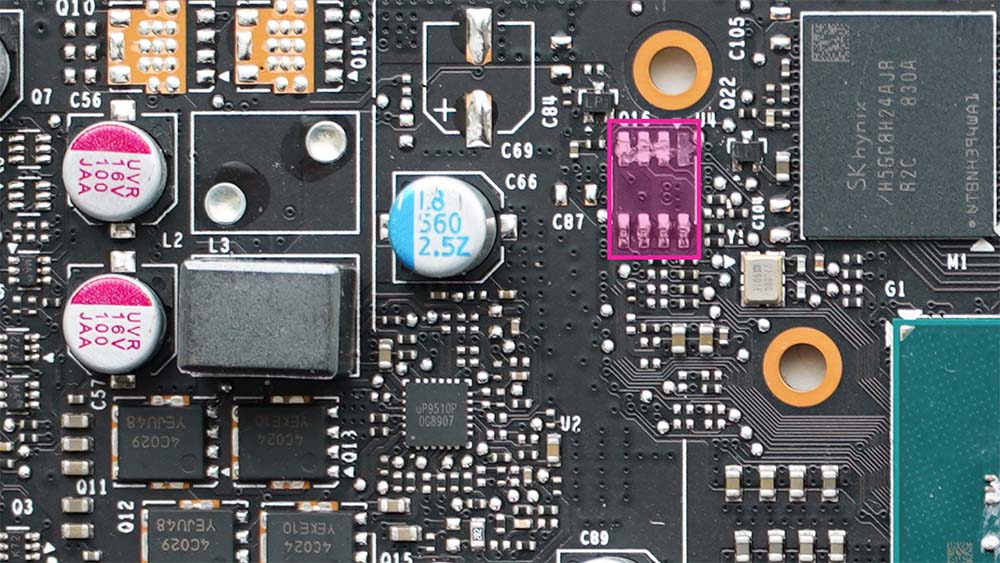
Good candidates for visual AI training include:
- Surface defect detection: Scratches, pits, cracks, or discoloration on components where the exact shape or size of the defect can vary.
- Assembly verification: Confirming whether all required parts are present, aligned, or soldered correctly on small-scale assemblies like PCBs.
- Pattern recognition in natural or variable materials: For example, wood grain, textile fibers, toolmarks on metal, or biological samples where inherent variation makes rule-based programming impractical.
Problems better suited for classical or heuristic programming include:
- Highly repeatable, geometric measurements: Checking if a borehole diameter is exactly 5 mm or verifying that an edge aligns within a fixed tolerance. Traditional image analysis with thresholds and edge detection is faster and more efficient in such cases.
- Fixtured mounted samples with simple binary presence/absence tasks with simple contrast: For example, verifying if a screw is present in a clearly defined location that does not change position in presentation to the camera.
- Environments with extremely limited sample data: AI requires training examples. If defects are rare or data collection is prohibitively expensive, rule-based checks may remain more practical.
The takeaway is that AI excels when there is complexity or variability that humans handle intuitively but classical programming struggles with. For everything else, traditional methods remain valuable. The art lies in matching the right tool to the right inspection problem.
Establishing a Practical Training Regime for Visual AI
Once a suitable inspection problem has been identified, the next step is building a training set for the AI. Here, pitfalls are common, but avoidable with the right approach.
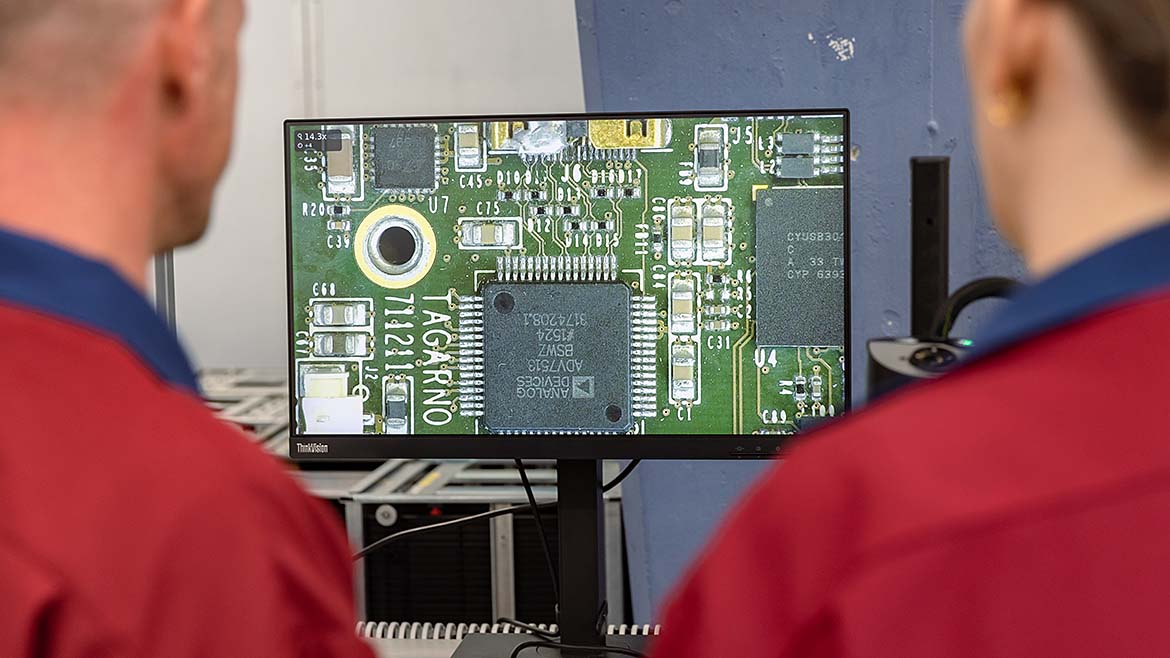
Key considerations when training visual AI:
-
Gather representative data
The AI can only learn what it sees. Images should reflect the full spectrum of real-world variation: different defect sizes, lighting conditions, and even acceptable variations. A training set that is too narrow will lead to an AI that fails in practice. Consider inadvertent, irrelevant, bias– do some of your parts come on blue trays and others on green trays? Could the AI accidentally be trained to expect that good parts only come on green trays? It is also essential, from a practical standpoint, that the AI be trained on what it can see, without needing to refer to other data. Fundamentally the question needs to be asked “can I make this judgment call based only on the image data?” -
Balance good and bad examples
Many QC teams inadvertently over-represent defects in training data, since defects are the focus. However, most production items are good, and the AI must learn to recognize what “good” looks like. A balanced dataset prevents false alarms and maintains trust in the system. This is the same for different defects or classifications, it is important to balance all examples equally. -
Consider what type of information you want the AI to return
There are different visual learning models that AIs can be implemented on ranging from simple image classification to instance segmentation that range from simple annotation requirements (image classification) to specifically labeling classes within an image (instance segmentation). Ultimately, in our experience, the choice of what approach to use comes down to what it is that the quality team wants to return from the AI. If, for example, the goal is to just train a simple grading, or pass/failure analysis then classification can be a good approach, just needing a lot of images. If more nuance is required, on why a part or product is good/bad with specific defects then be prepared for perhaps less images, but more time spent annotating and plan workflows accordingly. -
Annotate carefully
Regardless of what type of AI training approach, be it image classification to object detection, labeling images incorrectly or inconsistently can cripple an AI system. Establish clear labeling standards, especially when multiple operators are involved. Consistency is key to ensuring the AI develops robust recognition abilities. Because AI training occurs rapidly in many epochs, the adage of “garbage in = garbage out”, actually turns to “garbage in = exponential garbage out”. We recommend a two-step process where an inspector annotates and then a reviewer accepts. Eventually as the AI begins to be more confident, the AI itself can act as the inspector. -
Avoid overfitting
An AI that memorizes the training set but cannot generalize to new samples is of little use. Validation with unseen test images should always be part of the training cycle. -
Iterate gradually
Rather than trying to train a perfect model at once, begin with a basic dataset, test it, and then refine with additional examples of edge cases. This iterative approach mirrors how human inspectors refine their judgment over time.
Training a visual AI is as much about process management as it is about data science. By treating it as an ongoing collaboration between human operators and AI, rather than a one-time project, success rates rise significantly.
Implementing Visual AI Seamlessly into Microscope Workflows
A powerful, learning AI model is only useful if it integrates smoothly into the daily workflows of inspectors. Disruptive or overly complex implementations risk being sidelined, no matter how effective the technology.
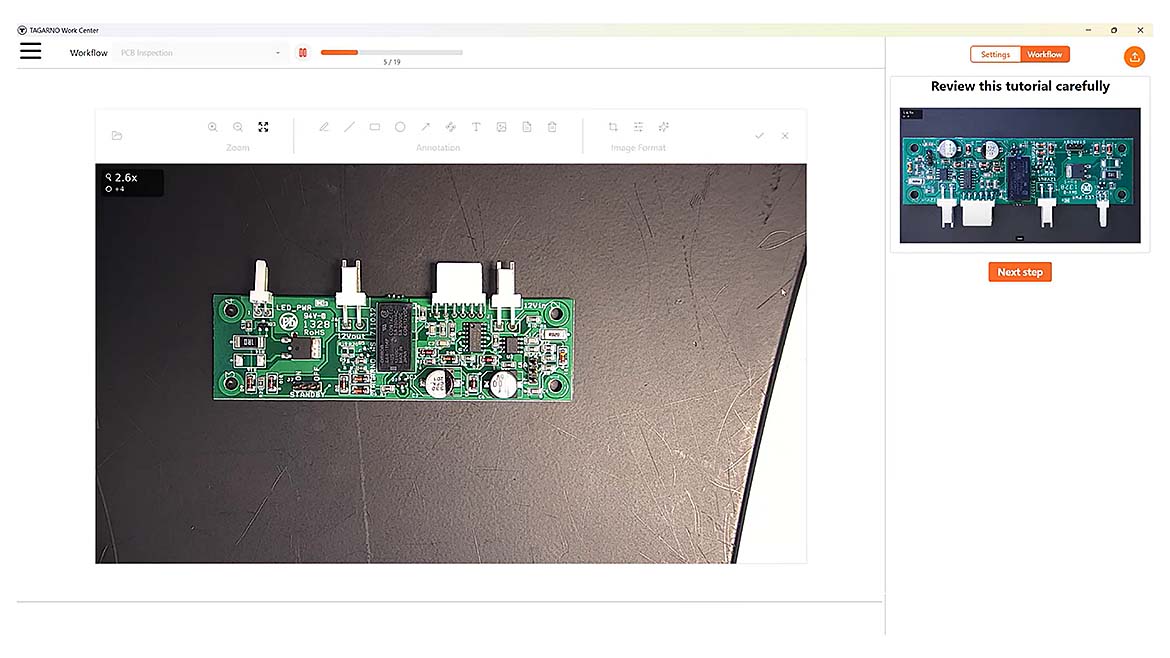
Practical integration strategies include:
-
Overlay suggestions and training directly on microscope images into your existing quality process
Instead of pulling operators into separate interfaces, AI results can be displayed in real-time on the microscope screen—highlighting suspected defects or confirming pass/fail decisions. Putting this inline into an already existing quality control process allows significant amounts of training data to be generated without requiring an entirely separate process to train an AI. -
Enable interactive retraining
When the AI flags something incorrectly, operators should have the option to correct it immediately, feeding that correction back into the system. This keeps the model aligned with production realities and ensures continuous improvement without halting the workflow. -
Preserve operator control
AI should assist, not replace, human judgment—at least in the early phases. Allowing inspectors to confirm or override AI decisions builds trust and helps prevent costly errors. This can also be used to filter, find, and train the AI on unusual edge cases.
Organizations can maximize adoption while minimizing training overhead by embedding AI into the natural workflow of digital microscope inspection, making the AI a supportive colleague rather than an intrusive technology.
As industries increasingly embrace AI to improve efficiency and reduce costs, digital microscope systems stand out as an especially well-suited platform for visual AI in quality control. Their ability to capture high-quality digital images, integrate seamlessly into workflows, and support interactive retraining makes them uniquely effective in tackling inspection problems that are too variable for traditional programming.
Looking for a reprint of this article?
From high-res PDFs to custom plaques, order your copy today!