Test & Inspection
Why Design Automation Is Starting to Reshape Inspection Workflows
Quality control is supposed to react quickly to production changes, part variations, and new product introductions.
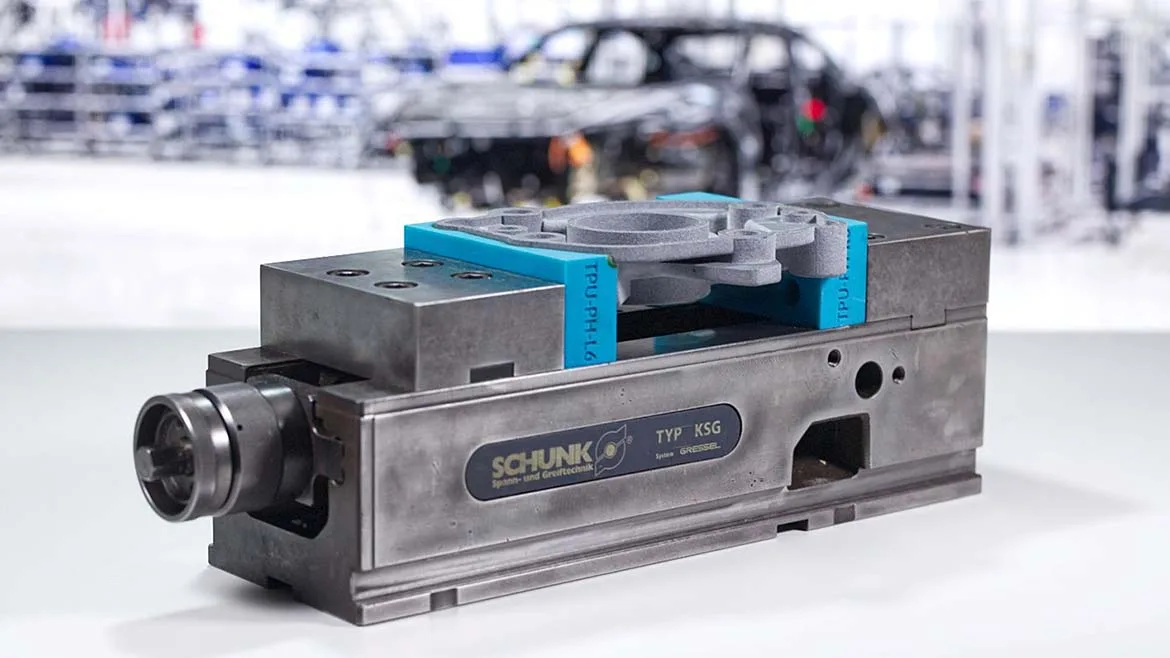
Custom clamping jaws designed with a dedicated app in the Additive App Suite allow non CAD users to create practical tools that make everyday work easier
In my time working alongside industrial partners, one pattern shows up again and again in quality departments: Fixtures are rarely the problem. The design process behind them is.
Custom gages, holding fixtures, and positioning jigs are essential for repeatable inspection. But creating them has traditionally required CAD expertise and engineering time. That introduces friction into what should be a fast, responsive part of the production workflow. When a quality engineer needs a fixture, the request often ends up in an engineering queue. A designer has to interpret the requirement, model the tool, and prepare the file for manufacturing.
None of that work is particularly difficult. It is simply slow.
The result is that inspection tooling often arrives later than it should. Sometimes it is simplified to save time. In other cases, teams abandon the idea entirely and fall back on manual handling.
Over the last few years, I have started to see a shift. Design automation tools are beginning to remove that bottleneck, particularly when combined with additive manufacturing.
The design bottleneck in inspection tooling
Quality workflows depend on repeatability. That often means holding parts in a defined position during measurement or inspection.
In many factories, that still involves manually machined fixtures or simple off-the-shelf tools that are adapted for the job. When a custom solution is needed, the request typically moves to a design team.
The process might look like this:
- A quality engineer identifies the need for a fixture
- Engineering receives the request
- A CAD specialist designs the tool
- The file is prepared for manufacturing
- The fixture is produced, often through machining or outsourced manufacturing
Even when everyone involved is responsive, this process can take days or weeks.
For inspection teams, that delay matters. Quality control is supposed to react quickly to production changes, part variations, and new product introductions. When tooling takes too long to design, the inspection process becomes less flexible.
How design automation changes the workflow
Design automation approaches the problem differently. Instead of requiring a CAD expert to model each fixture from scratch, the design logic is captured in software.
In practice, that means the user is not drawing geometry. They are configuring parameters.
A quality engineer might upload a part model, select a fixture type, and define a few functional inputs such as contact surfaces, tolerances, or clamping positions. The software then generates the underlying geometry automatically and exports a print ready file.
What used to take hours in CAD can often be done in minutes.
This shift has an interesting consequence. The people who actually need the fixtures can create them themselves.
Fixture design without CAD expertise
One example of this approach is a tool that focuses specifically on fixture generation. The tool captures common fixture design principles and turns them into configurable workflows.
Instead of designing a fixture from scratch, a user selects a fixture concept and defines how it should interact with the part. The software generates the geometry automatically, producing files that can be sent directly to a 3D printer.
In many cases, this reduces design time dramatically. It is not unusual to see fixture generation that previously took hours in CAD reduced to a few minutes of configuration.
That difference matters for inspection teams. If a fixture can be created quickly, it becomes practical to design one for each part variation rather than forcing a single tool to serve multiple purposes.
A broader ecosystem of automated design tools
Fixture design is only one piece of the inspection environment. On the shop floor, quality teams rely on a wide range of supporting tools.
Shadow boards organize gages and inspection instruments so they are always in the right place. Clamping jaws hold parts securely during measurement. Logistics trays keep components arranged in defined positions as they move between inspection stations.
These tools are simple in concept but often tedious to design manually. Each one needs to match the geometry of the part or tool it holds.
Platforms such as the Additive App Suite approach this challenge by capturing these design tasks as configurable workflows. Instead of modeling a tray, jaw, or organizer in CAD, the user defines the required parameters and the system generates the geometry automatically.
From the perspective of a quality team, this removes much of the design friction around custom tooling.
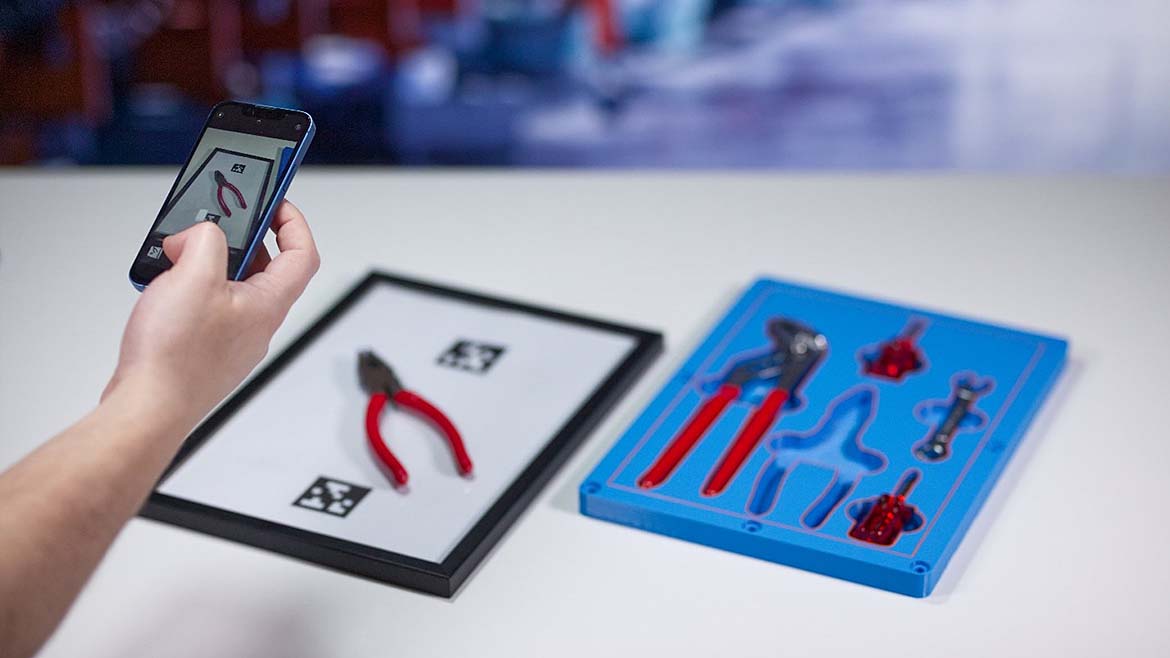
Apps such as Photo-to-Outline make accurate tool cutouts for shadow boards. Source: Trinckle
Why additive manufacturing fits naturally into this process
Design automation alone does not solve the entire problem. The generated fixtures still need to be manufactured.
This is where additive manufacturing becomes particularly useful. Once a fixture file is generated, it can often be printed immediately.
For inspection tooling, the advantages are practical. Most fixtures do not require high structural loads or complex material properties. They need to position parts accurately and repeatably. Polymer 3D printing is often more than capable of meeting those requirements.
The ability to produce fixtures quickly and inexpensively encourages experimentation. If a design needs adjustment, the team can modify the configuration and print a revised version within hours.
That kind of iteration is difficult to achieve with conventional manufacturing methods.
Real impact on inspection workflows
What I find most interesting is not the technology itself, but how it changes the behavior of teams.
When the barrier to designing a fixture disappears, quality engineers start thinking differently about tooling. Instead of treating fixtures as special projects, they become everyday tools that can be created whenever they improve a workflow.
Inspection setups become faster to prepare. Parts can be positioned more consistently. Measurement processes become easier to standardize across shifts or production lines.
Just as importantly, quality teams become less dependent on outside engineering resources. The knowledge of what a fixture needs to do already exists within the inspection team. Design automation simply gives them a way to act on that knowledge directly.
A broader shift in additive manufacturing adoption
Stepping back, this change reflects a broader trend in additive manufacturing.
For many years, the conversation around AM focused heavily on the machines themselves. Printer performance, materials, and build volume dominated the discussion.
What we are starting to see now is a growing recognition that software and workflow tools play an equally important role.
If designing a printable tool requires advanced CAD expertise, adoption will remain limited. When design automation lowers that barrier, additive manufacturing becomes accessible to a much wider group of users inside the factory.
From a quality perspective, that accessibility is significant. Inspection teams can respond more quickly to new parts, process changes, and unexpected issues on the production line.
In other words, design automation does not just make fixtures easier to design. It makes quality control more responsive.
Looking for a reprint of this article?
From high-res PDFs to custom plaques, order your copy today!