Measurement
Fixtures: Traditional vs. Modular Tooling Features and Benefits
Whether it’s a small part or large, there is a modular system capable of constructing a reusable, reconfigurable fixture.
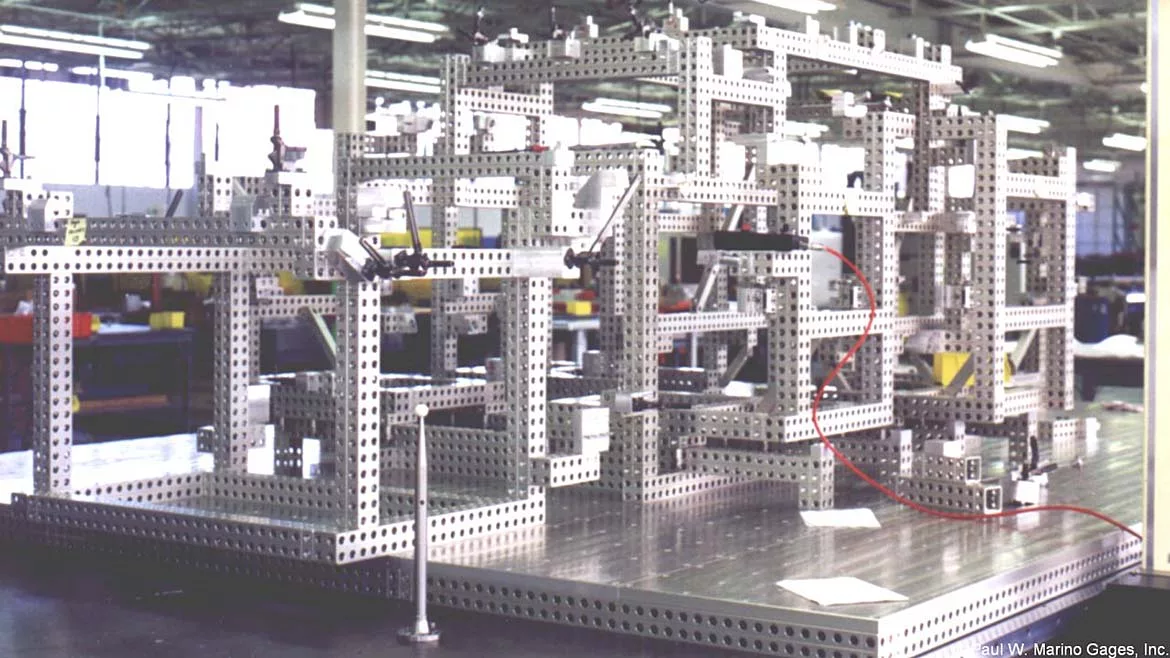
When asking a few of my favorite friends and colleagues about whether a CMM holding or checking fixture should be made by traditional welded base plates with common clamping methods versus a modular fixturing system, I tried very hard not to be “partisan” about the fixturing needs for manufacturing everything from rocket engines to automobiles.
With my many years as a trailblazer for the modular tooling concept (and no dates to indicate my age!) I have a place on my heart to see the next generation of fixture builders discontinue getting their hands dirty whenever possible. Those cell phones just can’t take it.
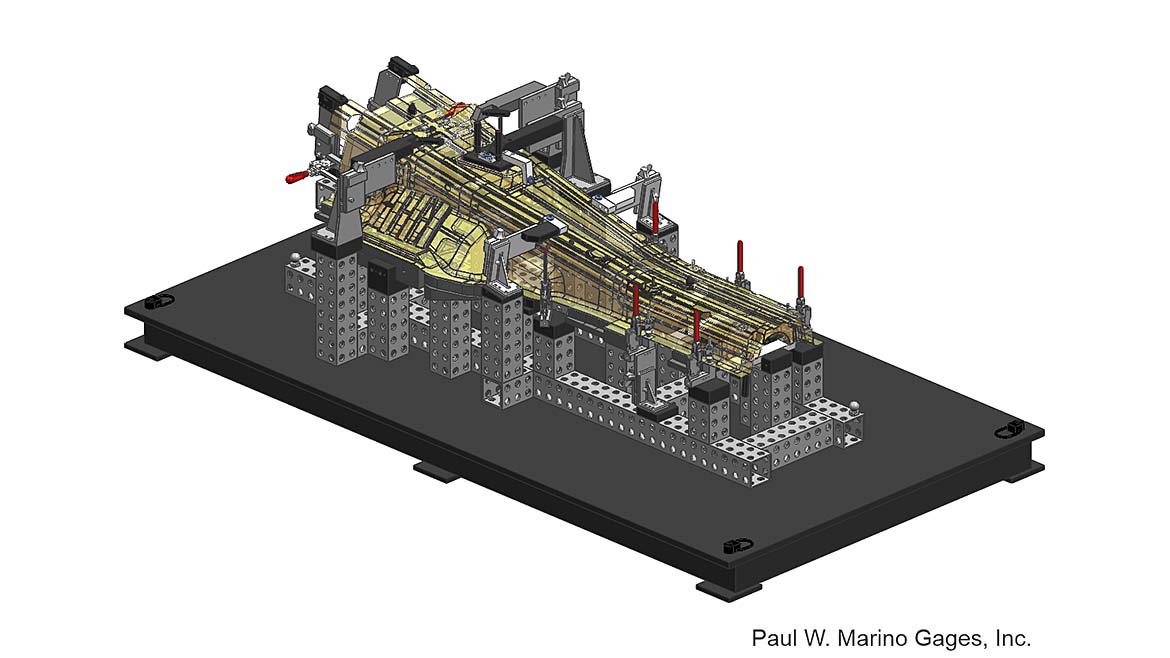
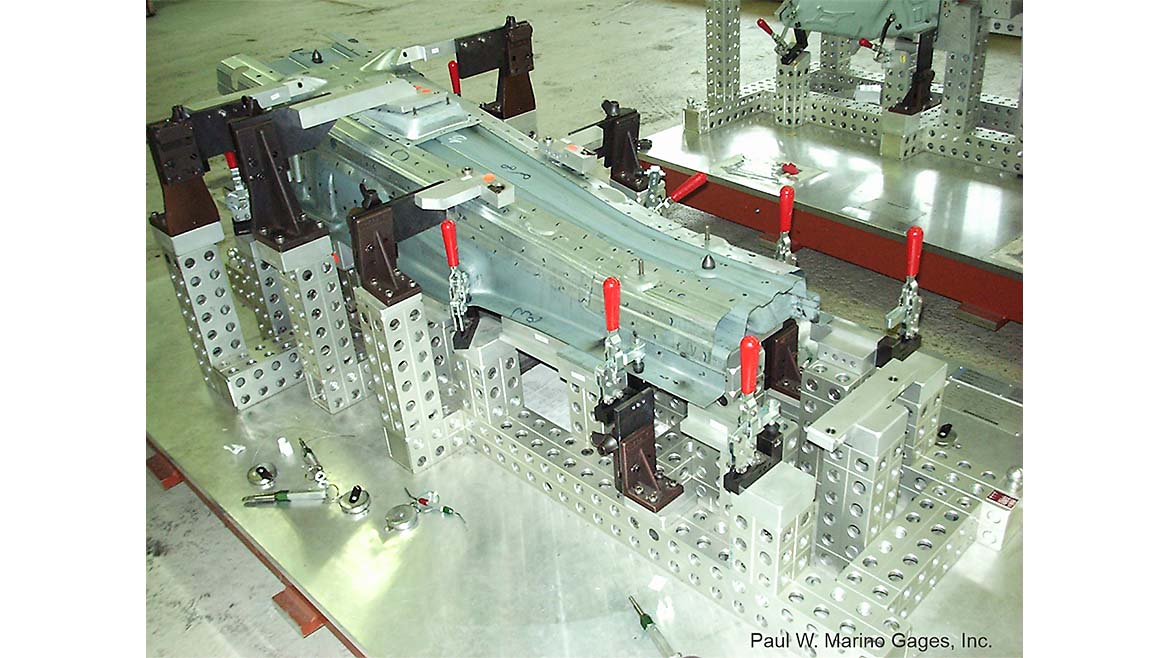
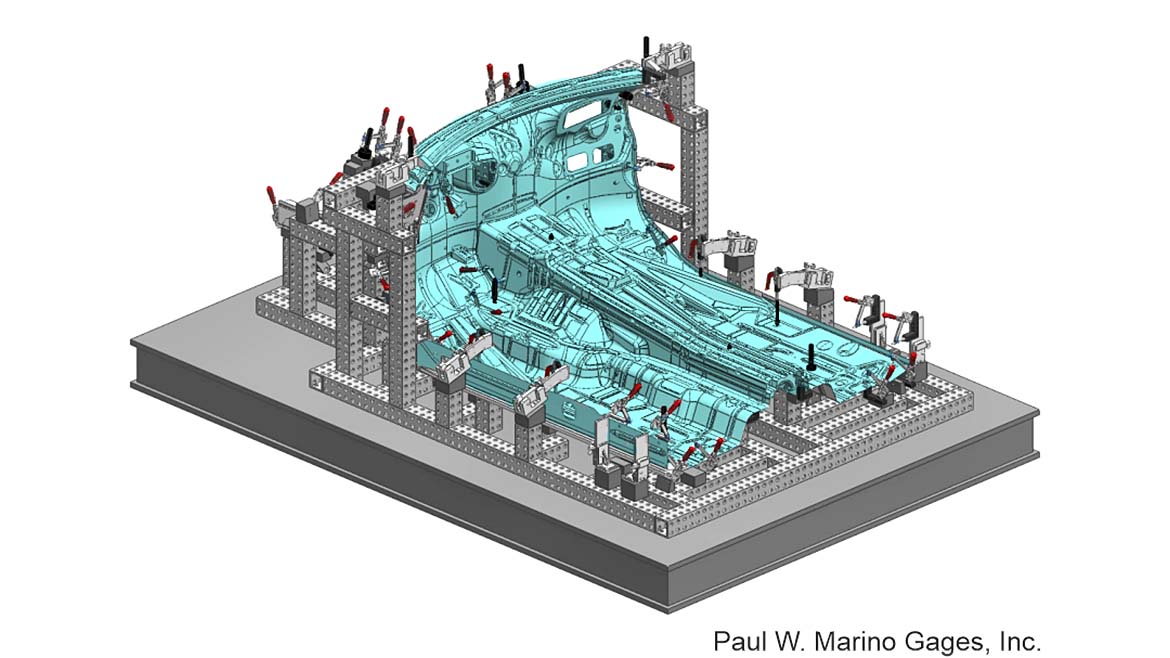
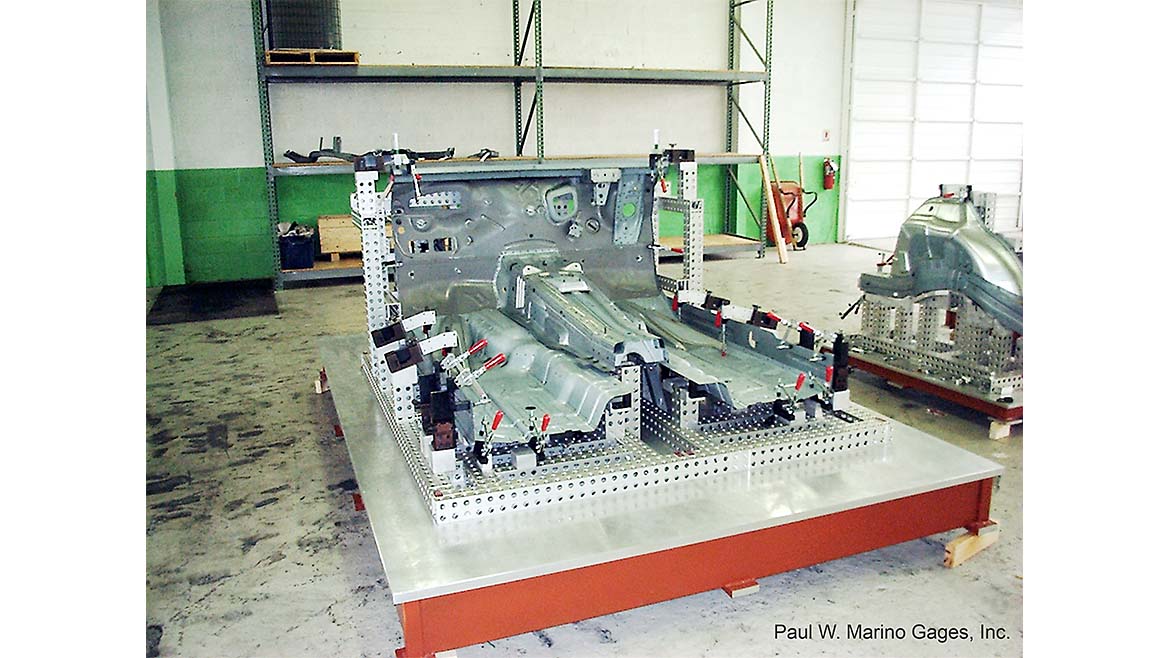
For instance, the popularity of modular tooling for match metal stamping parts in the form of a full body simulation, also known as a “master buck”, has become the norm (see figure 1). This large, automotive tool is completely constructed of reusable components.
But there is a need, and requirement, for both to live peacefully. Not all manufacturing may be able to take advantage of modular tooling due to part size, weight, transport, and of course the process. Here’s what my friend Rick Ignagni of TriStar Engineering had to say when asked about his many years building fixtures using both methods:
- How are traditional fixtures utilized in comparison to modular, reconfigurable tooling systems regarding automotive sheet metal applications?
“The difference is where they fit in the process. Traditional fixtures used in the sheet metal world are built for the rigors of a production stamping facility. There is nothing delicate about what is needed. The modular side of the sheet metal world leans heavily toward fixturing parts for laser scanning or CMM inspection. Shop conditions for scanning and CMM are much friendlier for modular tooling than production environments” - Are modular tools being integrated with digital technologies or automated inspection systems? What about the new tech AI?
“Modular tooling has been the front runner for fixturing robotic cell / cobot measuring, where minimal interference from the fixture is needed for inspection paths.” - How do these two technologies (old and new) ensure product quality, and help manufacturers maintain consistency?
“Traditional fixturing has always had the perception of reliability and toughness with resistance to abuse. Modular fixturing uses don’t require all the same perceptions, its value is its accuracy, ease of use, friendly assembly methods and reliability are its assets.” - Features and benefits in one word? Two words? For example, accuracy, quick changes, or reusability. “Reusable and User friendly”
- What trends are you seeing and how has the field changed?
“The big move lately in the industry is to scan part data. More manufacturers are requiring data sooner in programs and scan methods are now the norm. Quickly built fixtures seem to be largest request for component part manufacturing.”
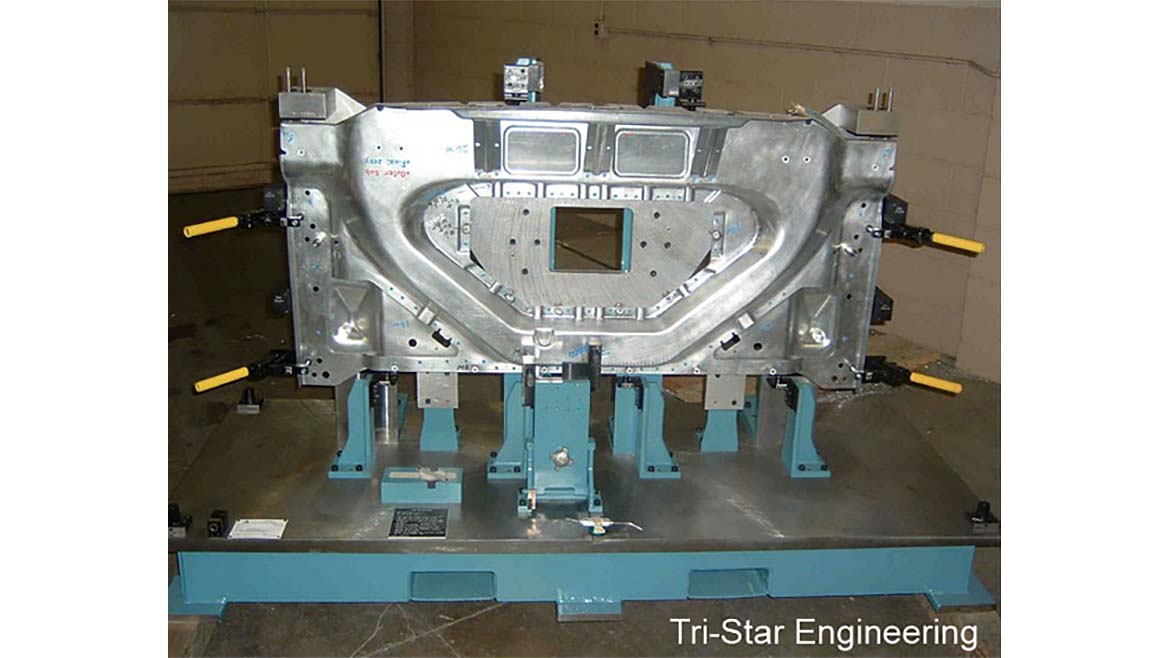
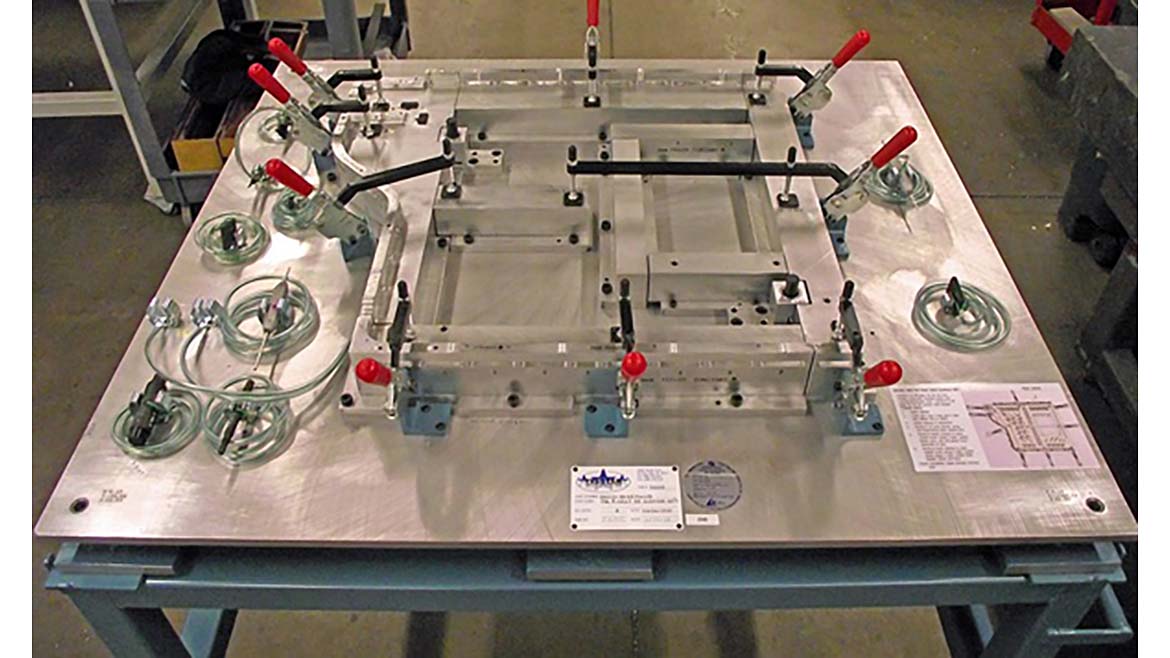
Whether it’s a small part or large, there is a modular system capable of constructing a reusable, reconfigurable fixture. Some systems are even adaptable using two sizes of modular components, with step down adapters to “marry” the two while maintaining accuracy and reusability. You’ll see this adaptation in the hybrid sub-base using larger profile components stacked with a smaller profile (see figures 5-8), still easily interchangeable and allowing quick modifications. Each locator (aka, “net block”) with “nesting” or custom locating surface capabilities, including clamping, can be machined surfaces or in some cases rapid prototype components for simulation (see figures 2-4).
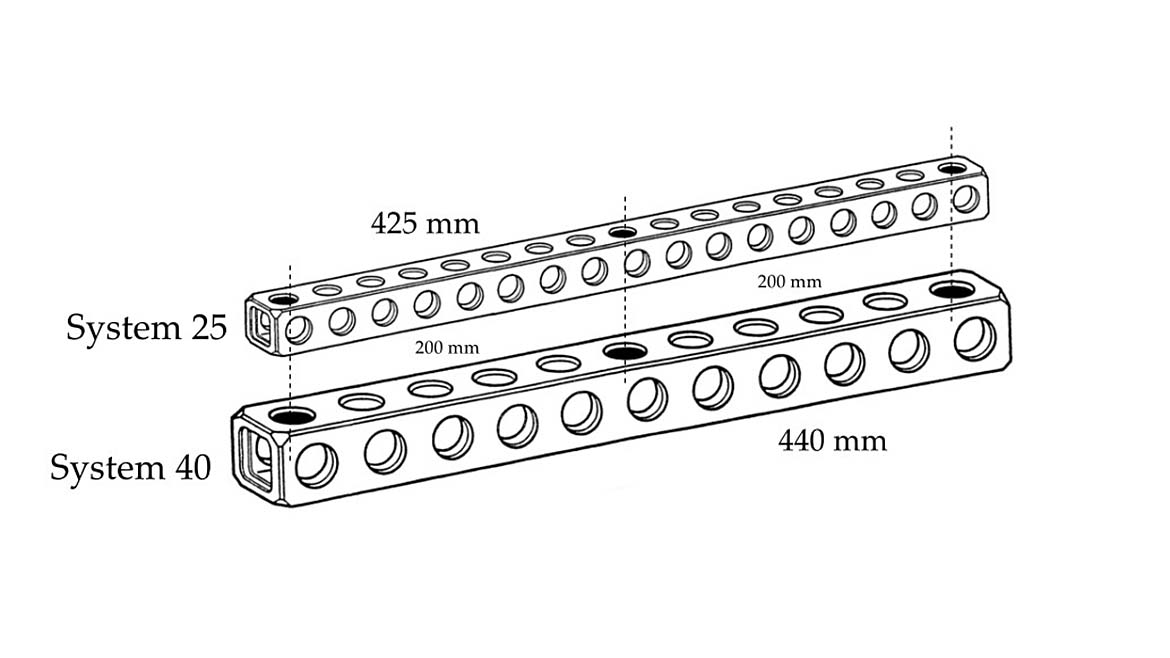
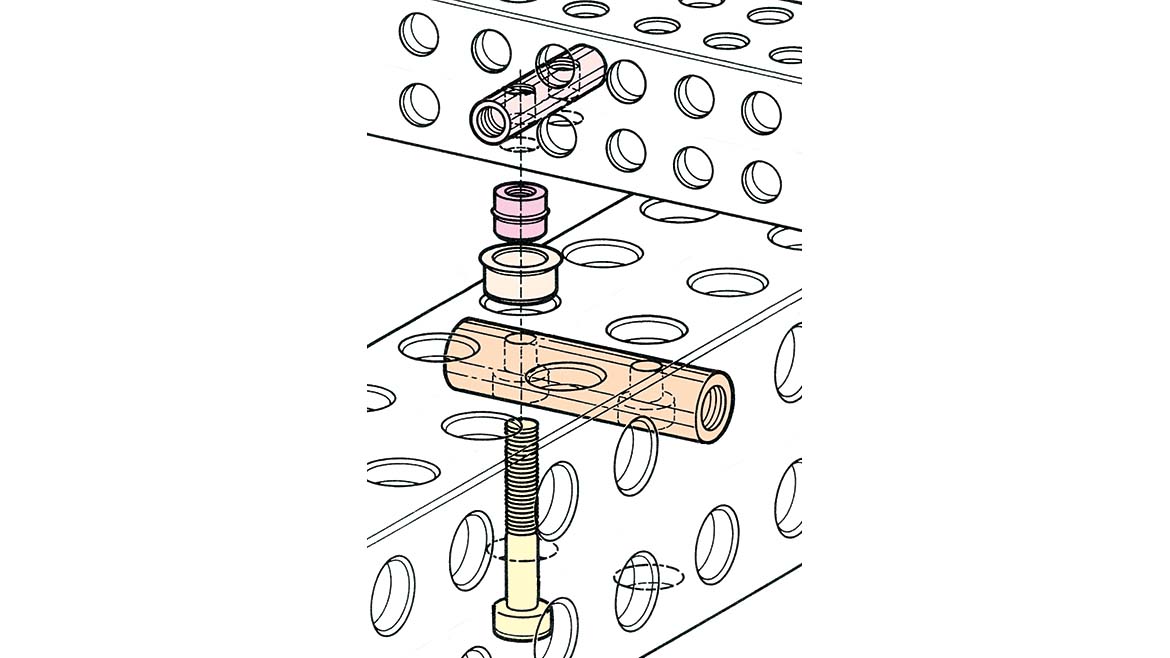
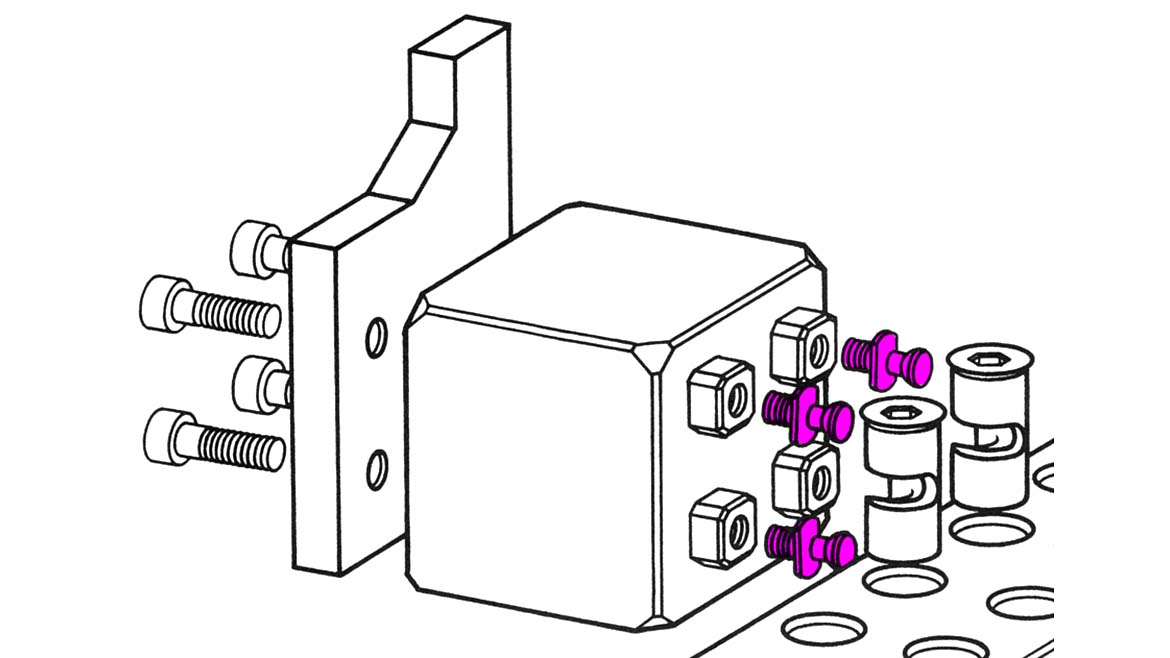
And there you have it. There is a choice based on the application and there are numerous features and benefits to both traditional and modular tools—and then there is the “hybrid.” There is also an expandable modular base option using plug-and-play grid plates supporting a fixture framework consisting of modular profiles, locators, and connectors (see figure 1), all completely reusable. The options are unlimited.
All in all, the process and application specifics will dictate your choice of whether to build traditional, single-use fixtures or to combine technologies. The stamping environment in plant operations can be a cost driven decision. If modular tooling is suitable for the operation on the plant floor and it meets your specifications, it will come down to your features vs. benefits vs. cost, including ROI. My motto has been for a very long time (nice try on age recognition) to “Be creative, think modular” whenever you can.
Looking for a reprint of this article?
From high-res PDFs to custom plaques, order your copy today!