Over the last few years, collaborative robotics has come to the fore as a way to increase manufacturing flexibility and improve ROI. When considering a human-robot collaborative workcell, we explicitly incorporate and expect humans to be safely working close to and/or interacting with the robot during operation.
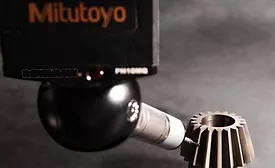
To simplify and hasten the measurement process, manufacturers are bringing measurement to the production line for verification, minimizing the time needed to refine machining.
February 14, 2022
As technology evolves, so do consumers’ tastes. We want more connected products that require increasingly integrated electronic components — such as household electronics that are connect to our phones.
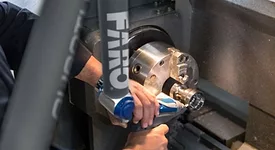
Articulating arms are portable and make inspection easier, since operators can move them to measure a part as opposed to moving the part to the CMM.
February 11, 2022
3D measurement arms, also referred to as articulating arms, are portable coordinate measuring machines (CMMs) that pinpoint and record the location of a probe and record the results through software.
The digital transformation of manufacturing is broadening the toolkit and opportunities for Six Sigma’s DMAIC process.
February 10, 2022
Greg Kinsey, Industry Executive at Hitachi, reveals how creative uses of the DMAIC process with digital transformation are helping factories to unlock the next level of process improvement.
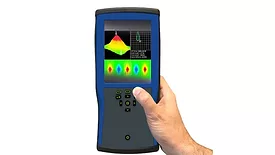
Nondestructive testing methods range from simple manual and visual techniques to sophisticated eddy current and ultrasound technologies that can be used for spot-checks or incorporated right into the production line.
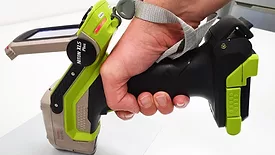
X-ray fluorescence (XRF) spectrometry is a useful technology to measure the thickness of metal layers. Handheld XRF is an indispensable tool in quality assurance.
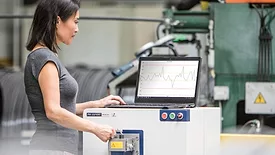
As international quality standards become increasingly demanding, you need to be confident in your QC analysis results – whether you are using an XRF, LIBS or OES analyzer. Without an accurate error margin, you simply cannot be sure that your parts meet specifications.
The global contribution of the automotive industry to the world economy is approximately $3.4 trillion (2021 – Mc Kinsey). Yet very little is communicated about the nondestructive testing (NDT) techniques used for industrial inspection to meet those often mutually opposed pressures of productivity and quality.