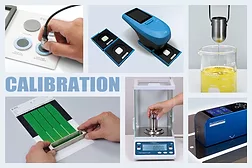
Let’s explore what calibration actually guarantees, where it falls short, and why instruments can pass calibration yet still produce inconsistent results.
When physical test equipment passes calibration, most customers assume that their results are bulletproof. In practice, however, many quality teams are discovering that “in-spec” instruments are no longer enough to defend their data when auditors or customers start asking questions.
Manufacturers continue to invest heavily in automation, cloud platforms, and artificial intelligence, yet many leaders still struggle to articulate whether those investments are delivering meaningful value, particularly across quality teams and functions.
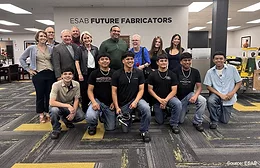
As part of National Welding Month in April, ESAB awarded $5,000 to support welding programs at Princeton High School and Lovelady High School, part of the Princeton Independent School District, through its ESAB Future Fabricators Charlie Monschke Welding Education Grant.
It is an exciting time to be in manufacturing. Across the globe, the industry is reinventing itself through artificial intelligence, automation, and data analytics that improve speed, visibility, and precision.
Manufacturers have long understood the promise of AI’s potential, especially for improving product quality, growing employee productivity, and reducing errors on the plant floor.
In metal additive manufacturing, “traceability” has become a badge of seriousness. We can trace powder batches. We can trace build jobs. We can trace post-processing steps. We can trace inspection results. Great.