You’ve built rigorous systems for tracing defects to their source. But one upstream cause rarely makes the diagram and it’s been generating quality escapes across the industry for years.
A homage to the work of David B. Kirk. His 1952 paper on pneumatic gaging is a foundational reference for dimensional inspection and measurement quality.
For more than seventy years, David B. Kirk’s illustrated lecture, Introduction to Principles of Pneumatic Gaging, existed in an unusual place in the history of manufacturing—quietly influential, widely practiced, yet almost entirely absent from the modern technical record.
This rapid adoption underscores a global industry shift toward data-driven, systematic quality oversight from pre-contract phases through project turnover.
Shipments of cutting tools, measured by the Cutting Tool Market Report, a collaboration between AMT – The Association For Manufacturing Technology and the U.S. Cutting Tool Institute (USCTI), totaled $259.3 million in March 2026.
Quality control programs in injection molding are often focused on monitoring production – measuring dimensions, tracking variation, and verifying consistency across runs.
The Association for Advancing Automation (A3), a leading global advocate for robotics and automation technologies, has named Jim Devaprasad of Lake Superior State University (LSSU) the recipient of the 2026 A3 Educator of the Year Award, sponsored by Siemens.
Customers should look for a trusted additive supplier with a rigorous quality control process, a robust supply chain to weather potential market changes and raw material constraints, and deep technical and regulatory expertise.
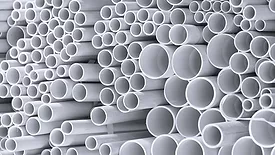
Tin-based heat stabilizers have long been the gold standard in North America for processing rigid and semi-rigid polyvinyl chloride (PVC) applications such as profiles, siding, and pipes.