Pick up any shaft or threaded fastener. How are you going to check it? An outside micrometer is most often the go-to tool for measuring diameters. A height gage or drop indicator could be used to check dimensions between part features, while an optical comparator is a good way to inspect thread forms or measure a groove width.
You may be unfamiliar with the term “optical shaft metrology.” But you’ve no doubt experienced the advantages of this technology. Traveling by car or airplane, for example. In fact, it might surprise you to learn that anytime you’ve used a machine with an electric motor, a turbo charger, fuel injection, precision bearings, transaxles or spindles, chances are good you’ve benefited from optical shaft metrology.
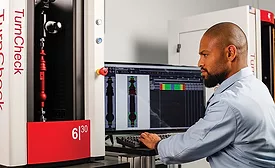
QVI® TurnCheck™ automatic optical measurement systems use advanced optics to measure shafts and cylinders in seconds. Rugged, easy-to-use TurnCheck offers instant measurement of diameters, lengths, angles, radii, cylindricity, runout and more.
Quality Vision International (QVI®) announced the newest precision optical instruments for measuring shafts and other cylindrical parts – QVI TurnCheck™.
Whether its in-line, off-line, in-process, or post-process, manufacturers are constantly searching for the best available measurement technology, and today’s metrology companies are stepping up to the plate to deliver.
Shaft-type parts can be found in just about every industry, from screws, medical needles, engines, and injectors, to aerospace and power sports. Shafts help the world go.
Shaft measurement tools have proven their reliability at manufacturing sites around the world.
January 7, 2014
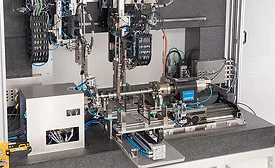
In today’s manufacturing environment high-precision noncontact optical shaft metrology is a solid investment, whether it’s an entry level SPC measuring station operated by the workers or a fully automatic system for 100% part inspection.